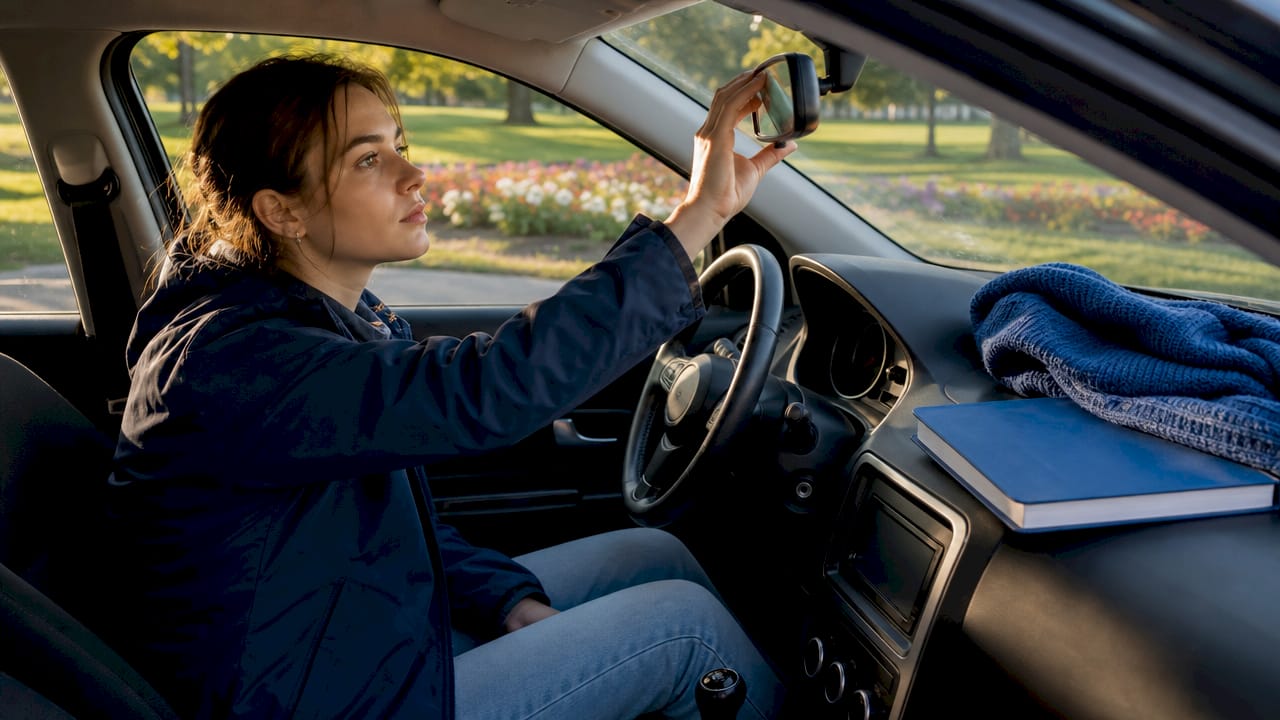
Being “lesson ready” in driving means you can perform core driving tasks safely and consistently without frequent prompts from your instructor, signalling that you are prepared to progress to more complex lessons or move towards test preparation. This is not a legal term or a formal DVSA classification. It is an instructional milestone used by driving instructors across the UK to judge whether a learner is developing the right habits and decision-making skills. Understanding what lesson ready means gives you a clearer picture of where you stand in your learning journey and what your instructor is actually looking for during every session.
What does lesson ready mean in driving?
“Lesson ready” means driving safely and consistently without frequent instructor prompts, performing the behaviours required by the practical test assessment. The phrase is used informally within UK driving instruction to describe a learner who has reached a reliable baseline of competence for a given stage of their training. Think of it as a green light from your instructor that says: “You are ready to handle what comes next.”
The key word here is consistency. Any learner can perform a smooth gear change or check their mirrors correctly once. Lesson readiness is about doing those things correctly, repeatedly, and without being reminded. Readiness is best defined as the capability to drive without constant intervention, emphasising competence over time served. That distinction matters because it shifts the focus away from counting lessons and towards building real skill.
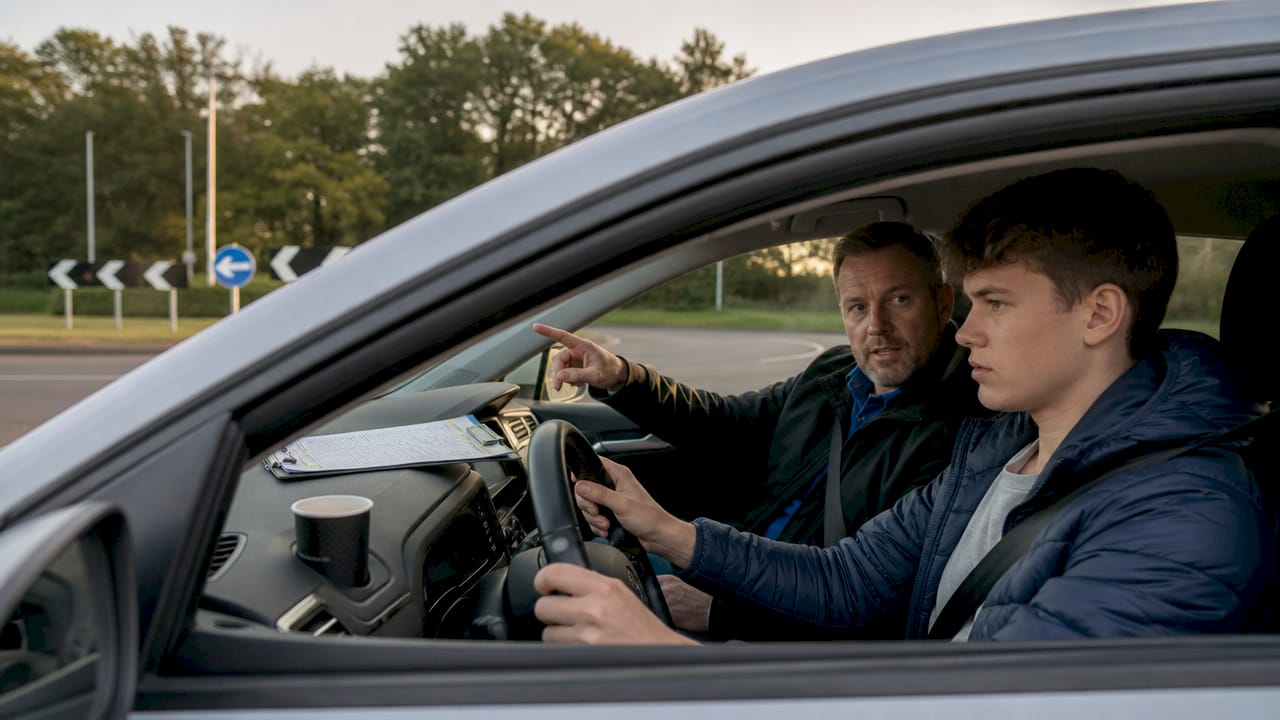
It is also worth understanding that there is no legal minimum number of lessons required before taking the practical test in Great Britain. Learners can book their practical test after passing their theory test and holding a provisional licence, regardless of how many lessons they have had. This makes your instructor’s honest assessment of your readiness all the more important as a safeguard.
How driving instructors determine if a learner is lesson ready
Instructors do not use a single test or checklist to decide whether you are lesson ready. They observe your performance across multiple sessions, looking for patterns of safe, independent behaviour rather than isolated moments of good driving.
The core skills they watch include:
- Clutch control and gear selection: Are you changing gear smoothly and at the right time without being prompted?
- Observation and mirror checks: Do you check mirrors and blind spots before every manoeuvre, or only after your instructor mentions it?
- Hazard awareness: Are you spotting and responding to potential hazards before they develop, or reacting late?
- Speed management: Do you adjust your speed appropriately for the road conditions and traffic ahead?
- Road positioning: Are you consistently in the correct lane and position without guidance?
Progressive lesson plans deliberately increase complexity to identify readiness gaps before test day, focusing on real-world challenges. Early lessons take place on quiet residential roads where the demands are lower. As your confidence grows, your instructor introduces busier junctions, dual carriageways, and town centre traffic. Consistency under mild pressure is key. Some learners perform well on quiet roads but struggle when junctions or busier situations are introduced. That gap reveals exactly where more work is needed.
Pro Tip: Ask your instructor at the end of each lesson which specific skills you performed without prompting. This gives you a concrete measure of your progress rather than a vague sense of how it went.
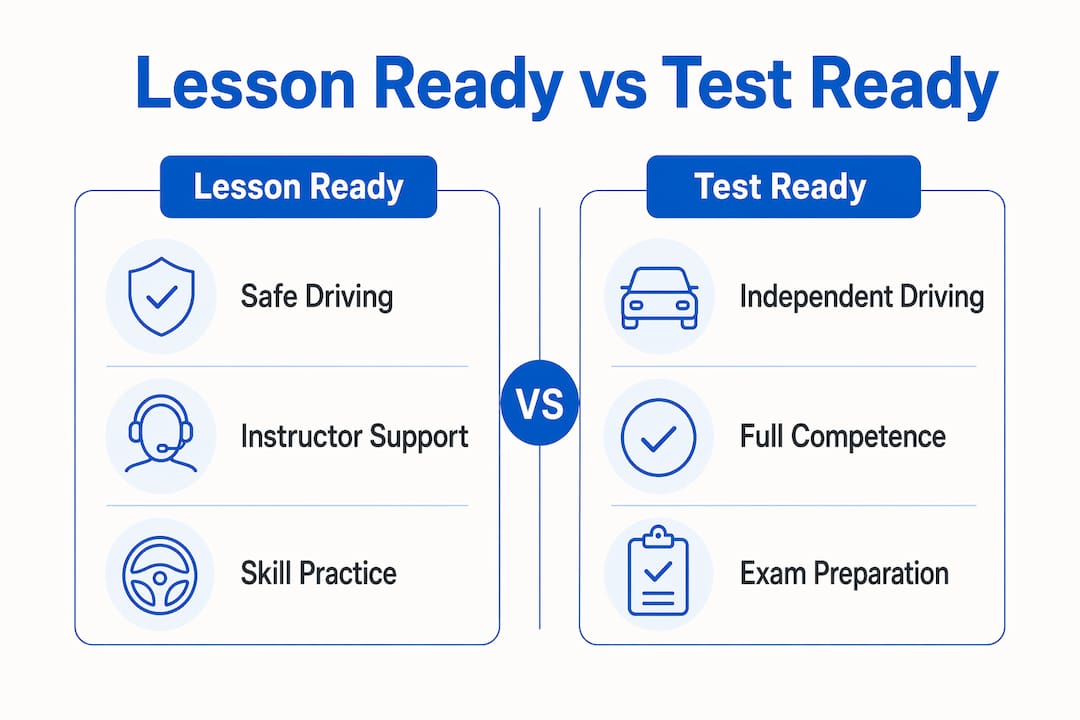
Lesson ready vs test ready: what is the difference?
These two terms are often confused, but they describe very different stages of your development. Understanding the distinction helps you set realistic expectations and avoid booking your practical test before you are genuinely prepared.
| Stage | What it means | What it requires |
|---|---|---|
| Lesson ready | Competent with instructor guidance at your current lesson stage | Consistent safe driving on familiar road types without constant prompts |
| Test ready | Capable of safe, independent driving across all test scenarios | Mastery of all DVSA assessment areas, including independent driving tasks |
| Not yet lesson ready | Producing correct results only after instructor prompts | More practice on current skills before progressing to new challenges |
| Approaching test ready | Performing well across varied conditions with minimal errors | Consistent performance on mock test routes and under mild pressure |
Lesson readiness is a stepping stone. You can be lesson ready for a particular stage of your training, such as driving on residential roads, while still being far from test ready. Test readiness means you can handle every scenario the DVSA examiner might present, from navigating a roundabout to following a sat-nav during the independent driving section.
Taking the test too early leads to additional lessons and retests, making readiness a genuine cost and safety checkpoint. A failed test costs money in rebooking fees and often requires further lessons to address the faults identified. Your instructor’s job is to protect you from that outcome by being honest about where you actually stand.
Common signs that show a learner driver is lesson ready
Recognising the signs of readiness in yourself is genuinely useful. It helps you have more productive conversations with your instructor and builds your confidence in your own progress.
Here are the most reliable indicators:
- You complete basic controls smoothly and safely. Clutch, accelerator, steering, and braking all feel natural rather than something you have to consciously think through every time.
- You make safe decisions before being prompted. You check your mirrors before signalling. You slow down approaching a hazard before your instructor says anything. You choose the correct lane without being told.
- You manage basic traffic situations with confidence. Quiet junctions, simple roundabouts, and straightforward road positioning no longer cause anxiety or hesitation.
- Your instructor intervenes less often. Fewer verbal prompts and less use of the dual controls are the clearest external sign that your readiness is growing.
- You can focus on the road rather than the controls. When operating the vehicle becomes more automatic, your attention shifts outward to the traffic environment, which is exactly where it needs to be.
Self-assessment for readiness includes recognising consistent safe choices made before instructor prompts, not just after being told. That internal awareness is a skill in itself, and developing it makes you a safer driver long after you pass your test.
Pro Tip: After each lesson, mentally replay two or three moments where you made a decision without being prompted. If you can identify those moments regularly, your readiness is building in the right direction.
Why being lesson ready matters for your driving progress and safety
Lesson readiness is not just an instructor’s administrative label. It has direct consequences for your safety, your wallet, and the quality of your learning.
- It reduces the risk of unsafe driving. Moving to complex roads before you are ready creates situations where your instructor has to intervene frequently, which is stressful and counterproductive. Instructor readiness evaluations help learners avoid premature test booking, reducing overall learning costs and improving pass rates.
- It protects the value of your lesson time. A lesson spent correcting the same basic errors is a lesson that does not move you forward. Reaching readiness at each stage means your instructor can introduce new challenges that genuinely develop your skills.
- It prevents bad habits from forming. Habits built under pressure or before you are ready tend to stick. Driving distraction management and safe habits are far easier to build correctly from the start than to unlearn later.
- It aligns your progress with DVSA standards. The practical test assesses specific competencies. Lesson readiness at each stage keeps your development on a path that maps directly to those standards.
- It supports your long-term safety as a driver. The goal of learning to drive is not simply to pass a test. It is to become a safe, independent driver. Respecting readiness milestones builds the foundation for that.
A minimum learning period has been proposed in the UK to improve learner experience and safety by ensuring broader exposure to varied road conditions. The underlying principle is the same as lesson readiness: experience and competence matter more than speed.
How to prepare yourself to become lesson ready
Becoming lesson ready is something you actively work towards, not something that simply happens after a set number of hours behind the wheel. The mindset shift from counting lessons to evaluating competence helps learners progress safely and confidently. Here is how to make that shift practical.
- Practise the basics between lessons. If you have access to private land or a patient supervising driver, use that time to work on clutch control, smooth braking, and steering accuracy. Repetition outside of paid lessons accelerates your progress significantly.
- Study the Highway Code regularly. Understanding road signs, rules at junctions, and right-of-way situations means you spend less mental energy on theory during your lesson and more on the physical act of driving.
- Accept feedback without defensiveness. Your instructor’s corrections are not criticism. They are the most direct route to readiness. Learners who act on feedback between lessons progress faster than those who wait to be told again.
- Use self-checks during lessons. Before your instructor speaks, ask yourself: “Have I checked my mirrors? Am I in the right position? Is my speed appropriate?” Building that internal dialogue is the core of independent driving.
- Communicate openly with your instructor. Tell them which situations make you nervous and which feel comfortable. That information helps them build a structured lesson plan that targets your specific gaps rather than following a generic sequence.
The learners who reach lesson readiness fastest are not necessarily the most naturally talented. They are the ones who treat every lesson as a deliberate practice session with a clear goal, not just time spent in a car.
Key takeaways
Lesson readiness is defined by consistent, safe, independent driving at your current stage of training, not by the number of lessons completed.
| Point | Details |
|---|---|
| Core definition | Lesson ready means driving safely without frequent instructor prompts, not a legal or DVSA classification. |
| Instructor assessment | Instructors observe clutch control, observation, hazard awareness, and decision-making across multiple sessions. |
| Lesson ready vs test ready | Lesson ready is stage-specific competence; test ready means performing safely across all DVSA assessment areas. |
| Self-assessment matters | Recognising your own safe decisions before prompts is the clearest personal sign of growing readiness. |
| Readiness protects your investment | Progressing before you are ready leads to repeated errors, extra lessons, and a higher risk of test failure. |
Why rushing readiness is the one mistake I see most often
I have seen learners at every stage of the process, and the pattern that leads to the most frustration is almost always the same. A learner feels comfortable after a handful of lessons, assumes they are close to test ready, and pushes to move faster than their actual skill level supports. The result is not faster progress. It is more lessons spent correcting problems that should have been resolved earlier.
Lesson readiness is not a bureaucratic hurdle your instructor invented to keep you paying for lessons. It is a genuine checkpoint that protects you from arriving at a test centre with gaps in your driving that the examiner will find, even if you did not notice them yourself. The learners I have seen pass first time are almost always the ones who respected each stage of the process rather than rushing through it.
There is also something worth saying about the emotional side of this. Accepting that you are not yet lesson ready for a particular challenge does not mean you are failing. It means your instructor is doing their job properly and so are you. The learners who progress most confidently are those who treat readiness as useful information rather than a judgement on their ability.
Focus on competence, not speed. The licence comes faster that way than you might expect.
— Simon
Start your journey to lesson ready with Pass4you
Pass4you is a Milton Keynes driving school with an 83.33% first-time pass rate, built on structured lesson plans that take learners from their very first control inputs through to full test readiness at the right pace. Every lesson is delivered by a calm, patient instructor in a modern Volkswagen with dual controls, so you build genuine competence at each stage before moving to the next challenge. If you want to understand exactly where you stand and what it takes to become lesson ready and then test ready, explore the learner driver courses at Pass4you to find the right programme for your starting point.
FAQ
What does lesson ready mean in driving?
Lesson ready means a learner can drive safely and consistently at their current stage of training without frequent prompts from their instructor. It is an instructional milestone, not a legal or DVSA term.
How many lessons does it take to become lesson ready?
There is no fixed number. Lesson readiness is about competence, not hours completed. Some learners reach readiness for basic road driving in fewer lessons; others need more time depending on their starting confidence and how regularly they practise.
Is lesson ready the same as being ready for the practical test?
No. Lesson ready describes competence at a specific stage of your training. Test ready means you can perform safely and independently across all scenarios the DVSA examiner will assess, including independent driving and all manoeuvres.
Can I assess my own lesson readiness?
Yes. The clearest sign is making correct, safe decisions before your instructor prompts you. If you are consistently checking mirrors, managing speed, and positioning correctly without being told, your readiness is developing well.
What happens if I progress before I am lesson ready?
Moving to more complex roads or booking your test before you are ready increases the risk of errors under pressure, additional lessons to correct ingrained habits, and a higher chance of failing the practical test. Your instructor’s readiness assessment exists to prevent exactly that outcome.
Leave a Reply