A trainee driving licence is a temporary, 6-month authorisation granted by the DVSA to aspiring instructors who have passed ADI Parts 1 and 2, allowing them to provide paid driving instruction legally while preparing for the Part 3 test. The standard industry term is “PDI licence” or “trainee instructor licence,” though many people search for it as trainee licence driving. This licence sits in a specific legal category under the Road Traffic Act 1988 and is entirely distinct from the provisional licence a learner driver holds. If you are a learner driver, a parent researching your teen’s instructor, or someone considering a career as an Approved Driving Instructor (ADI), understanding what this licence means and what it does not cover is genuinely useful.
What is trainee licence driving and its legal framework?
The legal foundation for the trainee driving licence sits in Section 129 of the Road Traffic Act 1988, which prohibits anyone from charging for driving instruction unless they are either a fully registered ADI or hold a current trainee licence. Without one of these two statuses, accepting payment for a lesson is a criminal offence. This is not a grey area. The statute is clear, and the DVSA enforces it.
The licence is deliberately temporary. Courts have consistently upheld the position that the trainee licence is non-renewable under normal circumstances, meaning the DVSA will not simply extend it because a trainee has not yet passed Part 3. The purpose is to create a defined window for progression, not a permanent workaround for avoiding full qualification. Legal tribunals have gone further, confirming that repeated licence applications without exam progress can be legitimately refused by the Registrar to protect the integrity of the ADI register.

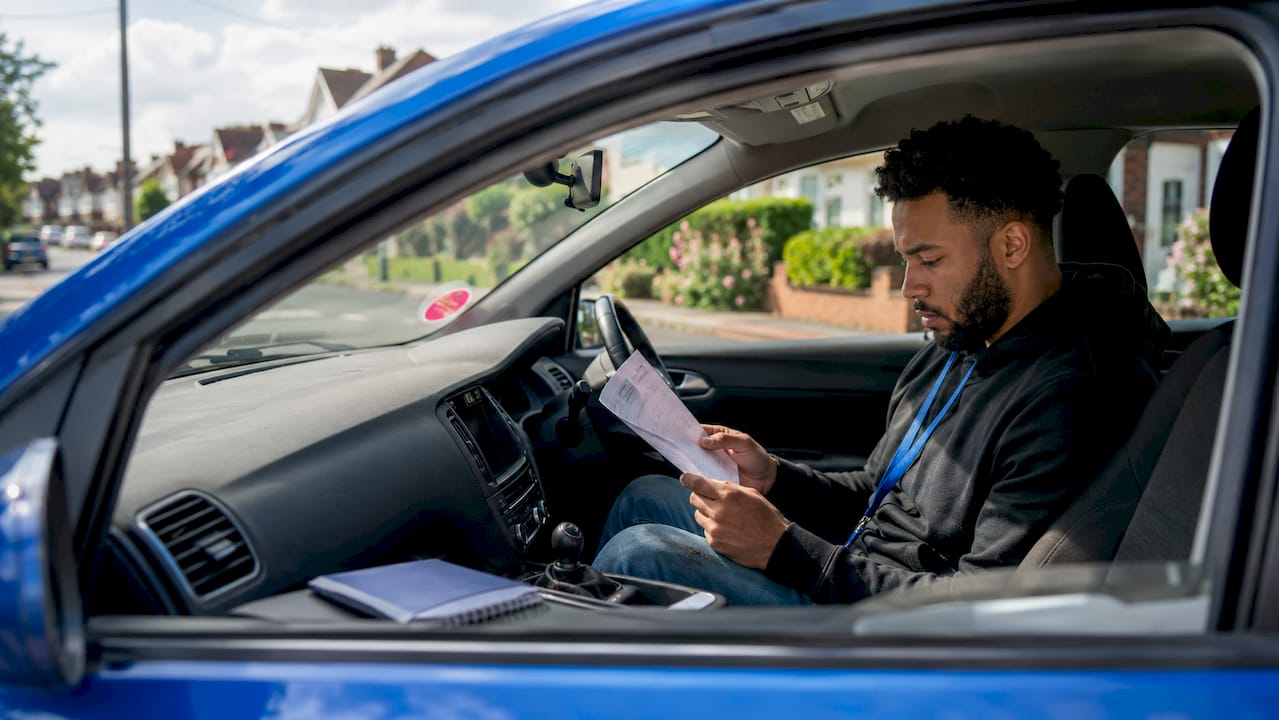
There are two visible markers that identify a trainee instructor’s status. A pink badge displayed on the nearside windscreen of the tuition vehicle indicates a PDI (Potential Driving Instructor) operating under a trainee licence. A green badge means the instructor is a fully qualified ADI. These badges are not optional decoration. They are a legal requirement, and their absence or incorrect display is a compliance failure.
Pro Tip: If you are a learner driver, always check the windscreen badge before your first paid lesson. Pink means trainee, green means fully qualified. Both are legal, but knowing the difference helps you ask the right questions about your instructor’s experience level.
The trainee must also work under a sponsoring driving school or trainer throughout the licence period. This sponsorship is a statutory condition, not an informal arrangement. The sponsoring school takes on supervisory responsibility for the trainee’s teaching practice, which shapes the entire business dynamic of the traineeship.
How to get a trainee licence: steps and costs
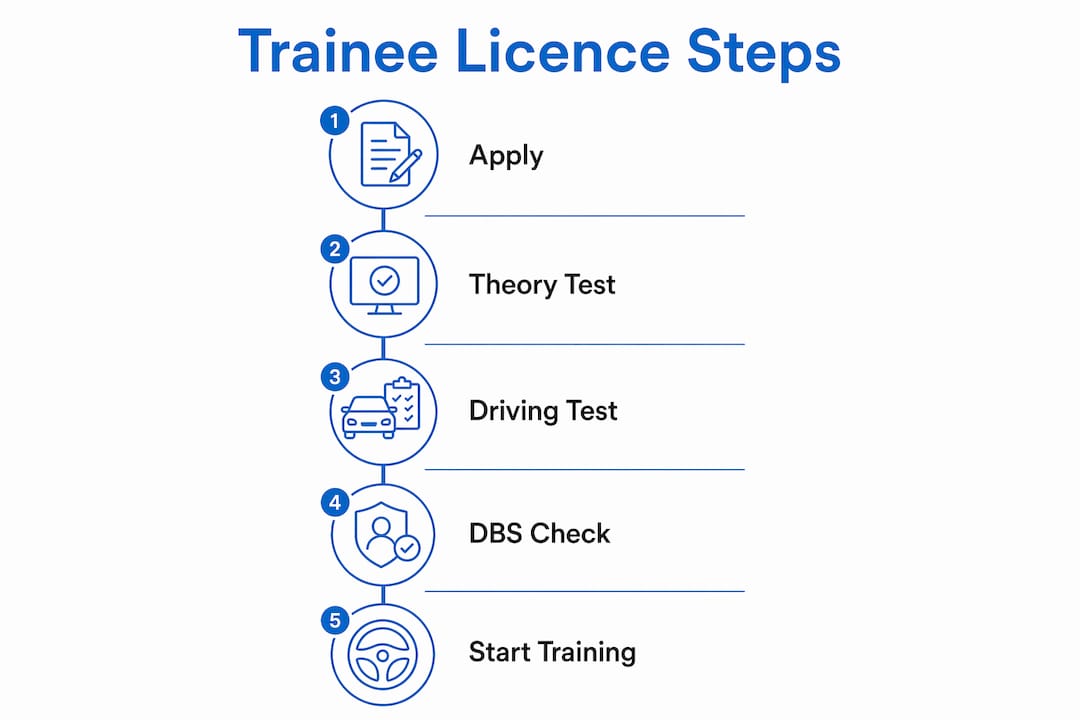
Obtaining a trainee driving licence follows a defined sequence. You cannot apply until you have cleared the first two stages of the ADI qualification process. Here is the pathway in order:
- Pass the ADI Part 1 theory and hazard perception test (fee: £81).
- Pass the ADI Part 2 practical driving ability test (fee: £111).
- Complete a DBS (Disclosure and Barring Service) check (fee: £5.40).
- Secure a sponsoring driving school willing to supervise your training.
- Submit your trainee licence application to the DVSA with the licence fee of £140.
- Await processing, typically 10 to 15 working days.
- Once issued, begin paid instruction while preparing for the ADI Part 3 teaching test (fee: £111).
The full cost breakdown for the DVSA qualification route, including the ADI certificate at the end, reaches approximately £748.40 in official fees alone. That figure does not include training costs from a driving instructor training provider, which can add several hundred to several thousand pounds depending on the programme chosen.
| Stage | DVSA fee |
|---|---|
| ADI Part 1 (theory) | £81 |
| ADI Part 2 (driving ability) | £111 |
| DBS check | £5.40 |
| Trainee licence | £140 |
| ADI Part 3 (teaching test) | £111 |
| ADI certificate | £300 |
| Total official fees | £748.40 |
The DVSA is the sole issuing body for the trainee licence. There is no alternative route, no regional variation, and no shortcut. The sponsoring school requirement means you need to have that arrangement confirmed before you apply, since the application itself requires the sponsor’s details.
Pro Tip: Choose your sponsoring school carefully before applying. Some schools offer genuine mentoring and structured support during the trainee period. Others treat the arrangement primarily as a franchise revenue opportunity. Ask specifically what supervision and feedback you will receive before signing anything.
Trainee licence vs learner’s permit: what is the difference?
This is where a great deal of confusion arises, particularly for parents and learner drivers who encounter the term “trainee licence” and assume it refers to their own provisional driving entitlement. The two licences are entirely different in purpose, audience, and legal standing.
A UK provisional driving licence is held by a learner driver. It allows that person to drive on public roads under supervision, with no payment involved. It is not time-limited in the same way, and it does not confer any right to teach others. A trainee instructor licence, by contrast, is held by someone who already drives to a high standard and is learning to teach driving. The trainee is the instructor, not the student.
For international comparison, US learner permits require minimum ages of 15 to 16, passing written tests, supervised driving hours, and often include curfews and passenger restrictions. Research from Car Talk notes that learner permits reduce crash risk by giving new drivers structured supervised practice before solo driving. Both the US permit and the UK provisional licence serve the same fundamental purpose: building a new driver’s skills under supervision. Neither has anything to do with instructor qualification.
| Licence type | Holder | Purpose | Time limit |
|---|---|---|---|
| UK trainee instructor licence | Aspiring ADI (PDI) | Legal paid instruction while qualifying | 6 months, non-renewable |
| UK provisional driving licence | Learner driver | Supervised driving practice | No fixed limit |
| US learner’s permit | New driver (age 15 to 16+) | Supervised driving before solo test | Varies by state |
The practical implication for learners is straightforward. If your instructor displays a pink badge, they hold a trainee licence and are a PDI. They are legally permitted to charge for lessons. They are not, however, a fully qualified ADI, and their teaching experience is limited. That is not necessarily a problem, but it is information worth having.
Practical challenges for trainee licence holders
The trainee licence period is widely described as one of the most demanding phases of the ADI qualification process, and that reputation is earned. The pressure of balancing paid teaching with Part 3 exam preparation is significant. You are running a small business, managing clients, and simultaneously studying for a high-stakes assessment, all within a six-month window that does not pause for illness, slow pupil progress, or personal circumstances.
The franchise model adds another layer of complexity. Because trainee income routes through the sponsoring school, the trainee’s financial independence is limited during this period. Some schools use this arrangement constructively, providing structured feedback and mentoring. Others use it primarily to generate franchise revenue, offering minimal genuine support. The trainee has limited leverage in this relationship, which makes the choice of sponsor critically important before the licence is even applied for.
Several practical points are worth knowing before you enter this phase:
- The six-month window begins from the date the licence is issued, not from when you start teaching.
- Failing Part 3 within the licence period does not automatically grant an extension.
- A second trainee licence application may be considered in limited circumstances, but a third is almost always refused.
- Learner drivers can and do book lessons with PDIs, but they should be informed of the instructor’s trainee status.
- The pink badge must be displayed at all times during paid instruction. Its absence is a legal breach, not an administrative oversight.
Pro Tip: Some trainees choose to delay applying for the trainee licence and focus entirely on Part 3 preparation first. This removes the financial pressure and franchise dependency, though it also means forgoing any income during that period. Neither approach is universally correct. It depends on your financial situation and how close to exam-ready you genuinely are.
Key takeaways
A trainee driving licence is a strictly time-limited, non-renewable permit that bridges the gap between passing ADI Parts 1 and 2 and achieving full instructor registration, and its misuse carries real legal consequences.
| Point | Details |
|---|---|
| Statutory basis | Section 129 of the Road Traffic Act 1988 governs all paid instruction in the UK. |
| Six-month limit | The licence lasts six months and is non-renewable under normal circumstances. |
| Application cost | The trainee licence fee is £140, with total DVSA qualification costs reaching £748.40. |
| Pink badge rule | A pink windscreen badge identifies a PDI; learners should check this before paying for lessons. |
| Franchise dependency | Trainees must work under a sponsoring school, which controls lesson revenue during the licence period. |
The trainee licence system: what experience actually shows
The trainee licence is a genuinely useful mechanism, but it is regularly misunderstood by everyone involved, including the trainees themselves. The most common mistake I see is people entering the trainee period without a realistic plan for passing Part 3 within the six months. They take on too many pupils, underestimate the exam difficulty, and find themselves at the end of the licence period with no qualification and no legal right to continue charging for lessons.
The franchise dependency issue is also underappreciated. Many trainees sign up with a sponsoring school based on marketing materials rather than asking hard questions about what supervision actually looks like week to week. The statutory requirement for sponsorship exists to protect learner drivers, but in practice, the quality of that supervision varies enormously. If you are a trainee, treat the choice of sponsor as seriously as you would treat choosing an employer.
For learner drivers and parents, the key takeaway is simpler. A PDI with a pink badge is not a second-rate option by default. Some trainees are excellent teachers who are simply at an earlier stage of formal qualification. What matters is that you know their status, that the badge is visible, and that you feel confident in their ability to keep you safe. If anything feels unclear, you are entitled to ask directly whether your instructor is a fully qualified ADI or a PDI on a trainee licence. A good instructor will answer without hesitation.
The system works when everyone understands their role within it. Trainees who treat the six months as a focused qualification sprint, rather than a comfortable income phase, tend to come out the other side as stronger instructors. Those who drift through it often find themselves in a difficult legal and professional position.
— Simon
Start your driving journey with the right support
Whether you are a learner driver trying to understand who is teaching you, or someone considering a career as a driving instructor, the quality of your training environment makes a measurable difference. Pass4you, based in Milton Keynes, delivers driving lessons with an 83.33% first-time pass rate, well above the local average, using modern Volkswagen tuition vehicles with dual controls and patient, experienced instructors who know the Bletchley test routes in detail.
If you are ready to learn with a team that takes your progress seriously, explore the learner courses at Pass4you to find the right programme for your needs. You can also visit Pass4you directly to book lessons or get in touch by phone or email. Verified Trustpilot reviews back up what the pass rate already tells you.
FAQ
What is a trainee driving licence in the UK?
A trainee driving licence, formally known as a PDI licence, is a six-month permit issued by the DVSA that allows aspiring driving instructors to provide paid lessons legally while completing their ADI Part 3 qualification. It is governed by Section 129 of the Road Traffic Act 1988.
How much does a trainee driving licence cost?
The trainee licence application fee is £140, paid to the DVSA. When combined with the ADI Part 1, Part 2, Part 3, DBS check, and ADI certificate fees, the total official DVSA cost reaches approximately £748.40.
Can a trainee driving licence be renewed?
Under normal circumstances, the trainee licence is non-renewable. Legal tribunals have upheld the DVSA Registrar’s right to refuse repeated applications where the applicant has not demonstrated progress toward passing the Part 3 exam.
How can I tell if my driving instructor is a trainee?
A trainee instructor displays a pink badge on the nearside windscreen of the tuition vehicle. A green badge indicates a fully qualified ADI. Both are legally permitted to charge for lessons, but the distinction is worth knowing before you book.
Is a trainee driving licence the same as a learner’s permit?
No. A learner’s permit or provisional licence is held by someone learning to drive. A trainee driving licence is held by someone learning to teach driving. The two serve entirely different purposes and apply to different people at different stages of their driving journey.
Leave a Reply