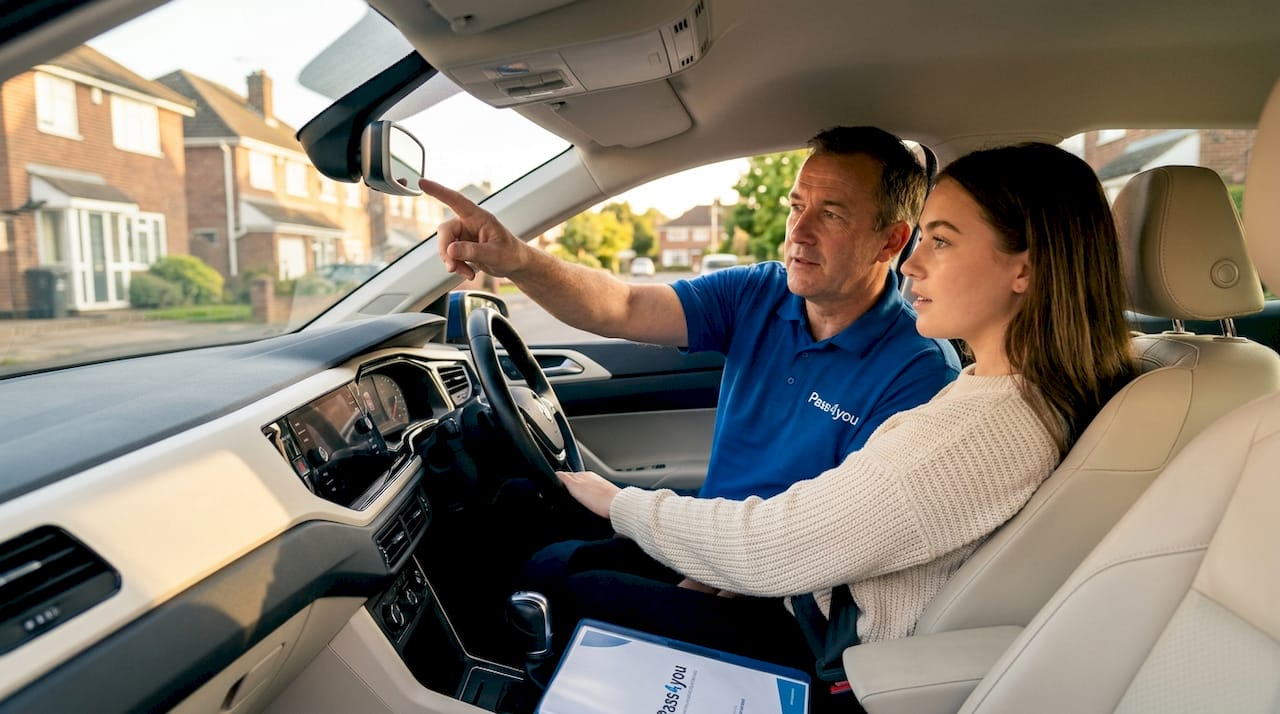
The qualities of outstanding driving instructors go far beyond knowing how to operate a vehicle. The best instructors combine patience, clear communication, adaptability, strong personal driving skills, and professionalism to produce confident, competent learners who pass first time. Recognised frameworks such as the RSA’s 16 core competencies and the UK ADI Part 3’s 17-point assessment define these traits formally, giving learners a reliable benchmark when choosing who to trust behind the wheel.
1. Patience: the foundation of effective driving instruction
Patience is the single most cited trait of effective driving instructors, and it is also the most measurable in practice. A patient instructor allows learners to make mistakes, self-correct, and repeat manoeuvres without feeling rushed or judged. This directly supports the student-centred approach that sits at the heart of the RSA’s competency framework.

Without patience, learners internalise anxiety rather than skill. Research confirms that student-centred teaching and encouraging self-assessment are core competencies for outstanding instructors, not optional extras. A learner who feels pressured to perform will focus on pleasing the instructor rather than understanding the road.
Patience also means tolerating repetition without frustration. Stalling at a junction three times in a row is not failure; it is the learning process in action. Instructors who communicate this clearly create a calmer, more productive environment.
- Allow learners to attempt corrections before intervening
- Avoid sighing, sharp tones, or body language that signals impatience
- Celebrate incremental progress, not just completed manoeuvres
- Revisit difficult topics across multiple lessons without making learners feel behind
Pro Tip: If you are assessing a potential instructor, pay attention to how they respond the first time you make a mistake. That reaction tells you more than any testimonial.
2. Clear communication skills that keep learners safe
Communication is the mechanism through which all other instructor qualities are delivered. Giving clear directions in good time and linking feedback to specific incidents are two of the most technically demanding skills in driver training. Both are assessed formally under the UK ADI Part 3 framework.
The timing of instructions matters as much as their content. Telling a learner to turn left five metres before the junction is not communication; it is a hazard. Directions must arrive early enough for the learner to process, plan, and act without panic. This is what the ADI framework means when it specifies that instructions must come “in good time.”
Feedback closes the learning loop. When an instructor links a near-miss to the learner’s perception of the situation, rather than simply saying “that was dangerous,” the learner builds genuine understanding. Open questions to check understanding are a practical tool for this, prompting learners to articulate what they noticed and what they would do differently.
“Feedback links incidents to learner perception to maintain the learning loop.” — Driver Training Theory
Strong communication also means adapting language. A 17-year-old on their first lesson and a 45-year-old returning to driving after a gap need different vocabulary, different pacing, and different levels of technical detail. The best instructors read this within the first ten minutes and adjust accordingly.
3. Adaptability in teaching style and lesson planning
Adaptability is what separates a good instructor from a great one. Lesson plans should be reassessed continuously during lessons to address evolving learner needs and confidence levels, not simply followed as a fixed script from the start of the hour.
The GDE Matrix is a structured framework used by outstanding instructors to teach beyond manoeuvres. It addresses three levels of driver behaviour: vehicle control, traffic interaction, and the attitudes and life goals that shape how a person approaches risk. Instructors who only teach at the first level produce drivers who can park but cannot think.
| Teaching approach | What it covers | Best suited to |
|---|---|---|
| Fixed lesson plan | Pre-set route and objectives | Structured early-stage learners |
| Adaptive lesson plan | Route and pace adjusted mid-lesson | Learners with variable confidence |
| GDE Matrix-informed teaching | Attitudes, goals, and risk awareness | Developing independent decision-making |
Route selection is a practical expression of adaptability. A learner who is struggling with roundabouts does not benefit from a lesson that includes four of them in the first twenty minutes. An adaptable instructor recognises this and builds exposure gradually, increasing complexity as competence grows.
Pro Tip: Ask a prospective instructor how they would adjust a lesson if you were having a difficult day. Their answer reveals whether they teach to a schedule or to the learner.
The Academy of Road Safety recommends requesting a trial lesson specifically to evaluate teaching style fit. This is one of the most practical steps any learner can take before committing to a full course.
4. Strong personal driving skills and professional conduct
An instructor’s own driving proficiency is the baseline of their credibility. Learners observe everything, including how the instructor handles the dual controls, how they position the vehicle, and how they respond to other road users. Poor personal driving undermines every instruction given.
Professionalism extends beyond driving ability to include punctuality, vehicle cleanliness, respecting personal boundaries, and appropriate conduct throughout the lesson. These factors are assessed as a core competency in instructor frameworks and directly affect learner comfort and trust.
The condition of the tuition vehicle matters more than most learners realise. A clean, well-maintained car with functioning dual controls signals that the instructor takes their responsibility seriously. Pass4you uses modern Volkswagen tuition vehicles with dual controls precisely because the vehicle itself is part of the safety environment.
- Arrive on time and prepared for every lesson
- Maintain a clean, roadworthy, and properly equipped tuition vehicle
- Demonstrate calm, considered driving at all times
- Respect learner boundaries and maintain appropriate professional distance
- Avoid personal phone use, distracted commentary, or dismissive responses
Risk management under the UK ADI framework includes timely intervention, sharing risk responsibility with the learner, and providing clear safety-critical feedback. An instructor who grabs the wheel at the first sign of uncertainty is not managing risk; they are preventing the learner from developing judgement.
5. Sharing risk responsibility with the learner
The most overlooked quality among the attributes of successful driving instructors is the deliberate transfer of risk awareness to the learner. Effective instructors share risk responsibility with learners, intervene appropriately, and encourage independent learning rather than over-directing.
This means allowing learners to identify hazards before pointing them out, asking what the learner noticed rather than narrating every observation, and gradually reducing instructor input as competence grows. Over-direction produces learners who can only drive when told what to do. That is not a driver; it is a passenger with a steering wheel.
The ADI Part 3 framework assesses this explicitly. Instructors who score highly on risk management are those who calibrate their intervention to the learner’s current ability, stepping in when safety demands it but holding back when the learner can manage independently. This balance is genuinely difficult to achieve and is one of the clearest markers of an outstanding instructor.
6. Structured lesson planning aligned to learner goals
The UK ADI Part 3 model breaks assessment into lesson planning, risk management, and teaching strategies across 17 competencies. Lesson planning is not simply deciding which roads to drive. It involves identifying the learner’s current level, setting a realistic objective for the session, and building in checkpoints to assess whether that objective has been met.
Outstanding instructors treat each lesson as part of a longer learning arc. They review what was covered in the previous session, set a clear goal for the current one, and preview what comes next. This gives learners a sense of progress and purpose, which directly supports motivation and retention.
Lesson planning also includes knowing when to abandon the plan. If a learner arrives visibly anxious or has had a difficult week, pressing ahead with a motorway introduction is counterproductive. The ability to read the learner and reset the session objective is a skill that only experienced, learner-focused instructors possess.
7. Commitment to continuous professional development
Instructor quality is more than driving skill; it centres on structured teaching, communication, adaptability, and risk management within a formal framework. The best instructors treat their own development as seriously as their learners’ progress.
In the UK, ADI registration requires ongoing standards checks conducted by the Driver and Vehicle Standards Agency. These checks assess the same 17 competencies that govern lesson quality. An instructor who scores highly on a standards check is demonstrably committed to professional growth, not just maintaining a licence.
Continuing professional development for driving instructors includes attending CPD workshops, studying updated Highway Code guidance, and reviewing teaching techniques through peer observation. Learners rarely ask about this, but it is one of the clearest signals of a genuinely outstanding instructor. You can find practical guidance on choosing and evaluating instructors on the Pass4you blog.
Key takeaways
Outstanding driving instructors combine patience, structured communication, adaptability, professional conduct, and deliberate risk-sharing to produce learners who are genuinely road-ready, not just test-ready.
| Point | Details |
|---|---|
| Patience builds confidence | Learners who are not rushed make fewer errors and retain skills longer. |
| Communication timing is critical | Instructions and feedback must arrive early enough for the learner to act safely. |
| Adaptability requires live reassessment | Lesson plans must flex mid-session to match the learner’s actual state, not the planned one. |
| Professionalism signals credibility | Vehicle condition, punctuality, and conduct directly affect learner trust and comfort. |
| Risk-sharing develops independence | The best instructors reduce their input as competence grows, building genuine driver judgement. |
What I have learned from watching great instructors work
The trait that most learners overlook when choosing an instructor is feedback timing. I have observed lessons where the instructor gave technically accurate feedback but delivered it thirty seconds after the incident, by which point the learner had mentally moved on. The feedback landed as criticism rather than learning. The instructors who consistently produce confident, capable drivers are those who link the observation to the moment, clearly and without drama.
There is also a tendency to overvalue instructors who never intervene. Calm is good; passivity is not. The best instructors I have seen operate with a quiet authority. They let learners work through difficulty but step in with precision when the situation genuinely demands it. That calibration is the hardest skill in the profession and the one most worth looking for.
One more thing: the GDE Matrix approach to teaching the “why” behind driving decisions is far more common in high-quality instruction than most learners realise. When an instructor asks “why did you choose that speed through the junction?” rather than “slow down,” they are building a driver who thinks. That is the difference between passing a test and being safe for life.
— Simon
See these qualities in practice with Pass4you

Pass4you delivers driving lessons in Milton Keynes with instructors who embody every quality covered in this article. Patient, qualified, and genuinely learner-focused, the team achieves an 83.33% first-time pass rate, well above the local average. Lessons are conducted in modern Volkswagen tuition vehicles with dual controls, and every course is tailored to the individual learner’s pace and goals. Whether you are starting from scratch or returning after a break, Pass4you’s learner courses give you the structured, professional instruction that produces real results. Book by phone or email and take the first step with an instructor you can trust.
FAQ
What are the most important qualities of a driving instructor?
The most important qualities are patience, clear communication, adaptability, strong personal driving skills, and professionalism. These align directly with the 16 core competencies defined by the RSA and the 17 competencies assessed under the UK ADI Part 3 framework.
How can I tell if a driving instructor is adaptable?
Ask how they would adjust a lesson if you were struggling or having a difficult day. A genuinely adaptable instructor will describe changing the route, pace, or objective mid-lesson rather than following a fixed plan regardless of your state.
Why does feedback timing matter in driving lessons?
Instructions and feedback must arrive early enough for the learner to process and act safely. Feedback delivered too late after an incident reads as criticism rather than guidance, and fails to close the learning loop that builds genuine understanding.
Should I request a trial lesson before committing to a course?
The Academy of Road Safety recommends trial lessons as a practical way to assess instructor patience, teaching style, and compatibility before booking a full course. A single session reveals more than any online review.
What does sharing risk responsibility mean in driving instruction?
It means the instructor encourages the learner to identify hazards and make decisions independently, rather than narrating every observation. This approach, assessed formally under the UK ADI framework, builds the judgement learners need to drive safely without instruction.
Leave a Reply