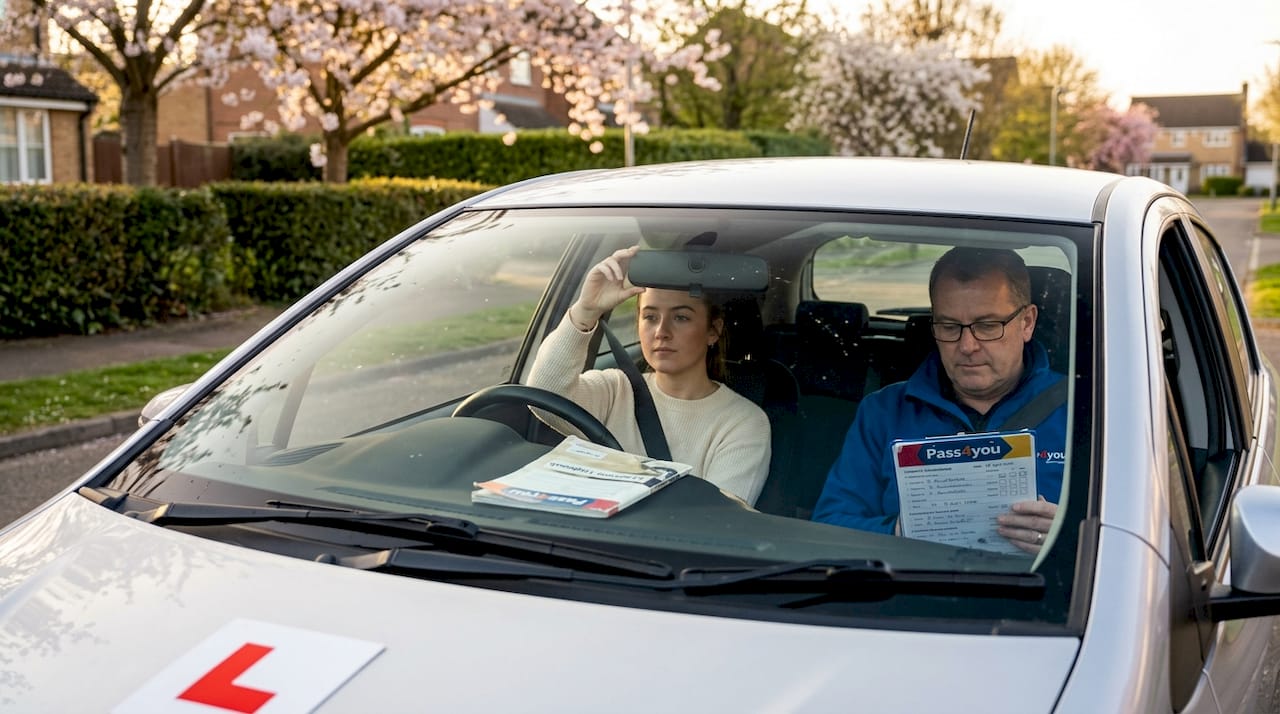
If you’ve been searching online for what a local road driving lesson actually involves, you’re not alone. Many learner drivers assume these sessions are simply about memorising test routes and ticking boxes. They’re not. A local road driving lesson, known formally as road tuition or on-road instruction, is supervised driving on real public roads in your own area, designed to build genuine, lasting driving competence. For Milton Keynes learners especially, where grid roads, roundabouts, and busy retail zones create a distinctive driving environment, understanding what to expect from these lessons can make the difference between passing first time and needing to go back.
Table of Contents
- Key takeaways
- What is a local road driving lesson?
- The real advantages of local driving lessons
- How to find quality local driving lessons in Milton Keynes
- Local lessons versus other learning approaches
- Making the most of every lesson
- My honest take on local road lessons
- Start your local lessons with Pass4you
- FAQ
Key takeaways
| Point | Details |
|---|---|
| Local lessons mean real roads | You practise on actual public roads near you, not closed circuits or test-route memorisation. |
| Confidence beats test knowledge | Real driving situations build lasting skills that memorising rules alone cannot give you. |
| Milton Keynes demands specific skills | Grid roads, busy roundabouts, and mixed traffic require locally tailored road driving lessons. |
| Instructor certification matters | Certified instructors prevent bad habits forming early, improving your long-term safety. |
| Flexible lessons suit most learners | Personalised scheduling and lesson pacing allow you to progress at a rate that suits your life. |
What is a local road driving lesson?
A local road driving lesson is supervised, on-road instruction delivered by a qualified driving instructor on public roads in and around your local area. The industry term for this is on-road tuition or in-car instruction, and it forms the backbone of most standard driving courses in the UK. Every session takes place in real traffic, on real streets, with real consequences requiring real decisions.
What happens during a typical session varies depending on where you are in your learning. Early lessons tend to focus on basics such as:
- Moving away from the kerb safely and checking mirrors correctly
- Steering control, gear changes, and managing junctions
- Responding to traffic signals and road signs
- Positioning on the road during turns and lane changes
- Identifying and reacting to hazards ahead
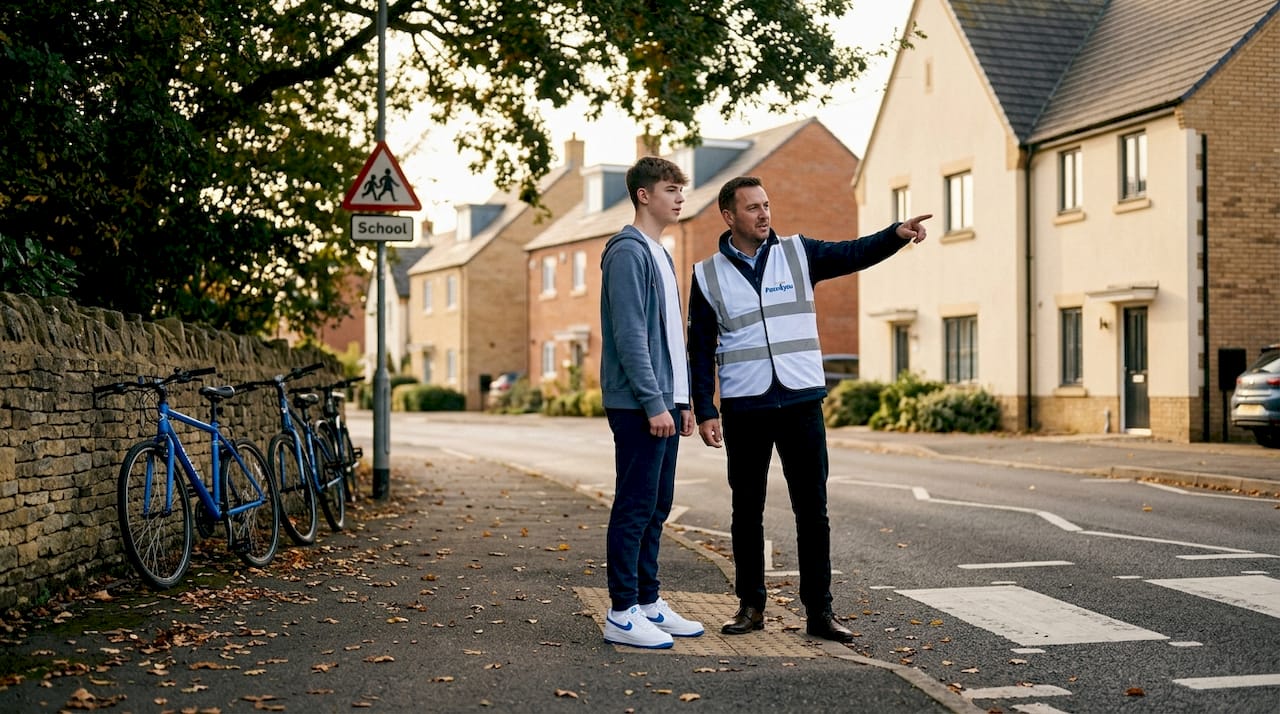
As you progress, the content shifts toward more complex scenarios. Local hazards like school zones and busy intersections feature heavily in mid-stage lessons, alongside managing different weather conditions and unfamiliar road types.
It’s worth being clear about what local road lessons are not. They are distinct from off-road or private land practice (which some learners use when starting out), motorway driving lessons (a separate qualification requirement for approved instructors), and intensive crash courses that compress learning into a short burst. Local road instruction is the structured, progressive middle ground where most lasting skill development happens.
Pro Tip: Ask your instructor to vary the routes from lesson to lesson rather than returning to the same streets. Variety forces you to read the road independently rather than rely on familiarity with a fixed path.
The real advantages of local driving lessons
The most underrated benefit of local instruction is anticipation. When you practise regularly on roads you actually use, you start to recognise patterns. You learn where the tricky junction is near the school at 3pm. You understand why the filter lane on a particular roundabout catches everyone out. That kind of local knowledge cannot be taught from a textbook.
Structured local driving lessons have been linked to pass rates as high as 98% when the focus is on genuine long-term confidence rather than test memorisation. Pass4you itself holds an 83.33% first-time pass rate in Milton Keynes, well above the local average, and that figure is directly tied to how lessons are structured around real road experience rather than route drilling.
For Milton Keynes learners specifically, the advantages of local instruction are pronounced. The town’s grid road system is unlike most of the UK. You have dual carriageways running alongside residential streets, enormous multi-lane roundabouts, and sudden transitions from 70mph zones to 20mph school areas. Local lessons prepare you for exactly this mix.
Here is why that local familiarity matters so much:
- You build hazard perception skills specific to your test area
- You develop confidence in conditions you will actually face after passing
- Your instructor tailors each session to your weaker areas on known roads
- Gradual, personalised pacing reduces test-day anxiety considerably
Certified local instructors combine safe habits, structured curricula, and real traffic experience in a way that reduces stress and accelerates learning. That combination is difficult to replicate through private practice alone.
How to find quality local driving lessons in Milton Keynes
Choosing where to learn is one of the most consequential decisions you will make as a learner. The driving school you pick shapes not just whether you pass, but how confident and safe you are afterwards. Here is a practical process for getting it right.
-
Check instructor qualifications. In the UK, all instructors must be DVSA-approved. Look for an ADI (Approved Driving Instructor) badge, which means the instructor has passed three rigorous DVSA tests covering theory, driving ability, and instructional ability.
-
Prioritise local expertise. An instructor who knows Milton Keynes roads intimately will cover the junctions, roundabouts, and test routes at Bletchley that you will actually face. Local knowledge is a genuine advantage, not a marketing phrase.
-
Ask about personalised lesson plans. Flexibility in lesson scheduling and personalised plans are among the most important features to look for. A good school adapts to your progress, not the other way around.
-
Request a trial lesson. Most reputable schools offer an introductory lesson. Use it to assess whether the instructor’s communication style suits you before committing to a full course.
-
Read verified reviews. Look for patterns in what learners say rather than focusing on the star rating alone. Consistent comments about patience, clarity, and pass rates tell you far more than a single five-star score.
-
Check vehicle standards. Modern tuition vehicles with dual controls are a baseline safety requirement. Pass4you uses Volkswagen vehicles equipped with dual controls, which matters more than you might think when a nervous learner makes an unexpected error.
-
Explore supplementary resources. Online theory tools combined with in-car training provide a more rounded learning experience. Ask whether your school supports theory preparation alongside practical sessions.
Pro Tip: When comparing prices between local driving schools, calculate the cost per lesson alongside the average number of lessons learners take to pass. A cheaper hourly rate often means more total lessons, making it more expensive overall.
Local lessons versus other learning approaches
Understanding where regular on-road instruction fits within the broader range of options helps you make a genuinely informed choice rather than defaulting to whatever is most familiar.
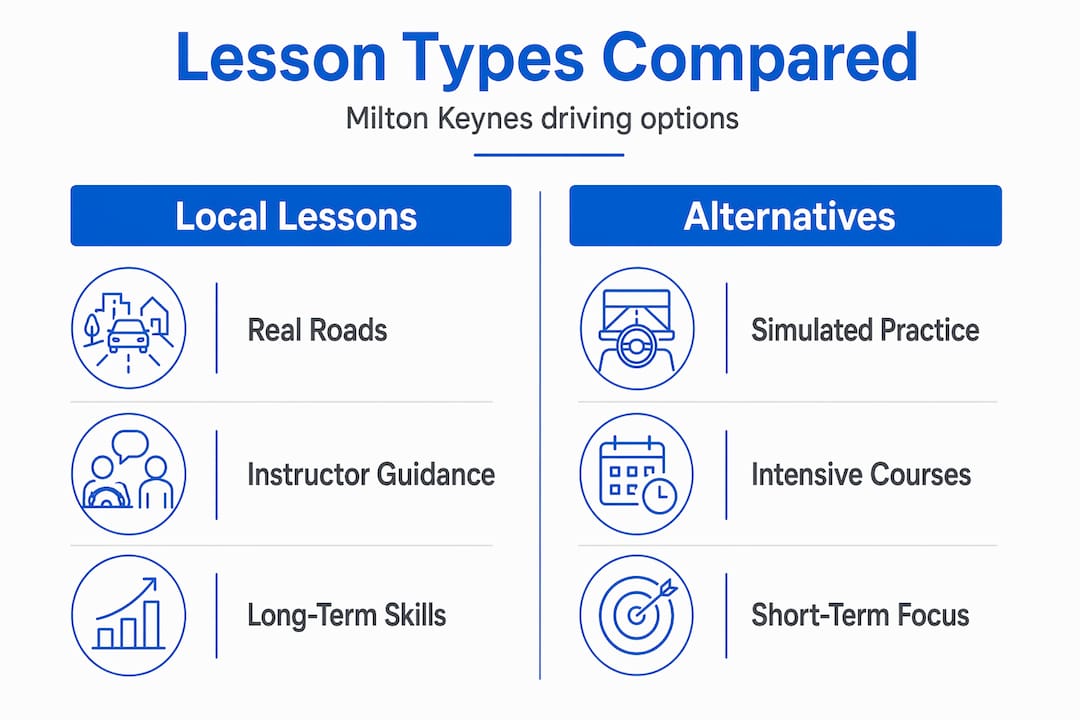
| Learning type | Best for | Key benefit | Potential drawback |
|---|---|---|---|
| Local road lessons | Most learners at any stage | Builds real-world skills at a sustainable pace | Takes longer than intensive alternatives |
| Intensive courses | Learners with time pressure or prior experience | Faster path to test readiness | Less time for skills to consolidate |
| Motorway lessons | Post-test drivers building confidence | Legally required ADI instruction for motorway driving | Not relevant before passing your test |
| Private practice | Reinforcing skills between lessons | Free additional mileage with a qualified supervisor | No formal feedback or correction |
| Off-road/private land training | Complete beginners with zero experience | Very low-pressure introduction to controls | No preparation for real traffic |
The honest answer is that local road lessons and one of the alternatives are not mutually exclusive. Many Milton Keynes learners do a standard weekly programme of local instruction and then opt for a short intensive driving course in the final weeks before their test. That combination gives you the depth of regular instruction and the focused preparation of an intensive format.
Learning with certified instructors specifically helps learners manage stress, understand traffic flow, and sharpen reaction times in ways that private practice simply does not replicate. Intensive courses can achieve good results, but research consistently suggests that learners who spread instruction over several months retain skills better and develop more independent road awareness.
Making the most of every lesson
Turning up to each lesson ready to engage makes a significant difference to how quickly you progress. The learners who advance fastest are not necessarily the most naturally talented. They are the ones who treat each session as a deliberate practice session rather than a passive experience.
A few habits that separate quick learners from slow ones:
- Review theory before each session. Knowing the rule behind a manoeuvre helps you understand why your instructor is asking you to do something a particular way, not just what to do.
- Set a specific goal for each lesson. Tell your instructor at the start what you want to work on. This shifts you from passenger to active participant.
- Practise mentally between lessons. Visualising junctions, roundabouts, and manoeuvres between sessions genuinely reinforces muscle memory.
- Talk through your mistakes. High-quality lessons prioritise independent decision-making over correction. Ask your instructor to explain the thinking behind errors, not just flag them.
- Be consistent with lesson frequency. Weekly lessons retain progress far better than sessions spread three or four weeks apart. Gaps cause regression.
Pro Tip: Keep a short written note after each lesson of two or three things you want to improve before the next session. Reviewing it just before you get in the car focuses your attention immediately.
My honest take on local road lessons
I’ve seen learners who passed their test on their first attempt but genuinely could not handle a supermarket car park six months later. And I’ve seen learners who took forty hours of lessons and became some of the most thoughtful, observant drivers I’ve ever sat beside. The difference is almost never raw ability. It is whether the instruction was rooted in real road experience or centred around getting through a test.
In my experience teaching learners across Milton Keynes, the biggest mistake people make is treating lessons as a countdown to a test rather than a process of becoming a competent driver. That mindset leads to shortcuts. You practise the same four junctions because they appear on the Bletchley test route instead of exploring the grid roads you will actually use every day.
What I’ve found works is this: the more varied the roads you cover during your lessons, the calmer you are on test day. Familiarity breeds confidence, but varied familiarity breeds the kind of confidence that holds up under pressure.
Avoiding early bad habits like missed mirror checks is also far easier than correcting them later. I always tell learners in Milton Keynes: the habits you form in your first ten hours will still be with you in ten years. Make them good ones from the start.
— Simon
Start your local lessons with Pass4you
If you are ready to move from uncertainty to genuine confidence on Milton Keynes roads, Pass4you offers exactly the kind of structured, locally grounded instruction this article has described.
Pass4you’s learner driving courses are delivered by calm, patient ADI-qualified instructors with detailed knowledge of local roads, junctions, and the Bletchley test centre routes. Lessons are available in both manual and automatic vehicles, with fully flexible scheduling to fit around work, college, or family commitments. Whether you want to learn steadily over several months or accelerate your progress, Pass4you builds a plan around you. Contact the team by phone or email to discuss your starting point and get personalised advice on the right course length and format.
FAQ
What does a local road driving lesson involve?
A local road driving lesson involves supervised on-road instruction with a qualified ADI on public roads near your home. Sessions cover real traffic, junctions, hazards, and road types relevant to where you actually drive.
How many lessons does it take to pass in Milton Keynes?
The DVSA suggests most learners need around 45 hours of professional instruction before they are test-ready, though this varies. Learners who practise consistently between lessons and maintain weekly sessions typically progress faster.
Are local driving lessons better than intensive courses?
Local road lessons build skills more gradually and allow greater consolidation, making them better for most beginners. Intensive courses suit learners with some prior experience or time pressure, and many learners combine both approaches.
How do I find a good driving instructor in Milton Keynes?
Look for an ADI-registered instructor with demonstrable local knowledge, verified reviews, and flexible lesson scheduling. A trial lesson is the most reliable way to assess whether the instructor’s style suits you before committing to a full course.
Can I practise driving on local roads without an instructor?
Yes, with a fully licensed driver aged 21 or over who has held their licence for at least three years sitting in the front passenger seat. However, private practice works best as a supplement to formal instruction, not a replacement, since it provides mileage without structured feedback.
Leave a Reply