Did you know that 52% of learners currently fail their driving test, which often doubles the total cost of learning to drive uk 2026 in a single afternoon? When you consider that a second attempt usually requires an extra ten hours of remedial lessons and a new £62 test fee, the financial stakes feel incredibly high. It’s completely natural to feel anxious about rising hourly rates and the confusing world of learner insurance. You want to start your journey behind the wheel, but you don’t want to see your savings disappear into a cycle of “cheap” lessons that don’t actually prepare you for the road.
We believe that learning to drive should be a calm, confidence-building experience, not a source of financial stress. In this guide, we’ll provide a complete breakdown of every expense you’ll face this year. We’ll help you set a realistic savings goal and explain why investing in quality instruction is the most effective way to secure a first-time pass. From the initial £34 online provisional licence fee to the hidden costs of private practice, you’ll discover exactly how to budget for success and become a safe driver for life.
Key Takeaways
- Understand why the total cost of learning to drive uk 2026 now ranges between £2,500 and £3,100, helping you plan your finances with confidence.
- Get a clear breakdown of mandatory DVSA fees and current professional tuition rates to ensure you aren’t caught off guard by rising prices.
- Identify the “hidden” expenses of learning to drive, from learner insurance premiums to the fuel costs required for effective private practice.
- Discover the “Maths of Mastery” and how passing your test the first time can save you up to £600 in avoidable re-test fees and extra lessons.
- Learn why investing in a patient, professional mentor is the most cost-effective way to become a safe driver for life and secure your freedom.
Breaking Down the Total Cost of Learning to Drive in 2026
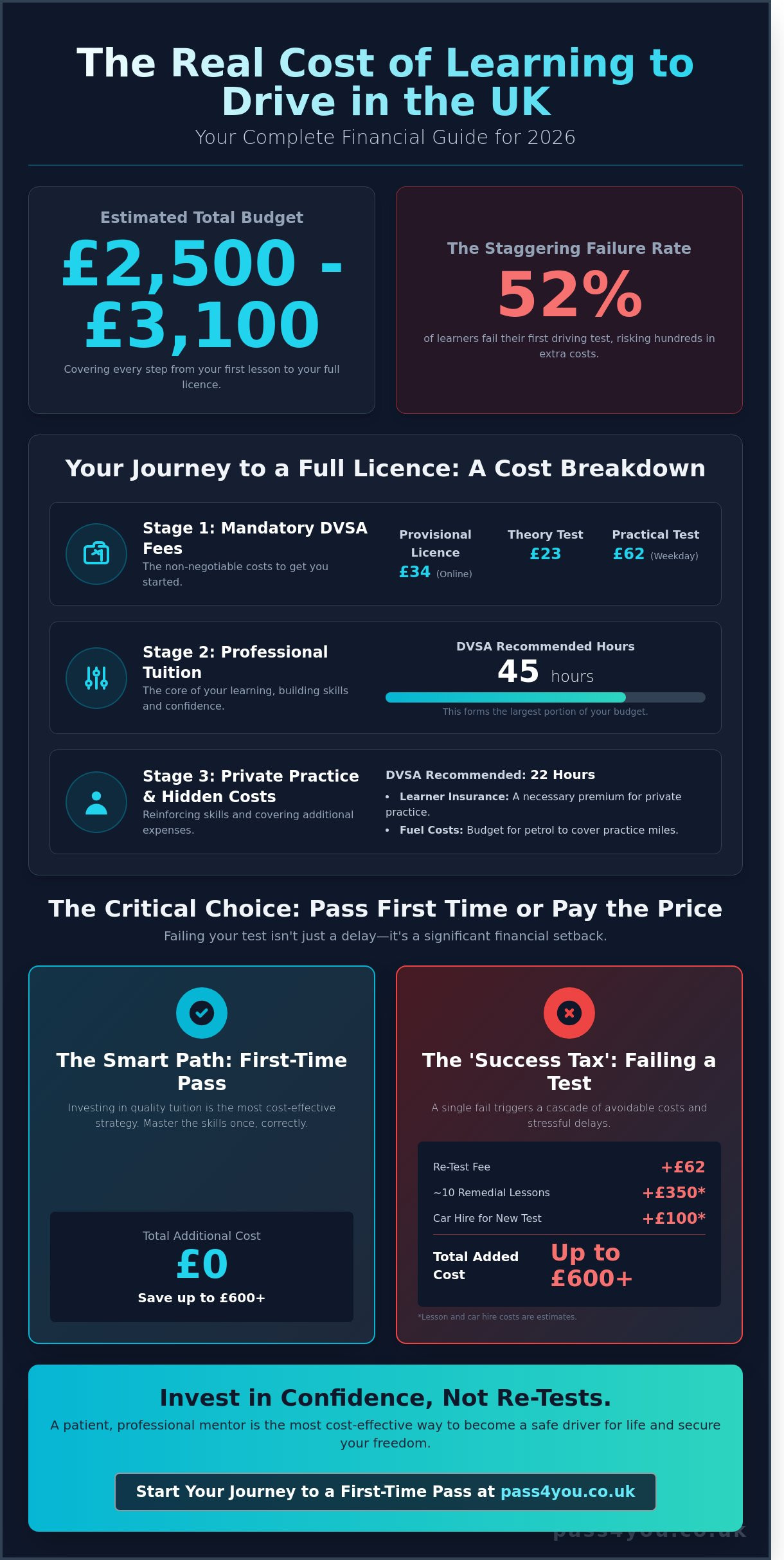
Learning to drive is one of the most rewarding investments you’ll ever make. It opens up doors to new career paths, social freedom, and personal independence. However, the cost of learning to drive uk 2026 has evolved, and being prepared helps you stay calm throughout the process. For a typical learner in 2026, the estimated total budget ranges from £2,500 to £3,100. This figure isn’t just a random guess; it covers every essential step from your initial provisional license application to the final practical pass.
The journey starts with understanding the UK driving test process, which requires passing both a theory and a practical exam. Between these two milestones, you’ll spend the bulk of your budget on professional tuition. We understand that seeing a four-figure number can feel overwhelming, but breaking it down into manageable steps makes the goal achievable. Our focus is always on helping you become a safe driver for life, rather than just getting you through a test as quickly as possible.
The 2026 Price Reality: Why Budgets Have Increased
Several economic factors have pushed driving costs higher over the last few years. Inflation has impacted vehicle maintenance and insurance premiums for driving schools significantly. With petrol prices averaging around 136p per litre, the daily running costs for instructors have climbed. We choose to use modern, high-spec Volkswagens for our lessons because they provide a stable and comfortable environment for nervous learners. While these vehicles are more expensive to maintain and insure than older models, they offer the safety features and reliability you need to feel confident behind the wheel. The Total Cost of Success is the only metric that matters.
National Averages vs. Reality
The DVSA suggests an average of 45 hours of professional tuition, combined with 22 hours of private practice, to reach test standard. Many learners are tempted by “quick fix” intensive courses that promise a license in a week, but these often lead to gaps in knowledge and higher anxiety. Rushing the process frequently results in a failed test, which triggers what we call the “Success Tax.” Failing your test just once can easily add £300 or more to your total bill when you account for the £62 re-test fee, car hire for the exam, and the extra lessons needed to keep your skills sharp while you wait for a new slot.
Choosing a patient, experienced mentor helps you avoid these unnecessary costs. If you’re starting your journey in Buckinghamshire, our driving lessons Milton Keynes are designed to get you to that first-time pass safely and efficiently. We focus on building your confidence steadily, ensuring you’re fully prepared before you even book your exam. This measured approach saves you money in the long run by reducing the risk of expensive re-tests and additional training sessions.
Mandatory Fees: DVSA Test and Licence Costs
Before you even sit in the driver’s seat, you’ll encounter fixed expenses set by the DVSA. Understanding the cost of learning to drive uk 2026 starts with these non-negotiable fees. These prices are regulated across the country, so you won’t find a “cheaper” version of a driving test. It’s best to budget for these early so you can focus your energy on developing your skills with a patient instructor. Being prepared financially helps reduce the stress of the process.
The Provisional Licence Investment
Your journey begins with your provisional licence. You can apply for this up to three months before your 17th birthday, though you can’t start lessons until you’re 17. Applying online costs £34, which is significantly better value than the £43 fee for postal applications. You must have the physical card in your possession before any professional lesson begins. For a step-by-step walkthrough of the application, check out our provisional licence uk guide. Having this ready ensures your training starts without delays.
Once you have your licence, the next milestones are your tests. According to the official government test fees, the theory test is fixed at £23 per attempt. While this seems modest, failing repeatedly adds up quickly. Passing the first time is a financial must. The practical test is slightly more complex. You’ll pay £62 for a weekday slot, while evenings, weekends, and bank holidays cost £75. These fees go directly to the DVSA to cover the examiner’s time and administration.
Booking and Re-booking Fees
Demand for tests remains high in 2026. You should always use the official DVSA site to avoid “booking bot” scams that inflate prices by charging “finder fees”. If you need to change your date, you can do so for free if you give at least three clear working days’ notice. However, if you fail, there’s a mandatory 28-day wait before you can take another practical test. This delay often results in needing extra refresher lessons to keep your skills sharp. You can find more details in our guide on how to book your driving test.
Many learners forget the “hidden” test day cost. You aren’t just paying the DVSA fee; you also need to hire your instructor’s car for the duration of the test. Most instructors charge for a two-hour block. This covers a warm-up lesson beforehand and the time spent at the test centre. It’s a standard industry practice that ensures you’re driving a car you feel confident and safe in. We focus on building that confidence so you’re ready to succeed. We take pride in our 83.33% first-time pass rate, which helps our students avoid the cost of re-tests. If you’re ready to start, booking your first lesson is the first step toward freedom.
Professional Tuition: Calculating Your Lesson Budget
The cost of learning to drive uk 2026 has evolved to reflect the professional standards required on modern roads. Currently, average lesson prices across the country range between £40 and £50 per hour. If you’re learning in Milton Keynes, you’ll likely see rates at the higher end of that bracket. Urban areas demand more from instructors, including navigating complex roundabouts and dealing with heavier traffic, which requires a higher level of expertise and vehicle maintenance.
Most learners find that block booking is the smartest way to manage their budget. Paying for 10 or 20 hours upfront typically secures a discount of 5% to 10%. This doesn’t just save you money; it shows a commitment to your progress that helps you stay focused. It’s much easier to plan your finances when you’ve already secured a chunk of your training at a fixed, lower rate.
It’s easy to be swayed by a trainee instructor offering a rate of £35 per hour. We call this the “Cheap Instructor Trap.” While the initial saving looks good on paper, a novice instructor often lacks the refined coaching methods that a veteran professional possesses. You might find yourself stuck on basic maneuvers for weeks. In the long run, paying for 60 hours with a trainee is significantly more expensive than completing your training in 30 hours with a specialist.
Manual vs. Automatic Lesson Costs
Deciding which gearbox to use will impact your budget. Automatic lessons generally carry a £2 to £5 premium per hour compared to manual ones. This higher cost covers the increased purchase price of automatic cars and their maintenance. However, there’s a trade-off. Many students find they need fewer hours to reach test standard in an automatic because they don’t have to struggle with the clutch or gear timing. To see how these prices compare in your specific postcode, you can look for driving instructors near me to get an accurate local quote.
Why Instruction Quality Dictates Your Final Bill
The fastest way to reduce your total spend is to choose an instructor who knows how to teach efficiently. At Pass4you, we’ve spent years honing a tried and tested technique that builds your confidence and skills at an accelerated pace. Simon creates a calm, patient environment that is essential for progress. Stress is the biggest barrier to learning. When you’re nervous, you make mistakes that require more lessons to fix. A supportive mentor prevents these “stress-learning” plateaus from happening. Ultimately, 30 hours of high-quality instruction with a pro is much cheaper than 60 hours with a novice who can’t explain complex junctions clearly. Investing in expertise ensures you become a safe driver for life without wasting money on unnecessary retakes.
The “Hidden” Expenses: Insurance, Fuel, and Practice
When you’re calculating the cost of learning to drive uk 2026, it’s easy to focus only on the price of your weekly lessons. However, several additional expenses often catch learners by surprise. We want you to feel prepared and confident throughout your journey, so it’s vital to budget for the costs that occur outside of the instructor’s car. Being aware of these figures early on helps reduce anxiety and keeps you focused on your progress.
Learner Driver Insurance Explained
Insurance is often the most significant “hidden” cost. For learners aged 17 to 24 in 2026, average premiums have reached approximately £1,121. You generally have two choices: an annual policy or “pay-as-you-go” temporary cover. Temporary cover is excellent for short bursts of practice, while annual policies suit those practicing daily in a family car.
- Avoid Fronting: Never let a parent claim to be the main driver if you’re the one using the car most. This is insurance fraud and can lead to a cancelled policy or a criminal record.
- Telematics: Choosing a “black box” policy can help keep premiums lower by proving you’re a safe, responsible driver.
- Comparison: Always shop around. Prices vary wildly between providers based on your postcode and the car’s insurance group.
Private Practice: Is It Actually Free?
Many learners assume practicing with a parent is free, but the costs add up quickly. The DVSA recommends around 22 hours of private practice to supplement your professional lessons. With fuel prices averaging 136p per litre in 2026, you could spend over £100 just on petrol for these extra sessions. It’s also important to consider the risk of picking up “bad habits.”
If a supervisor isn’t up to date with modern standards, they might accidentally teach you techniques that lead to a fail on your practical driving test. A failed test results in more than just disappointment; it means paying for a re-test and further lessons to fix those habits. We find that a calm, professional approach is the best way to ensure your private practice remains productive and safe.
Safety Essentials and Opportunity Cost
Before you hit the road for practice, you’ll need a few physical items. A set of magnetic L-plates, an extra rear-view mirror for your supervisor, and a copy of the Highway Code will cost roughly £30. These are non-negotiable for safety and legal compliance.
Don’t overlook the “opportunity cost” of your time. If you’re taking time off work or school for lessons and tests, that’s time you aren’t earning or studying. In 2026, where every hour counts, planning your lessons around your existing commitments is the smartest way to manage the total cost of learning to drive uk 2026 without feeling the pinch.
Ready to start your journey with a patient, experienced instructor? Book your first lesson with Pass4you today and let’s get you on the road to success.
The Pass4you Strategy: Saving Money by Passing First Time
While the national average pass rate in the UK typically sits between 48% and 50%, our students at Pass4you achieve a much higher success rate. We are proud of our 83.33% first-time pass rate. This figure is more than just a statistic; it represents a significant reduction in the total cost of learning to drive uk 2026 for our learners. When you choose an instructor who prioritizes patience and a calm environment, you aren’t just buying a lesson. You’re investing in a result that saves you money in the long run.
We call this the “Maths of Mastery.” Failing a driving test is an expensive setback. Between the £62 DVSA booking fee, the cost of car hire for the test day, and the necessary top-up lessons to stay “test-ready” while waiting for a new slot, a single fail can easily cost hundreds of pounds. By focusing on quality over quantity and passing first time, our students often save up to £600 compared to those who cycle through multiple attempts. Our philosophy is built on “Safe Driving for Life.” We don’t believe in rushing through maneuvers or “teaching to the test.” We want you to feel confident on every road, from quiet estates to the busiest Milton Keynes dual carriageways.
Investing in Excellence
Many students come to us after feeling stressed or rushed by previous instructors who shouted or lost patience. Simon’s approach is different. By creating a supportive atmosphere, he helps you retain information faster, which actually reduces the total number of lessons you need. Look at the typical breakdown of costs:
- The Pass4you Way: 1 Test + 35 Lessons = Success.
- The Rushed Way: 3 Tests + 50 Lessons + Stress = High Costs.
One student recently shared that they nearly gave up after a bad experience elsewhere. After switching to Simon’s calm teaching style, they passed their test first time and saved a fortune on potential re-test fees. Choosing the right instructor is the most effective way to manage the cost of learning to drive uk 2026.
Next Steps for Milton Keynes Learners
Your journey to independence shouldn’t be a source of anxiety. Learning to drive is a permanent investment in your freedom, and we’re here to ensure that investment is handled professionally. We encourage you to browse our local Milton Keynes reviews and view our gallery of successful students. These stories are proof that a patient, expert environment leads to better results and lower overall costs. Are you ready to get started? The best way to plan your budget is to see where you stand. Book an initial assessment lesson today, and let’s get you on the road safely and confidently.
Secure Your Freedom Behind the Wheel
Understanding the cost of learning to drive uk 2026 is the first step toward gaining your independence. While DVSA fees and insurance costs are fixed parts of the budget, your choice of instructor is the biggest variable in your final bill. Choosing professional tuition saves you money in the long run by reducing the total number of lessons you’ll need. At Pass4you, we focus on efficiency and confidence. Our 83.33% first-time pass rate proves that a calm, patient approach works better than rushing through the basics. You’ll learn in modern, reliable Volkswagens with local Milton Keynes expertise that has earned us consistent 5-star reviews. Simon’s supportive teaching style is designed to eliminate nerves and ensure you aren’t just passing a test, but becoming a safe driver for life. Don’t waste time and money on a trial-and-error approach with family. Start your journey with a Milton Keynes instructor you can trust. Book your first lesson with Pass4you today! It’s time to stop worrying about the budget and start looking forward to the open road.
Frequently Asked Questions
How much should I save for driving lessons in 2026?
You should aim to save between £1,800 and £2,500 to cover the total cost of learning to drive uk 2026. This budget accounts for approximately 45 hours of professional tuition at current market rates plus the costs for your theory and practical tests. We focus on providing value for money by helping you pass efficiently. Our 83.33% first time pass rate means you’re less likely to spend extra on retests and additional lessons.
Is it cheaper to learn in a manual or automatic car?
Manual lessons are usually cheaper per hour, often costing £5 to £10 less than automatic sessions. However, many students find they need fewer lessons in an automatic car because they don’t have to master clutch control or gear changes. If you’re a nervous learner, an automatic can build your confidence much faster. We’ll help you decide which option is most cost-effective for your specific learning style and needs.
How many driving lessons do I actually need to pass?
The Driver and Vehicle Standards Agency (DVSA) reports that the average learner requires 45 hours of professional lessons and 22 hours of private practice. Every student is different, so we provide a patient and steady environment that moves at your pace. Simon’s experienced mentoring ensures you become a safe driver for life. We don’t believe in rushing, but our proven techniques aim to get you test-ready as quickly as possible.
Can I save money by booking my driving test in the evening?
No, booking an evening, weekend, or bank holiday test is actually more expensive. The DVSA charges £75 for these premium slots, while a standard weekday test costs £62. While these times might be more convenient for your schedule, they don’t offer a financial saving. We recommend choosing a time when you feel most calm and alert. Most of our students find that weekday mornings provide a steady environment for their first time pass attempt.
What happens to my money if I fail my driving test?
If you fail your test, the fee paid to the DVSA is non-refundable and you’ll have to pay the full amount again to book a new slot. You’ll also need to pay for extra lessons to fix any mistakes and the hire of your instructor’s car for the next test. We work hard to ensure you’re fully prepared and confident before you head to the test centre. Our high success rate helps our students avoid the stress and expense of multiple attempts.
Do I have to pay for my instructors car during the test?
Yes, you’ll typically pay for a two-hour lesson block to cover the warm-up session and the duration of the practical exam. This is a standard part of the cost of learning to drive uk 2026 because it covers the instructor’s time and the insurance for the vehicle. We’re always honest and transparent about these costs from the very beginning. This ensures you can budget accurately for your big day without any hidden surprises.
Are intensive driving courses cheaper than weekly lessons?
Intensive courses can be cheaper in the long run if they help you retain information better and reduce the total number of hours needed. While the upfront cost is higher, often exceeding £1,200 for a full week, you might pass your test much sooner. However, these fast-paced courses don’t suit every personality. We provide a supportive atmosphere where we can assess whether an intensive route or a more patient, weekly approach is best for your success.
How can I reduce the cost of learner driver insurance?
You can lower your insurance premiums by adding an experienced, claim-free driver to your policy as a named driver. Choosing a car in insurance group 1, like a 1.0-litre hatchback, also significantly reduces the price. Many providers now offer “pay-as-you-go” policies that allow you to pay only for the hours you’re actually practicing. This is a brilliant way to get that essential 22 hours of private practice without a massive financial burden.
Leave a Reply