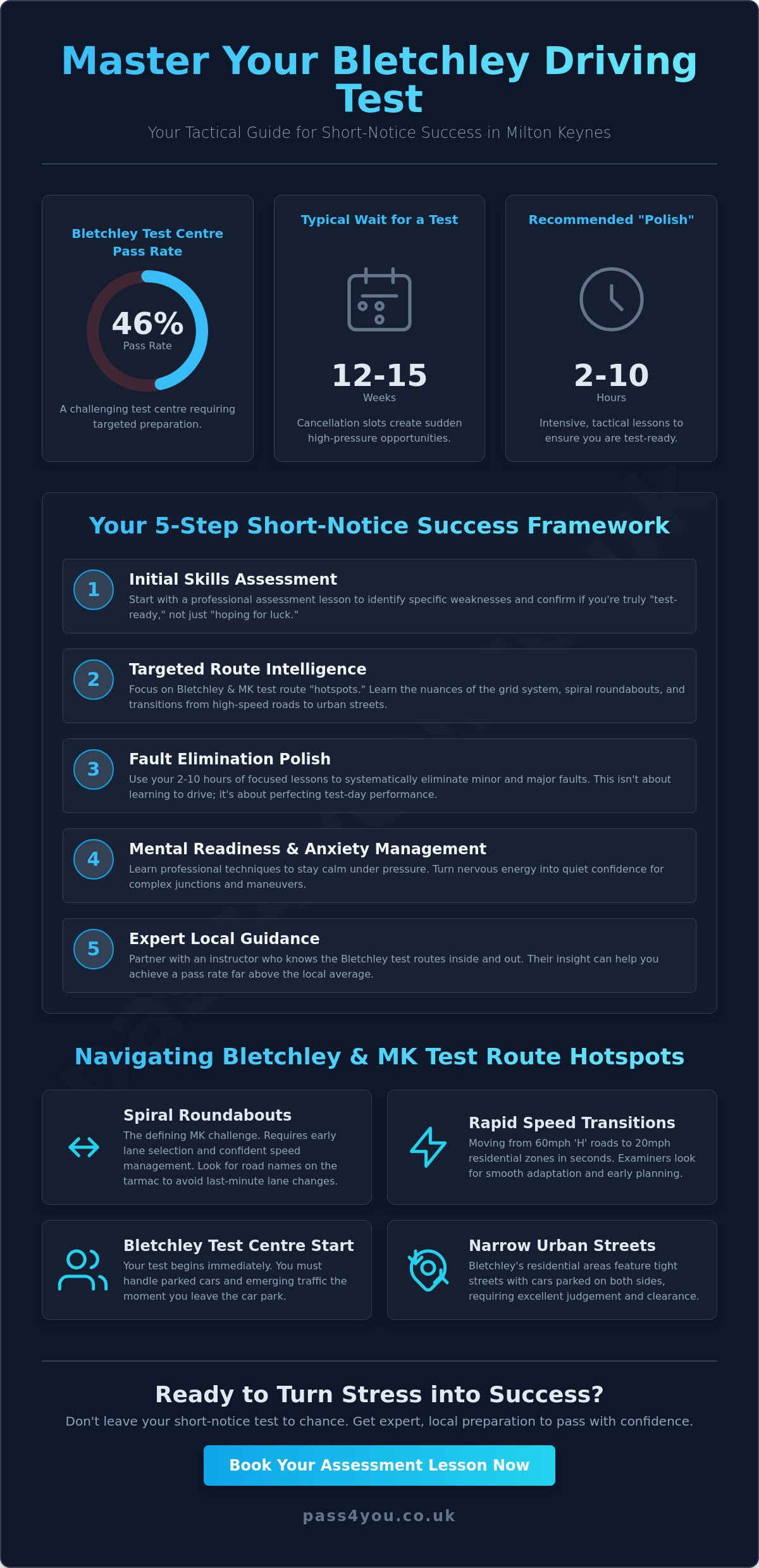
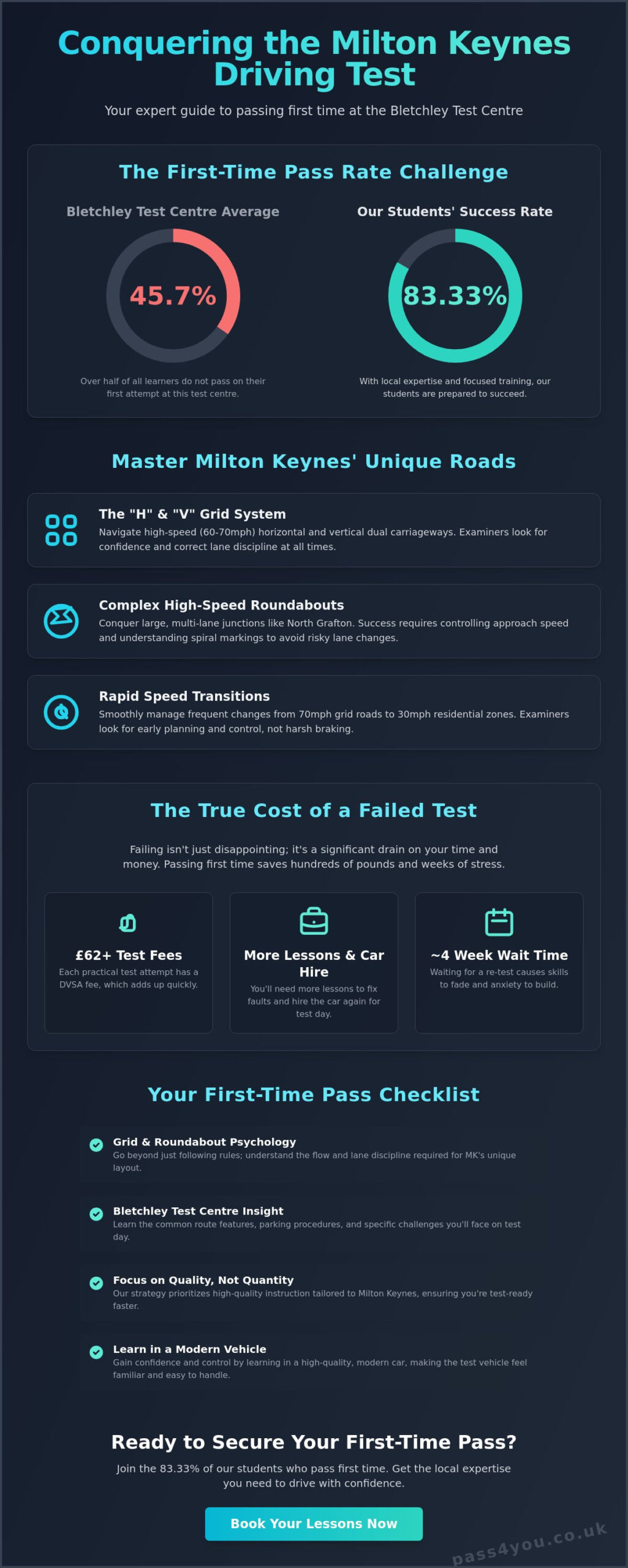
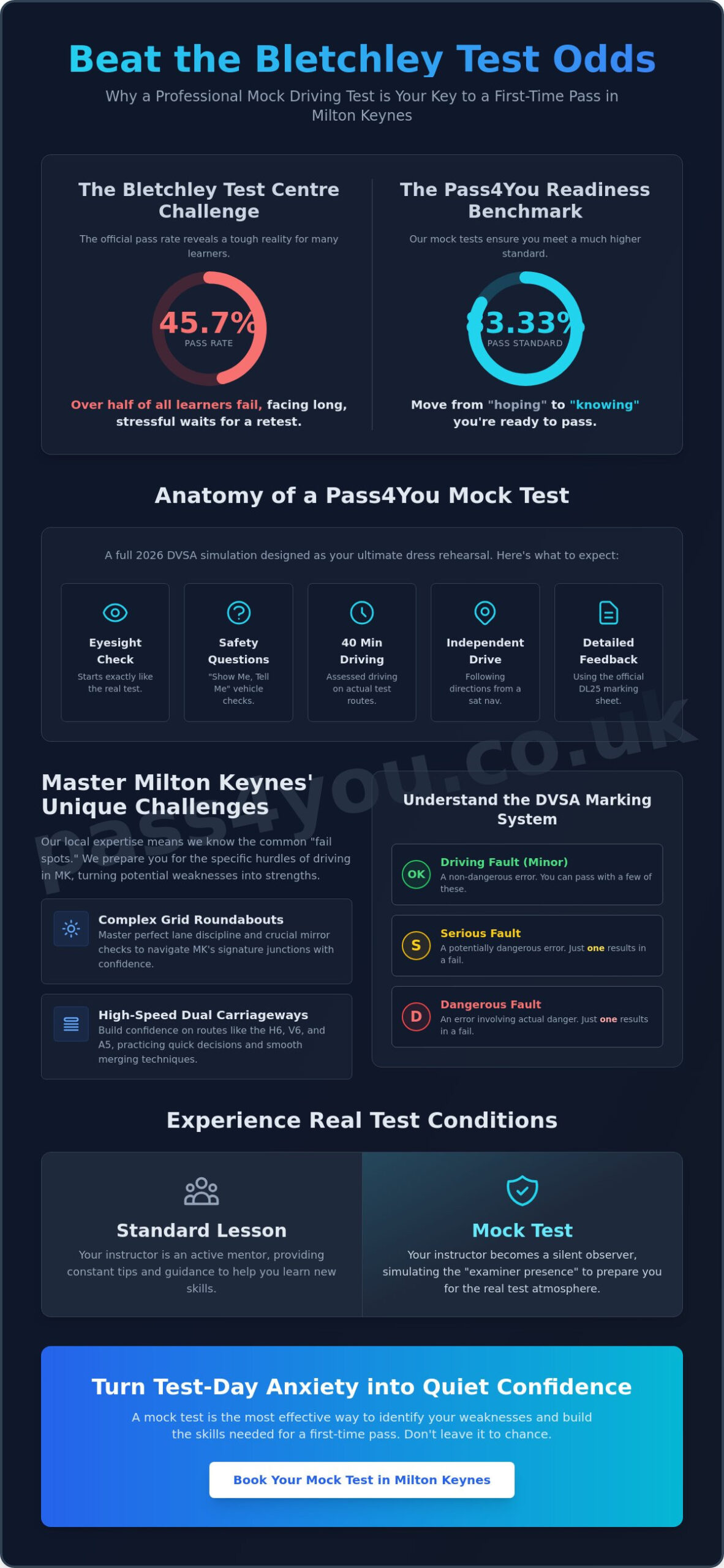
Did you know that the pass rate at the Bletchley Driving Test Centre is currently just 45.7%? This means more than half of learners in our area face the frustration of failing and the long, stressful wait for a retest. Booking a professional mock driving test milton keynes is the most effective way to ensure you aren’t part of that statistic. It’s about moving from “hoping” you’ll pass to “knowing” you’re ready.
It is completely natural to feel anxious about the independent driving section or feel confused about how examiners distinguish between a minor and a major fault. You’ve worked hard on your skills, but the pressure of a formal evaluation can make even the most capable driver feel uneasy. We understand these nerves because we see them every day, and we know how to help you move past them with patience and expert guidance.
This article explains how a professional mock test transforms your preparation by providing a realistic assessment on actual Bletchley test routes. You will discover how constructive feedback helps you fix recurring errors and gives you the familiarity needed for a first-time pass. We will show you exactly how to turn that test-day anxiety into the quiet confidence required to succeed.
Key Takeaways
- Understand how a full 2026 DVSA simulation replicates every part of the exam, from the initial eyesight check to 40 minutes of assessed driving.
- Learn to navigate notorious Milton Keynes challenges with ease, including complex grid roundabouts and high-speed sections like the H6 and V6.
- Discover how a professional mock driving test milton keynes acts as a diagnostic tool, identifying recurring errors before they lead to an expensive real-world failure.
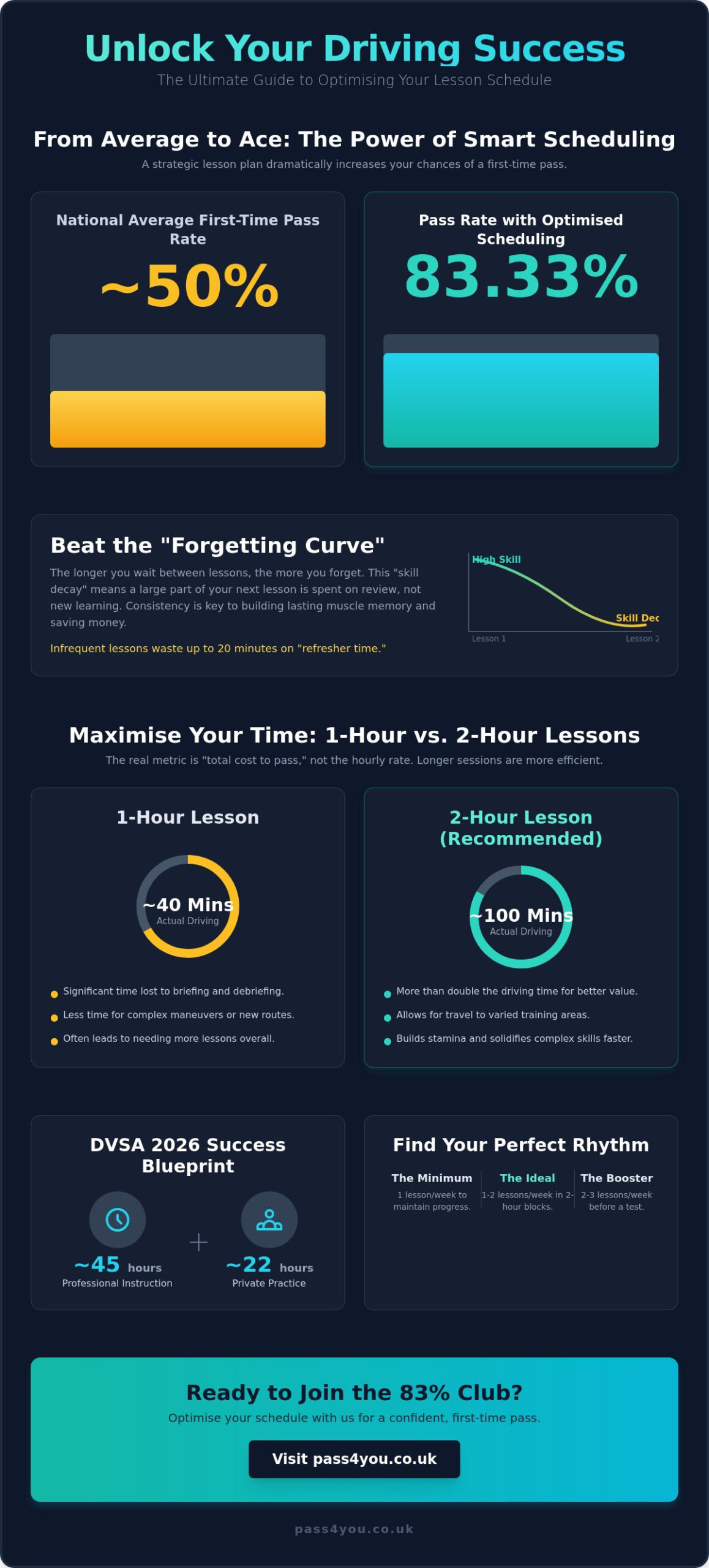
- See how reaching our specific 83.33% pass rate benchmark ensures you are truly ready for the Bletchley test centre standard.
- Gain the peace of mind that comes from practicing in modern tuition vehicles under the patient guidance of an experienced, supportive mentor.
What is a Mock Driving Test and Why is it Essential?
Think of a mock driving test as a dress rehearsal for your big performance. It is a full simulation of the official DVSA practical exam, conducted under strict conditions to mirror the real experience. When you book a mock driving test milton keynes, you aren’t just getting another hour of practice. You’re getting a clear, honest look at your current driving standard through the eyes of an examiner. This process replaces uncertainty with a data-driven path to success.
The simulation begins exactly like the real thing, starting with the standard eyesight check and vehicle safety questions. You will then complete 40 minutes of assessed driving, including the independent driving section. By following the official UK driving test process, we identify “blind spots” in your technique that might have become habits during regular lessons. It’s about finding those small errors before they become big problems on your test day.
Understanding how the DVSA marking system works is a vital part of your preparation. We use the official DL25 marking sheet to record your progress, helping you distinguish between a driving fault and a serious or dangerous fault. While you can pass with a few minor driving faults, a single serious error results in an immediate fail. Seeing these marks on paper helps you understand exactly where your safety margins need to improve, giving you a realistic assessment of your readiness.
The Difference Between a Lesson and a Mock Test
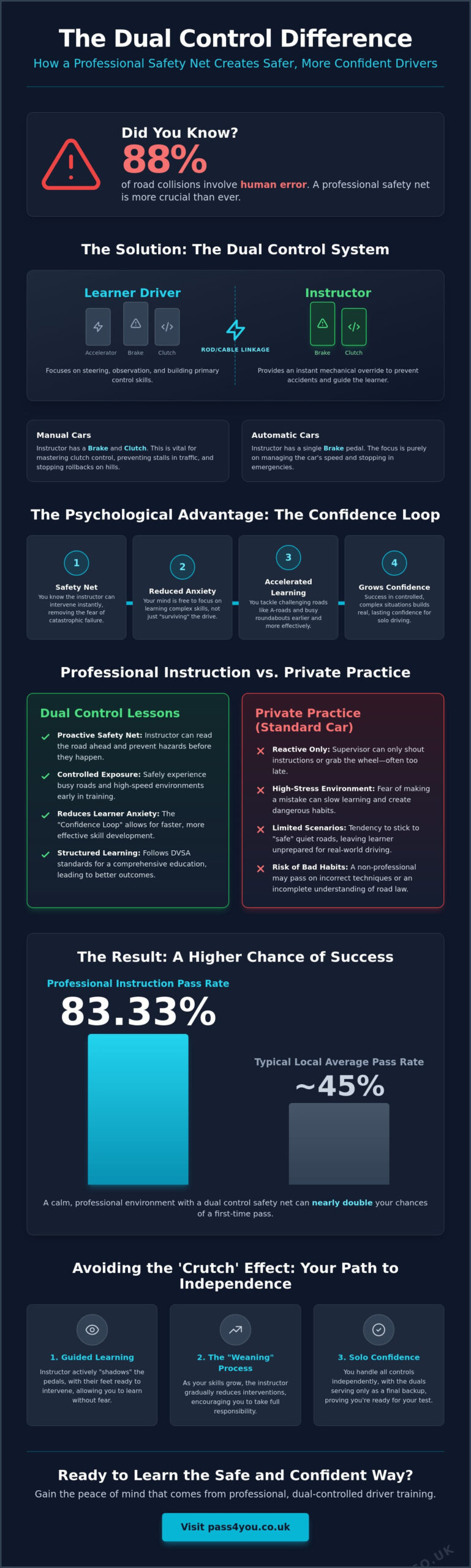
In a standard lesson, your instructor is a mentor who guides you and offers active tips. During a mock test, they become a silent observer, only speaking to give directions. This shift in atmosphere is designed to prepare you for the “examiner presence” you’ll face at the Bletchley centre. It’s often the silence that makes students nervous, so experiencing it beforehand helps you stay calm and focused when it really matters.
Who Should Take a Mock Test in Milton Keynes?
If you have a test date approaching, this is your essential final check. It’s also incredibly helpful for students who have been practicing with parents or friends. While informal practice is great for building experience, an independent professional assessment ensures you haven’t picked up any habits that could lead to a fail. This service is for anyone who wants to verify their standard, build their confidence, and avoid the frustration of waiting months for a retest.
Navigating Milton Keynes Test Routes: The Local Advantage
Milton Keynes offers a unique driving environment that can feel intimidating if you aren’t prepared. The city’s famous grid system means you’ll frequently transition between quiet residential streets and high-speed dual carriageways. A mock driving test milton keynes focuses on these specific transitions. We often take students through notorious sections like the H6 Childs Way or the V6 Grafton Street to ensure they feel comfortable where others often struggle. By practicing near the Bletchley test centre, you’ll become desensitized to the local environment and feel much more at home on your actual test day.
Our instructors have spent years identifying the common “fail spots” where local learners often struggle with lane discipline. It’s easy to get overwhelmed by the sheer number of signs and road markings in MK, but a mock test helps you filter out the noise and focus on what the examiner is looking for. This local knowledge is the difference between guessing your way through a junction and navigating it with genuine precision. If you’re feeling unsure about a particular area, taking driving lessons focused on these routes can provide the clarity you need.
Mastering the Milton Keynes Roundabouts
Multi-lane grid roundabouts are the heart of MK driving, but they’re also where many candidates lose marks. It isn’t just about entering the roundabout; it’s about maintaining perfect lane discipline until you exit. A very common error we see is failing to check the left door mirror before exiting. During our mock tests, we simulate the pressure of navigating these complex junctions at peak traffic times, ensuring you can handle the flow of vehicles while keeping your observations sharp and consistent.
Dual Carriageway Confidence
High-speed links like the A5 require quick decision-making and smooth merging techniques. While the official guidance on what happens during the driving test covers general driving ability, the reality of MK dual carriageways is their intensity and speed. You’ll need to maintain appropriate following distances and stay aware of blind spots even at 70mph. Incorrect speed management on dual carriageways is a leading cause of failure in Milton Keynes because drivers often struggle to adapt quickly to changing speed limits between different grid roads.
- Practice safe merging at various times of day.
- Develop a “deep scan” observation habit for high-speed traffic.
- Learn to anticipate speed limit changes before they happen.
The Anatomy of a Pass4you Mock Test: What to Expect
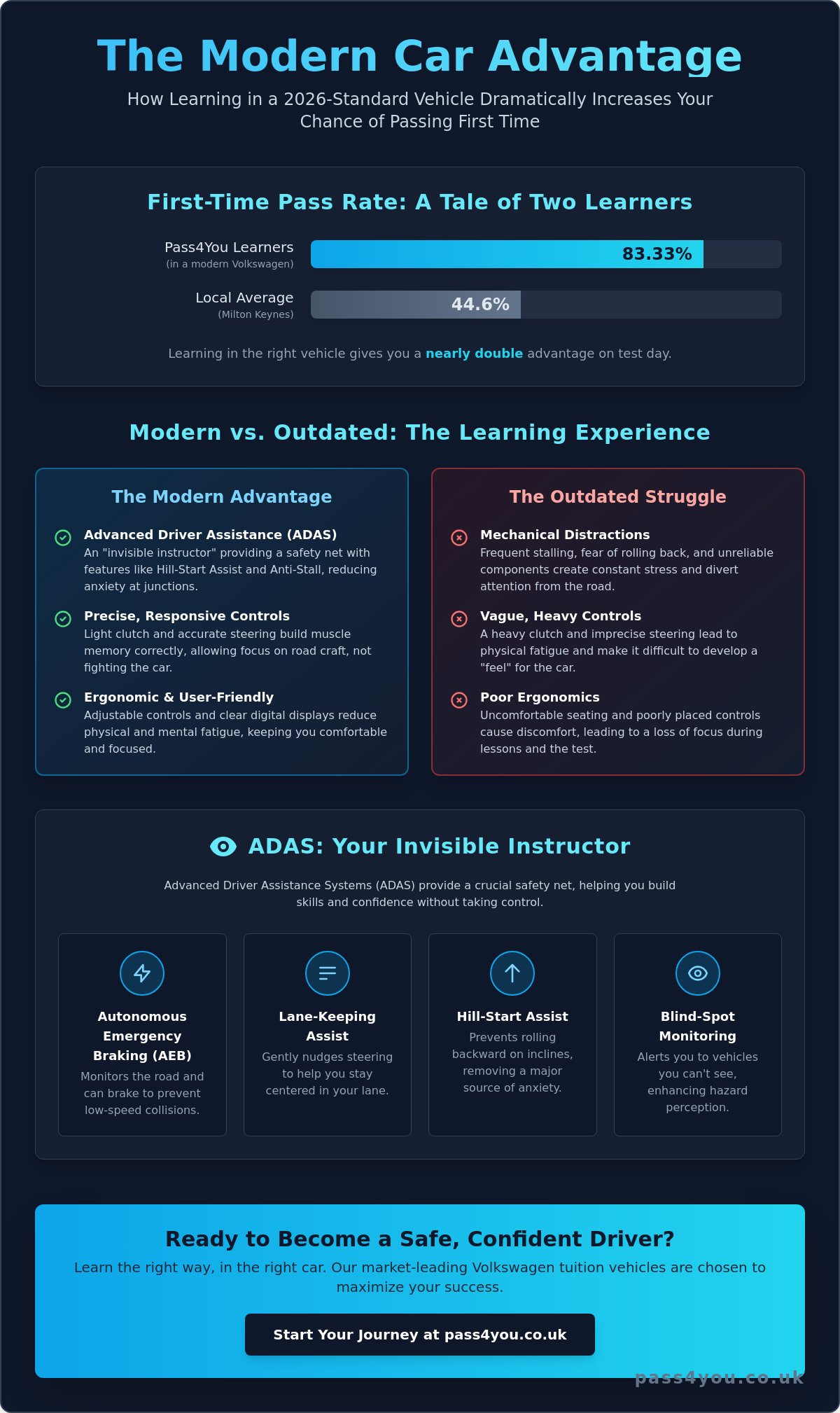
Our mock driving test milton keynes isn’t just a quick lap around the block. We replicate the exact 2026 DVSA test structure to ensure there are absolutely no surprises when you arrive at the Bletchley centre. You’ll drive one of our modern Volkswagen tuition vehicles. These cars are chosen for their reliability and ease of use, providing a consistent, professional feel that helps settle your nerves. The entire session lasts approximately two hours. This timeframe is essential because it allows for a full 40-minute test followed by a deep-dive feedback session where we can discuss your performance in detail. We deliver all feedback in a calm, patient manner, staying true to our mentor-led philosophy of building your confidence through understanding rather than criticism.
Step 1: The Pre-Drive Requirements
The test begins before you even start the engine. We’ll start with an eyesight check, where you must read a number plate from a distance of 20.5 metres. We also check that your provisional license and theory certificate are in order, just as an examiner would. You’ll then face a “Tell Me” safety question. You can prepare for this by mastering the vehicle safety questions using our guide on Show Me, Tell Me questions. Starting the session with these formalities helps you transition into the “test mindset” early on.
Step 2: The Independent Driving Section
For roughly 20 minutes of your test, you’ll be asked to drive independently. This usually involves following directions from a sat-nav or following traffic signs to a specific destination. It’s a common source of anxiety, but we use this time to teach you how to manage stress. If you make a wrong turn, don’t panic. As long as you recover safely and follow the rules of the road, it won’t result in a fault. We encourage a “Plan, Scan, and Act” approach, helping you stay ahead of the road even when you aren’t being guided turn-by-turn.
Step 3: Maneuvers and Emergency Stops
During the drive, you’ll be asked to perform one of three standard maneuvers: a parallel park, a bay park, or pulling up on the right side of the road and reversing. We place a heavy emphasis on “all-around observations” during these slow-speed tasks. Lack of observation is frequently cited among the common reasons for failing in Great Britain. Additionally, one in three tests includes an emergency stop. We make sure you’re ready for the signal and can bring the car to a safe, controlled stop while maintaining full control of the vehicle.
Turning Mock Test Feedback into a First-Time Pass
A “fail” on your mock test is actually a success in disguise. It is much better to discover a mistake now than to have it cost you £62 on the official day. When you take a mock driving test milton keynes, we use a specific 83.33% pass rate benchmark. This high-precision metric shows you exactly how close you are to the required standard. If you don’t reach it yet, don’t worry. Our feedback focuses on the “why” behind a fault rather than just listing what happened. We look for the root cause, such as a lapse in concentration or a misunderstanding of a junction, to ensure the error doesn’t happen again.
Mental preparation is just as important as your physical driving skills. Many learners fail because they dwell on a small mistake they think they made earlier in the drive. We teach you how to stay calm and keep your focus on the road ahead. If you believe you’ve made an error, the best thing you can do is put it behind you and continue driving safely. You might find that what you thought was a fail was actually just a minor fault that wouldn’t stop you from passing.
Analyzing Minor Faults vs. Serious Errors
In the official exam, you are allowed up to 15 minor driving faults, but a single serious or dangerous fault results in an immediate fail. A serious fault is any action that potentially endangers road users. It’s also vital to understand that recurring minors can escalate. For example, if you receive three minor faults for mirror usage, the examiner may decide this shows a habitual lack of observation and upgrade it to a serious fault. Our mock tests highlight these patterns so you can break them before your test date.
The Pass4you Action Plan
Once the mock test is complete, we don’t just leave you with a results sheet. We create a targeted action plan for the final weeks of your preparation. This includes focused driving lessons milton keynes to refine specific control and observation habits. By using our modern VW vehicles, you’ll build the muscle memory needed for a smooth, safe drive. This structured approach ensures you walk into the Bletchley centre feeling prepared and capable.
Ready to see where you stand? Book your realistic mock assessment today and take the first step toward your first-time pass.
Ready to Book? Secure Your Mock Driving Test in Milton Keynes
Joining the ranks of our successful students begins with one simple, decisive step. A realistic assessment of your skills is the only way to move from “nearly ready” to “fully prepared.” Our instructors focus on creating a reassuring and patient environment because we know that high-pressure situations can be overwhelming. By booking a mock driving test milton keynes, you give yourself the best possible chance of success. This service isn’t just for our regular students. We welcome anyone who is training elsewhere but wants an independent, professional evaluation before their big day. Preparing the right way with Pass4you means you can walk into that test centre with a calm mind and steady hands.
Our approach is designed to alleviate the anxiety often associated with the learning process. We don’t believe in hurried or aggressive instruction. Instead, we project a calm, supportive style that puts you at ease. This allows you to focus on your driving rather than your nerves. When you experience the simulation, you’ll see how the freedom of the road is within your reach. It’s about more than just passing a test; it’s about becoming a safe and responsible driver for life. This blend of encouragement and responsibility creates a feeling of being in safe, professional hands.
Booking Your Session with Pass4you
We make it easy to check availability for a mock driving test milton keynes specifically on the Bletchley test centre routes. Our booking process is straightforward and designed to fit around your existing schedule, whether you have a test date in a week or a month. When you arrive for your session, please remember to bring your provisional license. More importantly, bring a “ready to learn” mindset. We are here to help you refine your skills, not just point out mistakes. Our goal is to ensure you feel like you’ve already passed before you even meet the examiner. We provide clear, direct feedback that is easy to digest, making the entire experience valuable from start to finish.
The Freedom of the Road Awaits
Think about the freedom and opportunities that come with holding a full license. Passing your test first time isn’t just a point of pride; it’s a huge financial saving. By avoiding the official retest fee and the cost of extra lessons while you wait months for a new slot, a mock test pays for itself. Our Milton Keynes instructors are dedicated to providing a first-class experience that prioritizes your safety and long-term proficiency. We believe that everyone can become a safe, confident driver with the right mentorship. Don’t leave your success to chance when you can have the peace of mind that comes from professional preparation.
Book your mock test with Pass4you today and start your journey toward the freedom of the road.
Take the Next Step Toward Your Driving Success
Mastering the complex roundabouts and dual carriageways of Bletchley is much easier when you’ve already experienced them under exam conditions. A professional mock driving test milton keynes provides the realistic assessment you need to replace nerves with genuine skill. By identifying your specific blind spots and refining your technique in our modern Volkswagen tuition vehicles, you’re setting yourself up for a successful first-time pass. Our patient, DVSA-approved instructors are here to guide you every step of the way, ensuring you feel supported and capable.
Our commitment to your success is backed by a specific, high-precision 83.33% first-time pass rate. This isn’t just a practice run; it’s a proven method to ensure you are truly ready for the standard required. You don’t have to face test-day anxiety alone when you have a calm mentor in your corner. Let’s turn your hard work into a life-changing result and get you on the road with confidence.
Book your Milton Keynes mock test and join our 83% pass rate success story
The road to independence is waiting for you. We can’t wait to see you succeed and enjoy the freedom that comes with your new license.
Frequently Asked Questions
How much does a mock driving test in Milton Keynes cost?
Prices for a professional assessment vary based on the length of the session. We typically recommend a two-hour booking. This includes the full test simulation and a comprehensive feedback session. While the official DVSA test carries its own fee, investing in a mock test provides long-term savings by significantly increasing your chances of passing first time. Please reach out to us for our current lesson rates.
Can I take a mock test if I am not a regular Pass4you student?
Yes, we offer our mock assessments to all learners, not just those currently taking lessons with us. If you’ve been practicing with parents or another instructor, an independent professional evaluation can be incredibly helpful. It’s a chance to identify any habits that might lead to a fail. Our goal is to help every student in Milton Keynes become a safe and confident driver.
Which Milton Keynes test centre routes do you cover for mock tests?
Our mock tests specifically cover the routes used by the Bletchley Driving Test Centre. We take you through a range of environments, including residential streets and the more challenging grid roads. You’ll practice on the same roundabouts and dual carriageways that you’re likely to encounter during your official exam. This local familiarity is a key part of building your confidence for the big day.
What happens if I fail my mock driving test?
If you don’t pass your mock test, don’t worry. It’s a success in disguise because it reveals exactly what needs to be fixed before the real exam. We’ll go through the marking sheet together and explain why certain faults occurred. This diagnostic approach allows us to target your remaining lessons effectively, ensuring those errors aren’t repeated when you face the actual examiner.
Do I use my own car or the instructor car for a mock test?
You’ll use our modern Volkswagen tuition vehicles for your mock test. These cars are chosen for their reliability and ease of handling, which helps you feel comfortable during the session. Using a professional tuition vehicle also ensures that the simulation is as realistic as possible. You won’t need to worry about the mechanical standard of the car, allowing you to focus entirely on your driving skills.
How long before my real test should I book a mock assessment?
It’s best to book your mock test about two to three weeks before your practical exam date. This window provides enough time to act on the feedback and perfect any maneuvers that need extra work. If you book too close to the real test, you might feel rushed. A few weeks of lead time allows for a calm and steady final preparation phase.
Will the mock test instructor be the same as my regular driving instructor?
Whenever possible, we use a different instructor for the mock test to create a more formal atmosphere. This helps you get used to driving with someone you don’t know, which is exactly what happens on the real test. Having an independent set of eyes on your driving often identifies small errors that you and your regular instructor might’ve overlooked during your routine lessons.
What is the most common reason for failing a mock test in Milton Keynes?
The most frequent cause for failure during a mock driving test milton keynes is a lack of effective observation at junctions and roundabouts. The city’s unique grid system requires constant awareness and quick decision-making. Many students fail to check their mirrors at the correct times or misjudge the speed of approaching traffic. We focus heavily on these observation skills to ensure you can navigate the city safely and confidently.