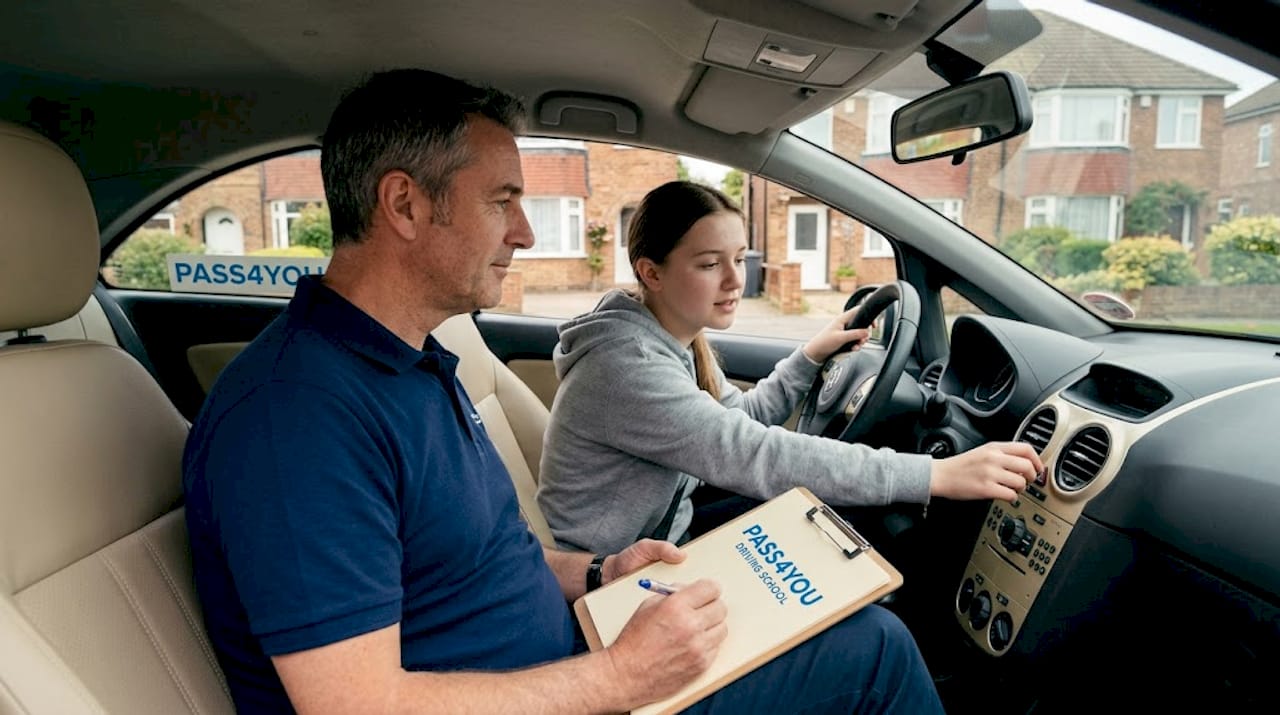
Most new drivers focus entirely on learning to steer, brake, and signal. What they rarely consider is where and how those skills are practised — and that gap in thinking is exactly what separates learners who pass first time from those who don’t. Understanding what is driving lesson safe environment means recognising that your progress depends not just on what you learn, but on the conditions in which you learn it. The right environment builds genuine confidence. The wrong one builds anxiety, bad habits, and risk. This guide explains what a safe learning environment looks like, why it matters, and how professional instructors use it to give you the best possible chance of passing.
Table of Contents
- Where safe driving lessons begin: controlled environments and vehicle checks
- Progressive exposure: moving from parking lots to quiet streets
- Key habits for a safe lesson environment: routines, awareness, and preparation
- Adapting to varied conditions: why timing and environment matter for learner drivers
- How professional instructors create a safe, personalised learning environment
- Rethinking safe learning environments: why patience beats pressure
- Start your safe driving journey with Pass4You Driving School
- Frequently asked questions
Key Takeaways
| Point | Details |
|---|---|
| Start in controlled spaces | Begin learning in empty parking lots or quiet roads to build basic vehicle control safely. |
| Vehicle safety checks | Professional instructors always perform thorough vehicle checks before driving. |
| Progress gradually | Move from mild to more complex environments only when ready to avoid overload. |
| Master safe habits | Routines like MSM and cockpit drills are essential for ongoing safety. |
| Adapt to conditions slowly | Add night and weather challenges only after confident daylight driving. |
Where safe driving lessons begin: controlled environments and vehicle checks
Before a single metre of road is covered, a safe lesson begins with preparation. This is not a formality. It is the foundation that every reliable instructor builds on, and skipping it is where many informal lessons go wrong.
Professional lessons typically start in a quiet, controlled space. Think empty car parks, private roads, or low-traffic residential streets where you can focus entirely on the mechanics of the vehicle without the added pressure of other road users. In Milton Keynes, there are several ideal spots for this, including quieter estates and retail car parks outside peak hours. These locations give you room to make mistakes without consequences.

The vehicle itself is equally important. Dual-control vehicles allow instructors to intervene immediately using a second set of pedals, which removes the fear of losing control that many beginners carry into their first lesson. That reassurance alone changes how quickly learners relax and absorb information.
Before driving, a thorough vehicle check covers:
- Seat position — adjusted so you can fully depress the clutch without stretching
- Mirrors — interior and both wing mirrors set to eliminate as many blind spots as possible
- Head restraint — positioned correctly to reduce whiplash risk
- Seatbelt — fitted and checked before the engine starts
- Pedal familiarity — understanding the biting point and brake sensitivity before moving
Pro Tip: Arrive at your first lesson in flat, comfortable shoes. High heels or thick-soled boots reduce your ability to feel pedal feedback accurately, which affects clutch control significantly.
These steps reflect safe driving lesson tips that experienced instructors follow consistently. You can explore the full range of learner courses available at Pass4You to see how this structured approach is built into every lesson from day one.
Progressive exposure: moving from parking lots to quiet streets
Once you are comfortable with the vehicle, the next question is where you drive. The answer changes as your skills develop, and that progression is deliberate.
Safe driving practice environments follow a clear pattern: quiet roads or empty lots for the first 10 to 15 hours, then a gradual move to low-traffic streets with fewer than 10 vehicles per minute, allowing focused skill-building without cognitive overload.
“Skill-building without overload is not just a comfort consideration — it is a safety principle. When a learner’s working memory is overwhelmed, reaction times slow and decision-making deteriorates.”
Here is how that progression typically looks in practice:
- Stage 1 (hours 1 to 5): Empty car parks or private roads. Focus on steering, clutch control, and basic braking. No other road users to worry about.
- Stage 2 (hours 5 to 15): Quiet residential streets, ideally 20 mph zones, during off-peak times such as mid-morning on weekdays. Introduce junctions, giving way, and basic observations.
- Stage 3 (hours 15 and beyond): Busier roads, roundabouts, and dual carriageways. Introduced only once the learner demonstrates consistent control in lower-pressure settings.
One skill per session is the guiding principle. Trying to learn roundabouts, lane discipline, and parallel parking in a single lesson is a recipe for confusion and discouragement. Good instructors in Milton Keynes know which roads suit which stage, and they plan routes accordingly. For more on building your skills progressively, the driving tips and resources on our blog cover local routes and lesson planning in detail.
Key habits for a safe lesson environment: routines, awareness, and preparation
A safe lesson environment is not only about location. It is also about the habits you build inside the car. Two routines stand out above all others for beginner drivers.
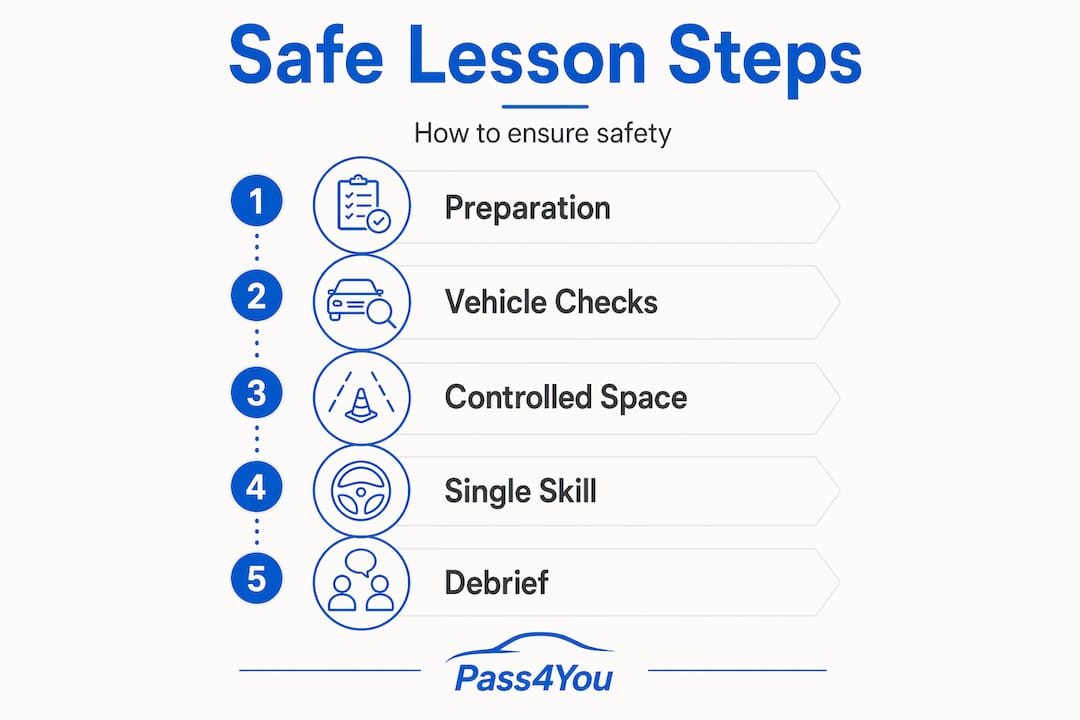
The cockpit drill, often remembered as DSSSM (Doors, Seat, Steering, Seatbelt, Mirrors), is the pre-drive checklist that ensures you are physically comfortable and the vehicle is correctly configured before you move. It takes under two minutes and prevents the kind of rushed, uncomfortable start that leads to poor early decisions.
The MSM routine (Mirrors, Signal, Manoeuvre) is the core of safe driving awareness. Executed every 5 to 8 seconds, it maintains situational awareness and minimises blind spots, making it one of the most important habits a learner can embed early.
Here is how to build these into every lesson:
- Complete the cockpit drill before the engine starts, every single time, without exception
- Check all three mirrors every 5 to 8 seconds while moving, not just when turning
- Signal before every manoeuvre, even if no other road users appear to be present
- Adjust mirrors if your seat position changes between lessons
- Practise hazard scanning by narrating what you see aloud — this forces active observation rather than passive looking
Personal preparation matters too. Arriving well-rested, wearing appropriate footwear, and giving yourself time before the lesson starts reduces the fatigue and stress that undermine concentration. A learner who arrives flustered five minutes late is already at a disadvantage before the engine turns over.
Pro Tip: If you wear glasses or contact lenses, always bring them to your lesson. Driving with uncorrected vision is not just unsafe — it is illegal once you hold a licence.
These habits are central to the importance of safe driving instruction, and they are the kind of detail that separates a pass from a fail on test day. Our learner courses are structured to reinforce these routines from the very first lesson.
Adapting to varied conditions: why timing and environment matter for learner drivers
Weather and lighting are variables that many learners overlook until they encounter them unprepared. The guidance here is straightforward: master the basics in dry daylight before introducing anything more complex.
Introducing learners progressively to varied conditions such as night driving and adverse weather only after basic skills are mastered significantly reduces collision risk. This is not overcaution. It is how competent, adaptable drivers are built.
| Condition | When to introduce it | Key challenge |
|---|---|---|
| Dry daylight | From lesson one | Baseline for all skill-building |
| Light rain | After 15 hours | Braking distances, tyre grip |
| Heavy rain | After 25 hours | Visibility, aquaplaning awareness |
| Night driving | After 20 hours | Headlight use, reduced visibility |
| Motorway driving | After passing test | High speed, lane discipline |
A few important points about timing and conditions:
- Lessons booked during rush hour in the early stages add unnecessary pressure. Mid-morning weekday slots are ideal for beginners in Milton Keynes.
- Wet roads increase stopping distances by up to double. Learners who have not yet mastered smooth braking should not be practising in rain.
- Night driving introduces glare, reduced depth perception, and unfamiliar visual cues. It deserves dedicated lesson time, not a surprise at the end of an evening session.
- Seasonal changes matter. Winter lessons in Milton Keynes mean shorter daylight hours, so planning ahead ensures you get the right conditions for your current stage.
For further guidance on how to approach lesson planning around local conditions, visit our driving environment tips on the blog.
How professional instructors create a safe, personalised learning environment
The environment is only half the equation. The other half is the person guiding you through it. A qualified instructor does far more than sit in the passenger seat and point at junctions.
Instructors assess learner readiness continuously, adjust lesson locations based on progress, provide immediate feedback to prevent bad habits forming, and tailor their coaching style to the learner’s anxiety level and existing knowledge. That last point is particularly important. A learner who is nervous requires a different approach to one who is overconfident, and a good instructor reads that difference quickly.
Here is what creating a safe, personalised learning environment looks like in practice:
- Continuous readiness assessment: The instructor monitors your responses, hesitations, and errors to decide when to introduce the next challenge
- Immediate correction: A mistake left uncorrected becomes a habit within a few repetitions. Good instructors address errors in the moment, calmly and clearly
- Route selection: Instructors who know Milton Keynes well choose roads that match your current skill level, not roads that happen to be convenient
- Anxiety management: Calm, patient communication reduces the stress response that narrows attention and slows learning
- Structured progression: Lessons follow a logical sequence that builds on previous sessions, rather than covering random topics
Pro Tip: Before each lesson, tell your instructor what felt difficult in the previous session. This gives them the information they need to plan a route and focus that genuinely helps you improve.
The benefits of safe driving lessons delivered this way are measurable. Structured, gradual instruction is directly linked to higher first-time pass rates. At Pass4You, our instructors learn to drive with confidence as the guiding principle behind every lesson they deliver.
Rethinking safe learning environments: why patience beats pressure
Here is something the driving industry does not say loudly enough: rushing a learner through complex environments does not build skill. It builds the appearance of skill, which is far more dangerous.
We have seen learners who have completed 30 hours of lessons but spent most of that time on busy roads before they were ready. They can navigate a roundabout. But ask them to do it in rain, at dusk, with a lorry on their bumper, and the cracks appear immediately. The habits were never properly embedded because the environment never gave them the space to embed them.
Gradual progression creates confident, adaptable drivers, while rushing through environments with multiple stressors creates drivers who panic when conditions change. This is not a minor distinction. It is the difference between a driver who handles an unexpected hazard calmly and one who freezes.
The pressure to progress quickly often comes from the learner, not the instructor. It is understandable. Lessons cost money and time. But the learner who insists on hitting dual carriageways after five hours is not saving money — they are spending it on lessons that build anxiety rather than competence.
Patience in a safe driving practice environment is not a soft option. It is the approach that produces drivers who are genuinely safe, not just test-ready. The best practices for driving safety are built on repetition, calm instruction, and an environment that matches the learner’s current ability. That is the standard worth holding to.
For more on this approach, our learner driver advice covers the reasoning behind structured, patient instruction in detail.
Start your safe driving journey with Pass4You Driving School
If this article has clarified what a safe driving lesson environment looks like, the next step is finding an instructor who delivers it consistently. That is exactly what Pass4You Driving School offers learners across Milton Keynes.

Our qualified instructors teach in modern, dual-control Volkswagen vehicles and plan every lesson around your current ability, not a one-size-fits-all timetable. Whether you prefer a steady pace with our learner courses or need to pass quickly with our intensive driving courses, we build safety and confidence into every session. Our 83.33% first-time pass rate reflects what structured, patient instruction in the right environments actually produces. Visit Pass4You Driving School to book your first lesson and start learning the right way.
Frequently asked questions
What type of roads are best for beginner driving lessons?
Quiet residential streets with 20 mph speed limits and fewer than 10 vehicles per minute are ideal, allowing beginners to build core skills without the pressure of heavy traffic.
Why do instructors use dual-control cars during lessons?
Dual-control vehicles give instructors a second set of pedals so they can stop the car immediately if needed, providing a critical safety net for both the learner and other road users.
When should a learner driver start practising night or wet weather driving?
Night and wet weather driving should only be introduced after basic skills are mastered in dry daylight, as combining new conditions with unembedded skills significantly increases cognitive overload and collision risk.
What is the MSM routine and why is it important?
MSM stands for Mirrors, Signal, Manoeuvre. Checked every 5 to 8 seconds, it keeps the driver continuously aware of their surroundings and minimises the blind spots that cause the majority of junction and lane-change incidents.
Leave a Reply