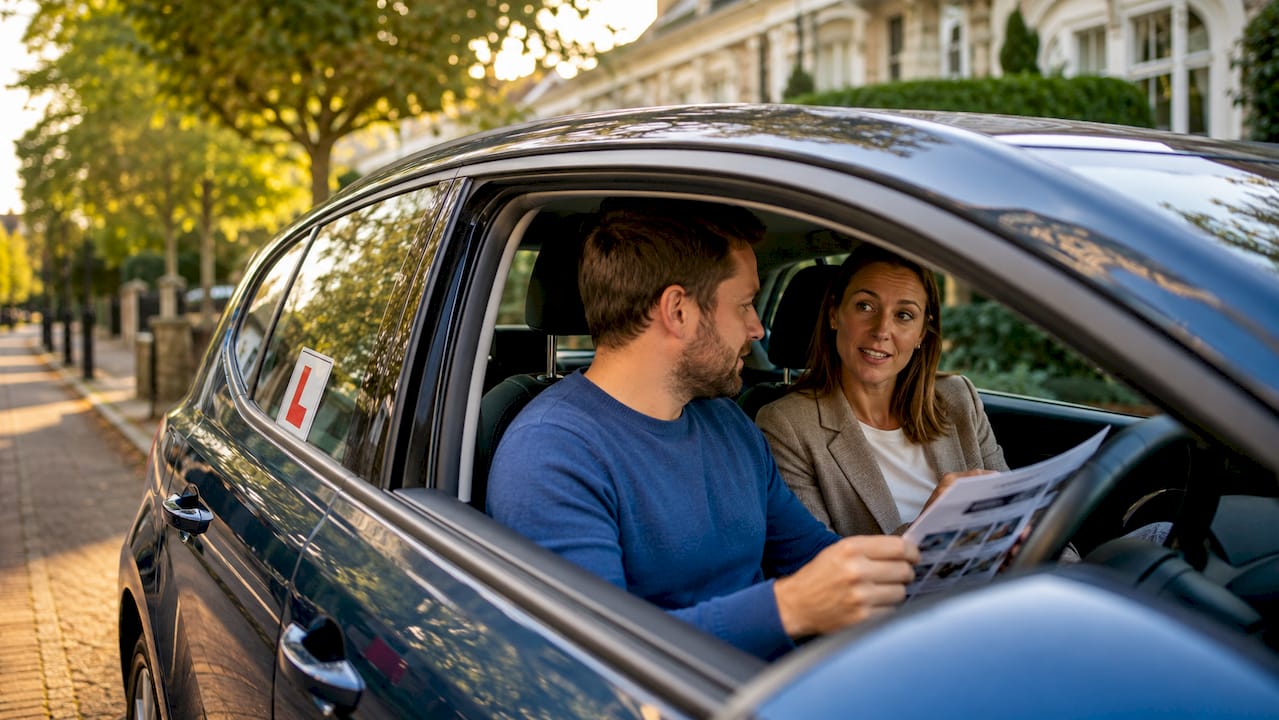
Types of DVSA approved driving schools refer to the main categories of driving instruction providers recognised by the Driver and Vehicle Standards Agency in the UK, covering independent instructors, local franchises, and national franchise schools. Each category carries different costs, structures, and teaching styles that directly affect your learning experience. Knowing the difference before you book your first lesson saves time, money, and frustration. This guide breaks down every category, explains what the official badges mean, and gives you a clear framework for choosing the right instructor in 2026.
1. What are the types of DVSA approved driving schools?
DVSA certified driving schools fall into three broad organisational categories: national franchise schools, local franchise schools, and independent sole-trader instructors. Within each category, the instructors themselves hold one of two official statuses: Approved Driving Instructor (ADI) or Potential Driving Instructor (PDI). Understanding both layers, the school type and the instructor status, gives you the full picture before you commit.
The ADI holds a green octagonal badge displayed in the front windscreen of the tuition vehicle. This badge confirms the instructor has passed all three parts of the DVSA qualifying examination, covering theory, driving ability, and instructional ability. The ADI is fully qualified and legally permitted to charge for lessons.
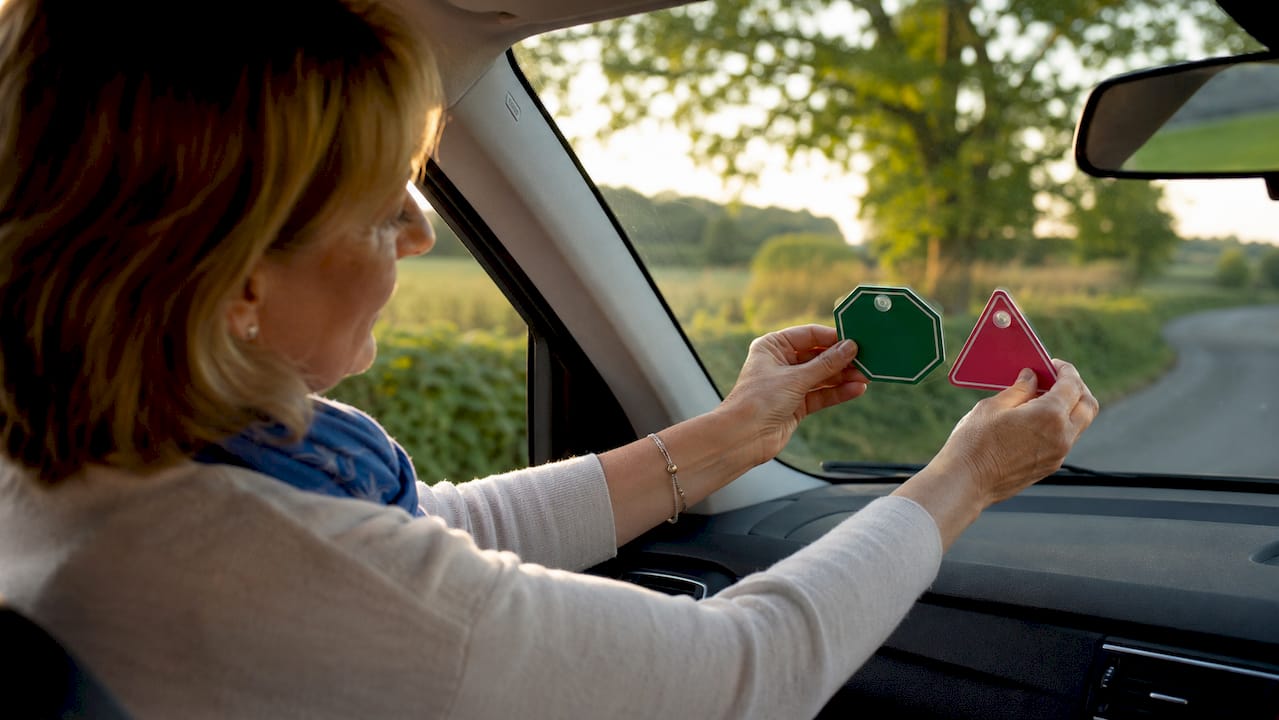
The PDI carries a pink triangular badge. A PDI has passed the first two parts of the DVSA exam but is still completing instructor training. PDIs can legally charge for lessons during a single limited training period, and their rates are often lower. The trade-off is that their instructional technique is still developing.
Pro Tip: Always check which badge is displayed in the car before your first lesson. A pink triangle means your instructor is still training. That is not necessarily a problem, but you deserve to know.
The three school categories break down as follows:
- National franchise schools: Branded networks such as the AA Driving School and RED Driving School. They offer centralised booking, standardised lesson plans, and backup instructor cover.
- Local franchise schools: Smaller regional networks where individual ADIs pay a local brand fee in exchange for leads and some administrative support.
- Independent sole-trader ADIs: Self-employed instructors who operate entirely on their own, setting their own prices, schedules, and teaching approaches.
Survey data shows that 68.2% of ADIs operate independently, 18.2% work within local franchises, and 11.5% are part of national franchises. That distribution tells you something important: the majority of quality instruction in the UK happens outside the big brand names.
2. Comparing national franchise, local franchise, and independent schools
Choosing between these three school categories is one of the most consequential decisions a learner makes. Each type suits a different learner profile, and the differences go well beyond price.
National franchise schools
National franchises such as AA Driving School and RED Driving School offer structured lesson plans, central booking systems, and the reassurance of a backup instructor if your regular one is unavailable. That backup cover is genuinely useful if you have a test date approaching and your instructor falls ill. The trade-off is cost: national franchise lessons typically carry higher hourly rates than independent alternatives.
The less obvious trade-off is consistency of quality. The franchise brand does not guarantee individual instructor quality. The teaching style and rapport of the individual ADI remain the crucial success factor, regardless of which logo is on the car door. You could book with a nationally recognised school and still end up with an instructor whose style does not suit you.
Local franchise schools
Local franchise schools occupy the middle ground. Individual ADIs pay a regional brand fee in exchange for referrals, a local reputation, and some administrative support. Pricing tends to be more moderate than national franchises. Flexibility varies depending on the specific network, but local franchises often allow instructors more autonomy over scheduling than their national counterparts.
Independent sole-trader ADIs
Independent driving schools offer the most personalised experience. A sole-trader ADI sets their own schedule, adapts lessons to your pace, and typically charges lower hourly rates. The limitation is cover: if your independent instructor is ill or on holiday, there is no backup system. For learners with a fixed test date, that is a genuine risk worth weighing.
Pro Tip: Ask any prospective instructor directly: “What happens to my lessons if you are unavailable?” Their answer tells you a great deal about how professionally they manage their business.
| Feature | National franchise | Local franchise | Independent ADI |
|---|---|---|---|
| Lesson pricing | Higher | Moderate | Lower |
| Backup instructor | Yes | Sometimes | Rarely |
| Scheduling flexibility | Lower | Moderate | Higher |
| Lesson standardisation | High | Moderate | Variable |
| Personal rapport | Variable | Variable | High |
| Brand assurance | Strong | Moderate | None |
3. What types of driving lessons are offered within these schools?
Approved driving instructors across all three school categories offer broadly the same menu of lesson types. The differences lie in how each school structures and prices them.
- Manual lessons: The most common choice in the UK. Manual lessons teach clutch operation and gear changes, and passing the test in a manual car grants a full licence covering both manual and automatic vehicles.
- Automatic lessons: Simpler to manage initially because there is no clutch or gear lever to coordinate. Passing the test in an automatic car restricts your licence to automatic vehicles only. This is worth considering carefully before you commit.
- Intensive or crash courses: These compress your training into a short period, typically one to two weeks of daily lessons followed by a test. They suit learners who need a licence quickly or who prefer immersive learning over weekly sessions spread across months.
- Refresher lessons: Aimed at drivers who already hold a full licence but have not driven for some time. A short block of refresher lessons rebuilds confidence and updates habits to current road standards.
- Pass Plus: A post-test course developed with the DVSA covering motorway driving, rural roads, and night driving. Some insurers offer discounts to drivers who complete it, though the discount varies by provider.
Standard lesson durations run from one hour to two hours. Most instructors recommend two-hour sessions for learners who are progressing well, as longer lessons allow more ground to be covered without the warm-up time eating into productive practice. Lesson frequency matters too: weekly lessons maintain momentum, while fortnightly gaps can slow progress noticeably.
4. How to verify and choose the best DVSA approved driving school
Verifying an instructor’s credentials takes less than five minutes and protects you from unqualified teachers and potential insurance gaps.
- Check the GOV.UK register. The official DVSA instructor register lists every ADI and PDI currently approved to teach. Search by postcode to find instructors near you. If a name does not appear, do not book.
- Check the Standards Check grade. The DVSA assesses every ADI through a Standards Check, grading performance on a scale where Grade A is the highest. Grade A instructors demonstrate the strongest client-centred teaching technique. Ask your prospective instructor their grade directly.
- Read local reviews. Platforms such as Trustpilot and Google Reviews provide verified feedback from real pupils. Look for patterns across multiple reviews rather than relying on a single five-star rating.
- Assess teaching style compatibility. Client-centred learning, where the instructor adapts to your current ability and encourages independent decision-making, produces better results than a rigid, instructor-led approach. Ask during your introductory call how they adapt lessons to individual learners.
- Confirm the vehicle. Modern dual-control vehicles with current safety features reduce risk during training. Ask what make and model the instructor uses and when it was last serviced.
Pro Tip: Your first lesson is an audition for both of you. If the instructor’s style does not suit you after two or three sessions, it is entirely reasonable to try someone else. Switching early costs far less than persisting with the wrong fit.
Key takeaways
Choosing the right DVSA approved driving school requires understanding instructor status, school type, and lesson format before you book a single session.
| Point | Details |
|---|---|
| ADI vs PDI status | Always check the badge: green octagon means fully qualified, pink triangle means still in training. |
| School type distribution | 68.2% of ADIs operate independently, making independent instructors the most common option in the UK. |
| Franchise trade-offs | National franchises offer backup cover and structure but charge higher rates and cannot guarantee individual instructor quality. |
| Lesson type choice | Passing in a manual car grants a full licence; passing in an automatic restricts you to automatic vehicles only. |
| Verification steps | Check the GOV.UK register and ask for the instructor’s Standards Check grade before committing to lessons. |
Why instructor quality matters more than school brand
I have spoken with enough learner drivers over the years to say this with confidence: the school name on the car door is almost irrelevant. What determines whether you pass first time is the individual in the seat next to you.
The most common mistake I see is learners choosing a nationally recognised franchise because the brand feels safe. That instinct is understandable, but it does not hold up under scrutiny. A Grade A independent ADI operating from a modest hatchback in your town will almost certainly produce better results than a distracted instructor from a national network who is juggling too many pupils.
The regulatory change from may 2026 is worth flagging here. Since May 2026, instructors can no longer book practical tests on behalf of pupils. Learners must book directly through GOV.UK. This shifts more responsibility onto the learner, which is actually a healthy development. It means you need to stay engaged with your own progress and communicate clearly with your instructor about test readiness.
The best instructors I have encountered treat driving as a lifelong skill-building process, not a box-ticking exercise. They teach you to read the road, not just to pass a specific test route. That distinction matters enormously once you are driving alone.
— Simon
Ready to start with a DVSA approved instructor in Milton Keynes?
Pass4you is a DVSA approved driving school based in Milton Keynes, delivering lessons with a first-time pass rate of 83.33%, well above the local average. Instruction is delivered in modern Volkswagen tuition vehicles fitted with dual controls, by calm and patient ADIs with detailed knowledge of the Bletchley test routes.
Whether you are a complete beginner or returning to driving after a break, Pass4you offers a range of learner driving courses tailored to your pace and schedule. Lessons are flexible, competitively priced, and backed by verified Trustpilot reviews. Visit Pass4you to browse course options or get in touch by phone or email to book your first lesson.
FAQ
What is an approved driving school in the UK?
An approved driving school is a driving instruction provider whose instructors are registered with the DVSA as Approved Driving Instructors (ADIs). ADIs must pass a three-part DVSA examination and display a green octagonal badge in their tuition vehicle.
What is the difference between an ADI and a PDI?
An ADI is fully qualified and holds a green octagonal badge. A PDI has passed the first two parts of the DVSA exam, carries a pink triangular badge, and can only teach for a limited training period while completing their qualification.
How do I check if a driving instructor is DVSA approved?
Search the official GOV.UK DVSA instructor register by postcode. Any instructor not listed on the register is not legally permitted to charge for lessons, and your insurance may not be valid during sessions with them.
Are independent driving schools better than national franchises?
Independent ADIs typically offer lower rates, more flexible scheduling, and a more personalised experience. National franchises provide backup instructor cover and standardised lesson plans. Neither is universally better; the individual instructor’s quality and teaching style is the deciding factor.
Can my driving instructor book my practical test for me?
No. Since May 2026, learners must book their own practical driving tests directly through GOV.UK. Instructors can advise on readiness but are no longer permitted to manage test bookings on a pupil’s behalf.
Leave a Reply