
Fitting driving lessons around work is entirely achievable with the right scheduling strategy, and most working learners pass their test without taking a single day off. The DVSA estimates most learners need around 45 hours of professional tuition plus 22 hours of private practice to reach test readiness. That sounds like a lot, but spread across evenings, weekends, and early mornings, it is manageable within a standard working week. The key tools are a flexible instructor, the DVSA’s online booking service on GOV.UK, and a pay-as-you-go (PAYG) lesson model where your schedule demands it.
How to fit driving lessons around work: best times to book
The three windows that work best for employed learners are early mornings before the commute, weekday evenings after 5pm, and weekends. Each has a distinct advantage beyond simply avoiding your job hours.
Early morning lessons, typically 6am–8am, offer lighter traffic. That means less pressure on a learner who is still building confidence, and it means you arrive at work having already ticked off something productive. Weekday evenings are the most popular slot for working learners, and most instructors accommodate lessons until 8pm or 9pm. The trade-off is that rush-hour traffic is heavier, which is actually useful preparation for real-world driving.

Weekend lessons are the most flexible option for shift workers or anyone with variable hours. Pre-booking lesson blocks in advance reduces the stress of constantly chasing availability and keeps your progress on track.
A few practical points worth knowing:
- Ask your instructor to pick you up from your workplace and drop you home. Many will accommodate this, saving you travel time on either side of the lesson.
- Saturday mornings offer quieter roads in most towns and cities, making them ideal for early-stage learners.
- If your employer offers flexible start times, a 7am lesson followed by a 9am start at the office is a genuinely workable pattern.
- Evening driving classes in winter give you valuable experience in low-light conditions, which the test examiner will expect you to handle confidently.
Pro Tip: Book your next three lessons at the end of each session rather than waiting until you need them. Instructor diaries fill quickly, and this habit alone prevents the gaps that slow progress.
Does lesson frequency affect how quickly you pass?
Consistent lesson spacing is the single biggest factor working learners get wrong. Irregular lesson spacing causes skill fade, meaning you spend the first 15 minutes of each lesson recovering ground rather than building on it. For someone paying per hour, that is a direct financial cost as well as a time cost.
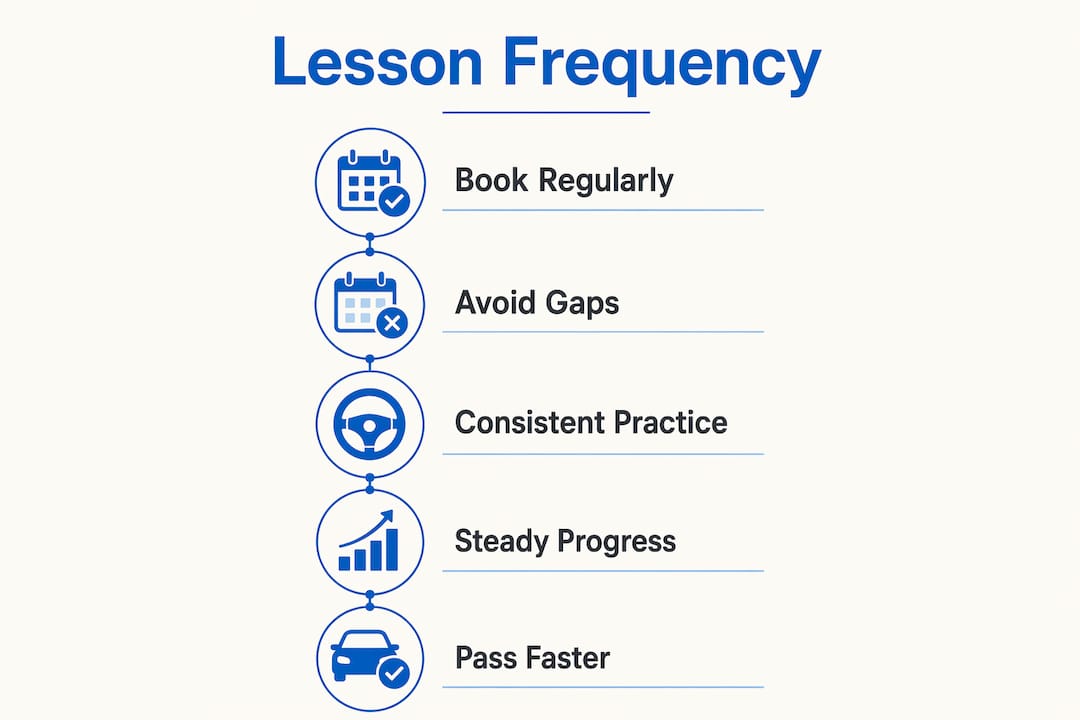
The practical target for most working learners is one or two lessons per week. One lesson per week is the minimum to maintain momentum. Two lessons per week, even if one is shorter, produces noticeably faster progress. Going longer than ten days between lessons without any private practice is where real regression sets in.
Private practice fills the gaps between professional lessons and is one of the most underused tools available to working learners. You need a car, a supervising driver aged 21 or over with at least three years’ experience, and learner driver insurance. Short-term learner insurance policies from providers such as Marmalade or Collingwood cover you for as little as one day, making it practical to grab an hour on a Sunday morning without committing to a full policy.
“Learners balancing work often underestimate the cumulative time needed for lessons and private practice, leading to rushed or poorly timed test bookings.” Confused.com
A realistic schedule for a full-time worker might look like this:
- One weekday evening lesson per week with a professional instructor
- One weekend morning lesson every fortnight
- Two or three private practice sessions per month with a family member or friend
That pattern builds hours steadily without overwhelming your diary or your budget.
PAYG vs block booking: which suits your schedule?
The booking model you choose has a direct impact on how well your lessons fit around unpredictable work demands. PAYG lessons offer maximum flexibility, with no upfront commitment and the ability to book single hours as your diary allows. That makes PAYG the right choice for shift workers, those on zero-hours contracts, or anyone whose rota changes week to week.
Block booking, by contrast, locks in a set of lessons at a discounted rate. The saving is real, typically 5%–10% per lesson depending on the school, but the trade-off is reduced flexibility if your work situation changes.
| Feature | PAYG | Block Booking |
|---|---|---|
| Upfront cost | Low | Higher |
| Flexibility | High | Lower |
| Cost per lesson | Standard rate | Usually discounted |
| Best for | Shift or rota workers | Stable 9-to-5 schedules |
| Admin burden | Book each lesson separately | Pre-planned, less admin |
Rota-based workers benefit most from a hybrid model: a fixed weekly lesson as a baseline, topped up with PAYG sessions during quieter work periods. This approach keeps progress consistent without locking you into a rigid timetable.
Pro Tip: If you do block book, choose a school that offers a credit rollover policy. That way, if work forces you to cancel, you keep the credit rather than losing the lesson fee.
How should you book your driving test around work?
The DVSA’s online test booking service on GOV.UK shows real-time availability across all test centres. Working learners often overlook the fact that you can check multiple test centres simultaneously, which significantly increases your chances of finding an earlier slot.
Weekend and evening test slots cost £75 compared to £62 for a standard weekday slot. That £13 premium is worth paying if it means you avoid taking annual leave or losing a day’s pay. For many working learners, the maths is straightforward.
Key points for booking your test strategically:
- Book your test before you feel fully ready. The waiting period, often four to eight weeks, gives you focused time to work on specific weak areas.
- Check test centres within a 20-mile radius of your home or workplace, not just your nearest one. A centre with shorter queues could save you weeks.
- Aligning your final lessons with your booked test date, focusing on the specific routes used at your test centre, measurably improves confidence and pass rates.
- Synchronise the last 2–6 lessons with your test date to target the fault areas most likely to come up.
| Test Slot Type | Fee | Typical Wait | Best For |
|---|---|---|---|
| Weekday | £62 | Longer | Flexible workers |
| Weekend/Evening | £75 | Shorter | 9-to-5 employees |
What mistakes do working learners make most often?
The most common mistake is treating lessons as optional when work gets busy. Skipping two or three consecutive weeks does not pause your progress. It reverses it. Evenly spaced lessons combined with private practice produce faster, more cost-effective results than intensive bursts followed by long gaps.
A second common error is poor communication with your instructor. If your work schedule changes, tell your instructor as early as possible. Most will accommodate a reschhedule with 48 hours’ notice without charging a cancellation fee. Leaving it until the last minute costs you money and goodwill.
Practical steps to avoid the most common pitfalls:
- Set a recurring lesson slot in your work calendar so colleagues and managers know it is a fixed commitment.
- Arrange learner driver insurance before your first private practice session, not after.
- If your employer offers a salary sacrifice or learning support scheme, check whether driving lessons qualify. Some do.
- Keep a simple log of hours completed so you can track progress against the DVSA’s 45-hour benchmark.
Pro Tip: Tell your line manager you are learning to drive. Most employers are supportive, and some will adjust your start or finish time by 30 minutes to accommodate a lesson. You will not know unless you ask.
Key takeaways
Working learners who combine consistent professional lessons with regular private practice and strategic test booking pass their driving test faster and at lower total cost.
| Point | Details |
|---|---|
| Lesson timing | Early mornings, evenings, and weekends are the most practical slots for working learners. |
| Lesson frequency | Aim for at least one professional lesson per week to prevent skill fade between sessions. |
| Booking model | Use PAYG for unpredictable schedules and block booking for stable 9-to-5 working patterns. |
| Test booking | Weekend and evening test slots cost £75 but can cut waiting times by two to three weeks. |
| Private practice | Short-term learner insurance from providers like Marmalade makes weekend practice sessions straightforward. |
What i have learnt from working learners over the years
The learners who struggle most are not the ones with the busiest jobs. They are the ones who treat their driving lessons as something that happens to them rather than something they plan. I have seen people with demanding full-time roles pass first time because they booked their lessons three months in advance and treated each slot like a work meeting. I have also seen people with relatively flexible jobs drag out their learning over two years because they kept rescheduling.
The flexible lesson models available now, particularly PAYG and hybrid booking, remove most of the old excuses. You do not need a perfect schedule. You need a consistent one. Even one solid lesson per week, backed up by an hour of private practice at the weekend, will get you to test standard within a realistic timeframe.
My honest advice is to book your driving test earlier than feels comfortable. The waiting period focuses the mind and gives your lessons a clear target. Working learners who drift without a test date booked tend to plateau. Those with a date on the calendar tend to sharpen up quickly.
— Simon
How Pass4you supports busy working learners in milton keynes
Pass4you offers evening and weekend lessons specifically designed for working adults who cannot commit to daytime slots. Both PAYG and block booking options are available, so your booking model matches your actual schedule rather than an idealised one.
Pass4you instructors are calm, patient, and experienced with learners who have irregular availability. Lessons are delivered in modern Volkswagen tuition vehicles fitted with dual controls, and the school’s knowledge of Bletchley test routes gives you a genuine advantage in your final preparation. Pass4you holds an 83.33% first-time pass rate, well above the local average. If you are ready to get started, explore the learner driving courses available and find a schedule that works around your job.
FAQ
How many driving lessons do i need if i work full time?
The DVSA recommends around 45 hours of professional tuition plus 22 hours of private practice. Working learners who take one or two lessons per week typically reach test standard within six to twelve months.
Are evening driving lessons as effective as daytime ones?
Evening lessons are equally effective and offer the added benefit of experience in lower-light conditions. Rush-hour traffic during evening driving classes also provides realistic preparation for everyday driving after you pass.
What is the cheapest way to book a driving test as a working learner?
A standard weekday test slot costs £62 through the DVSA’s online booking service. If weekday slots are unavailable, weekend and evening slots cost £75 but often have shorter waiting times, which can save you more in the long run.
Should i choose PAYG or block booking lessons?
PAYG lessons suit shift workers or anyone with an unpredictable rota. Block booking suits learners with a stable weekly schedule and offers a small cost saving per lesson.
Can i do private practice between professional lessons?
Yes, and it is strongly recommended. You need a supervising driver aged 21 or over with at least three years’ experience, and short-term learner insurance from providers such as Marmalade or Collingwood covers you for a single day if needed.
Leave a Reply