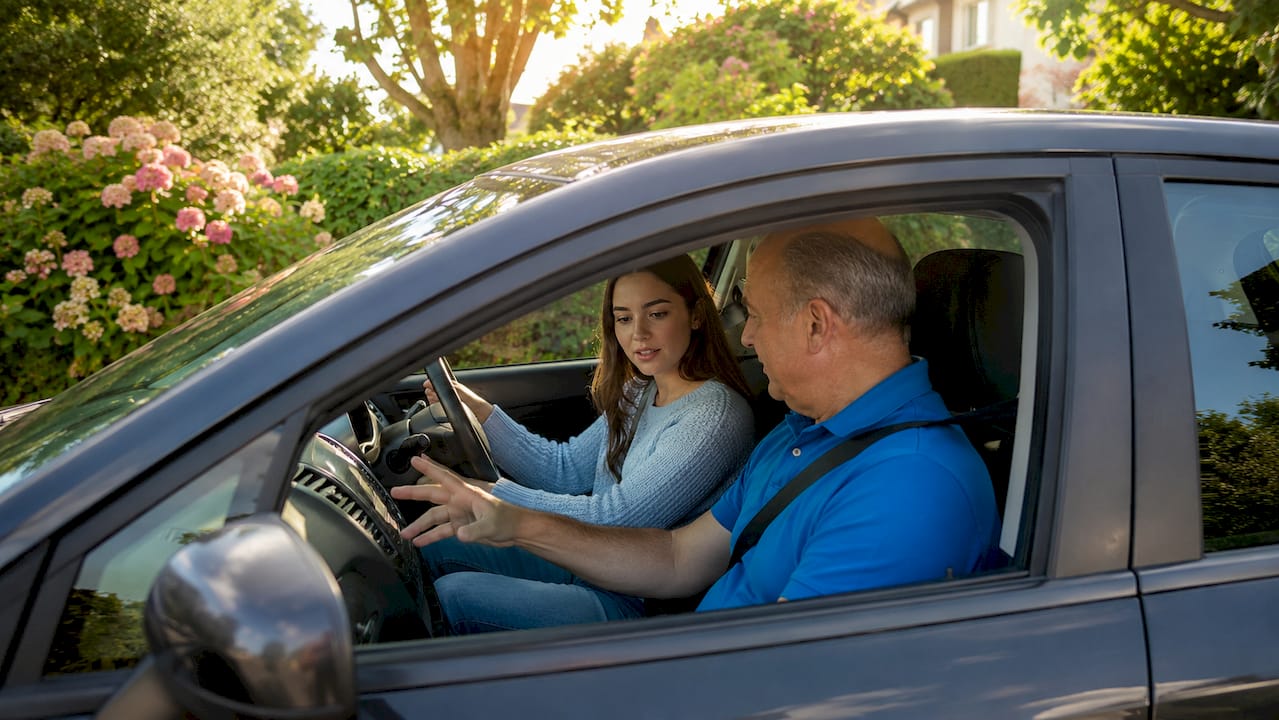
Trust in driving instruction is the foundation that determines how quickly a learner driver develops confidence, absorbs skills, and stays safe on the road. Without it, lessons become tense, progress stalls, and anxiety takes over. The role of trust in driving instruction shapes everything from how a learner handles their first roundabout to how they perform on test day. Choosing the right instructor is not just about qualifications. It is about finding someone whose approach makes you feel capable, not cautious. This guide explains what trust looks like in practice and how to find it.
How does trust influence learning outcomes in driving lessons?
Trust between a learner and their instructor directly determines how much the learner retains and how fast they progress. When a learner feels safe and supported, their brain shifts from a defensive, fear-based state into a receptive, skill-building mode. That shift is not abstract. It shows up in how quickly they master clutch control, how calmly they approach busy junctions, and how confidently they reverse around a corner.
Calm, emotionally intelligent instruction reduces learner anxiety and keeps students engaged throughout the lesson. Validation of fears matters here. When an instructor acknowledges that a manoeuvre feels difficult rather than dismissing the concern, the learner stays motivated instead of shutting down.
Small wins are a powerful trust mechanism. Celebrating achievements like smooth braking shifts the learning experience from fear to skill-building. A learner who hears “that gear change was much smoother” after ten minutes of stalling is far more likely to attempt the next challenge with confidence. The instructor who only corrects mistakes trains the learner to expect criticism, which raises stress and reduces performance.
Learners also benefit when they feel free to voice their concerns. Verbalising fears allows instructors to adapt lessons in real time, reducing anxiety and improving performance. A learner who says “I’m nervous about this junction” gives the instructor the information needed to slow down, explain, and rebuild confidence before proceeding.
Pro Tip: Before your first lesson, tell your instructor one thing that makes you nervous about driving. A good instructor will use that information to structure the session around your specific concern, not ignore it.
Key outcomes linked to trust in driving lessons include:
- Faster skill acquisition because the learner is not distracted by fear
- Greater willingness to attempt difficult manoeuvres earlier
- Better retention of feedback because the learner is emotionally open to it
- Reduced test anxiety because confidence has been built consistently over time
- Lower likelihood of needing to repeat lessons due to stalled progress
What factors build trust between learner drivers and instructors?
Trust is not accidental. It is built through specific behaviours, communication habits, and safety practices that instructors either have or do not have.
First impressions set the tone
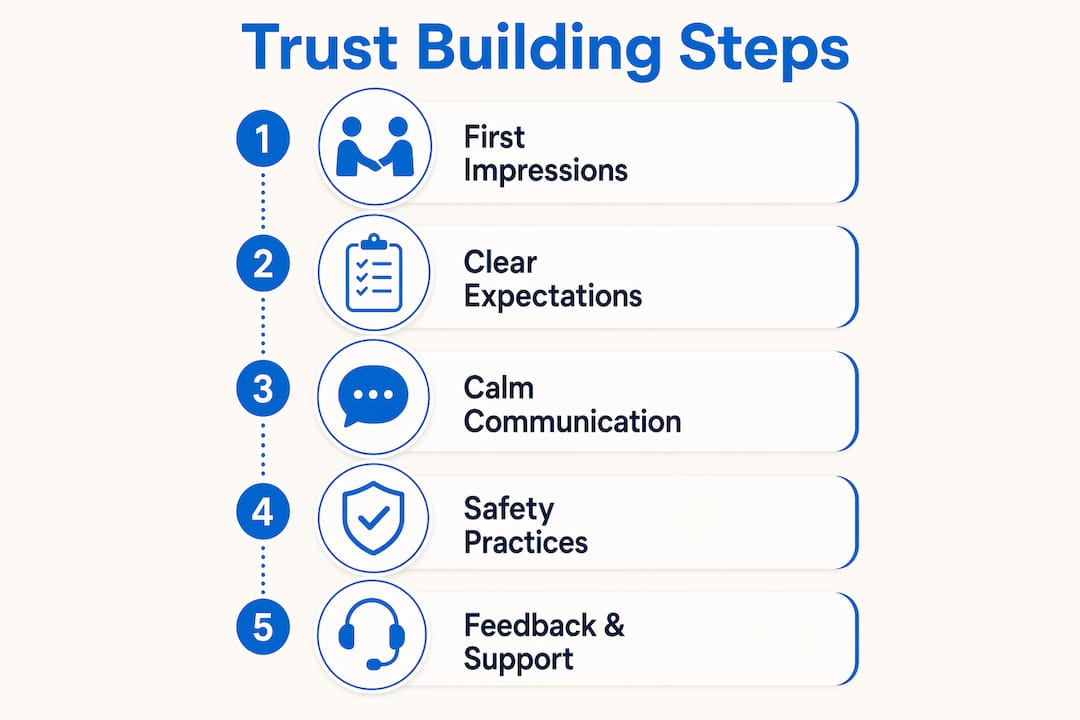
The very first lesson carries disproportionate weight. The TLI41225 Driving Instructor Course teaches emotional intelligence techniques specifically to help instructors create positive early experiences. An instructor who arrives on time, introduces themselves warmly, explains the lesson plan clearly, and checks in on the learner’s nerves before starting the engine is already building trust before the car moves.
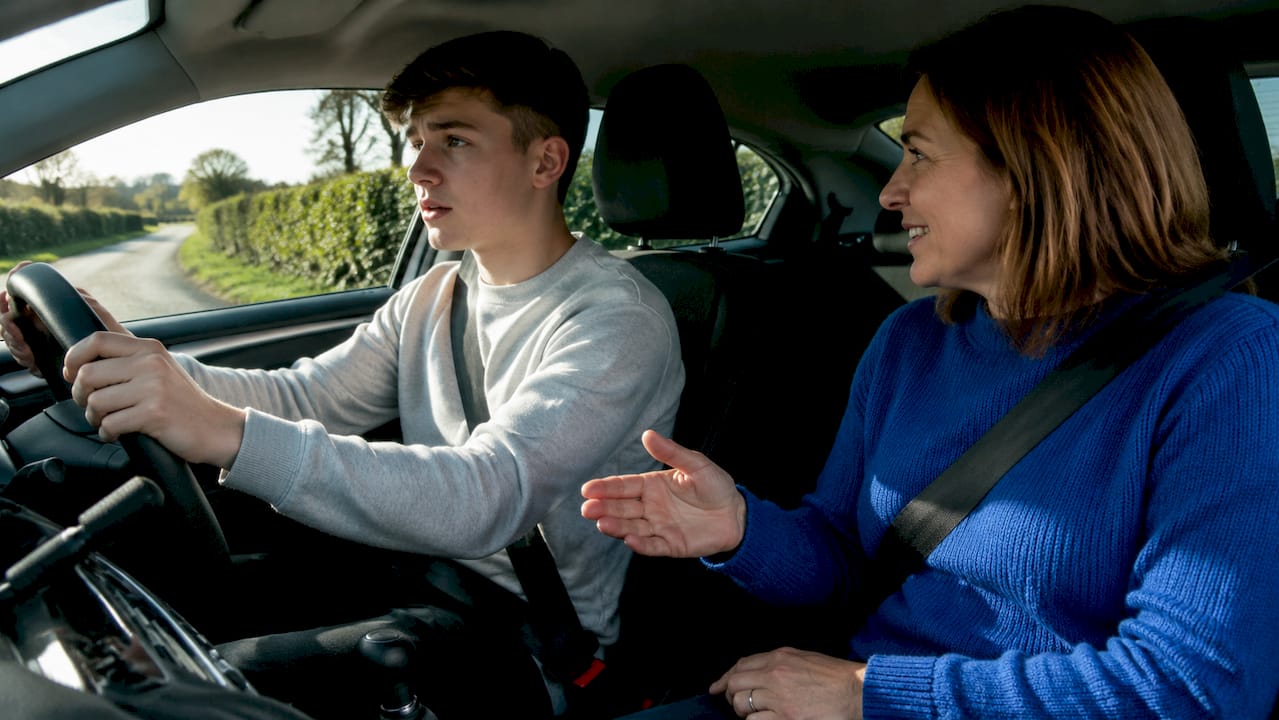
Structured lessons with clear expectations reduce anxiety from the outset. Learners who know what to expect in a session feel in control, and that sense of control is central to trust.
The psychological role of dual controls
Passenger-side brakes are more than a safety device. They reassure learners by establishing a safe zone, reducing fear and allowing learners to attempt complex manoeuvres earlier than they otherwise would. Knowing the instructor can intervene if needed removes the catastrophic thinking that holds many learners back.
The nuance, however, is critical. Overuse of dual controls erodes learner trust and prevents independent decision-making from developing. An instructor who grabs the wheel or stamps on the brake at the first sign of hesitation sends a clear message: “I don’t believe you can handle this.” That message is corrosive to confidence. The dual controls should function as a safety net, not a substitute for letting the learner drive.
Here are the key trust-building behaviours to look for in a driving instructor:
- Calm, consistent tone even when the learner makes mistakes, because raised voices create panic rather than correction.
- Constructive feedback that explains what to do differently, not just what went wrong.
- Transparent lesson planning so the learner understands the purpose of each exercise.
- Appropriate use of dual controls that protects without undermining learner autonomy.
- Genuine acknowledgement of progress, however small, at regular intervals throughout the lesson.
Pro Tip: Ask a prospective instructor how they handle a learner who stalls repeatedly. Their answer will tell you more about their teaching style than any qualification certificate.
How does trust work in complex driving scenarios?
Trust becomes most visible under pressure. When a learner approaches a busy roundabout, merges onto a dual carriageway, or navigates a multi-lane junction, the quality of the instructor-learner relationship determines whether the learner freezes or acts.
Research from simulator studies demonstrates just how measurable this is. Trust prediction models reached 86.42% accuracy in measuring driver confidence linked to instruction clarity in roundabout scenarios. That figure shows trust is not a soft, unmeasurable quality. It is a predictable outcome of consistent, clear communication.
The following table summarises how trust dynamics shift across different driving scenarios:
| Scenario | Trust challenge | Instructor behaviour that builds trust |
|---|---|---|
| Roundabout entry | Fear of misjudging gaps | Verbal guidance before entry, not during panic |
| Dual carriageway | Speed anxiety | Gradual exposure with clear speed targets |
| Parallel parking | Embarrassment at errors | Normalising mistakes as part of the process |
| Emergency stop | Shock response | Pre-briefing the exercise fully before attempting |
| Night driving | Reduced visibility anxiety | Explaining what changes and what stays the same |
There is a compelling parallel between human instruction and autonomous vehicle systems here. The World Economic Forum notes that trust is earned through transparent dialogue, replacing command structures with mutual understanding. Self-driving car engineers discovered that passengers trust autonomous systems far more when the system explains its decisions. The same principle applies in a driving lesson. An instructor who says “I’m going to ask you to slow down here because the sight lines are poor” builds more trust than one who simply says “slow down.”
Explaining the why behind decisions transforms the learner-instructor dynamic from a hierarchy into a partnership. That shift matters enormously for how learners respond to correction and how willing they are to take on new challenges.
How to choose a trustworthy driving instructor
Selecting the right instructor is one of the most consequential decisions a learner or parent will make. The wrong choice costs money, time, and confidence. The right choice accelerates progress and makes the test feel achievable.
Look for these qualities when evaluating instructors:
- Verified qualifications: Confirm the instructor holds a current DVSA Approved Driving Instructor (ADI) badge. This is a legal requirement in the UK and a baseline indicator of competence.
- Positive, specific reviews: Look for Trustpilot or Google reviews that mention patience, clear communication, and calm instruction. Generic five-star ratings without detail are less informative than specific accounts of how the instructor handled a nervous learner.
- A clear lesson structure: Ask whether lessons follow a progression plan or are improvised. Structured lessons, as taught in frameworks like TLI41225, build confidence more reliably than ad hoc sessions.
- Emotional intelligence signals: During a trial lesson, notice whether the instructor asks about your concerns, explains the purpose of each exercise, and responds to mistakes with guidance rather than frustration.
- Appropriate vehicle safety features: Modern dual-control vehicles, such as the Volkswagen models used by Pass4you in Milton Keynes, signal that the school invests in learner safety and comfort.
If trust is absent after several lessons, changing instructors is not a failure. It is a sensible decision. Staying with an instructor who makes you more anxious rather than less will slow your progress and increase your overall cost. Explore learner driving courses that prioritise instructor-learner compatibility from the outset.
Parents researching on behalf of a learner should ask the school directly: “How does your instructor handle a learner who is very anxious?” The answer reveals whether the school treats emotional wellbeing as central to instruction or as an afterthought.
For new drivers, understanding the basics of car care and vehicle awareness also contributes to confidence. A learner who understands what they are driving feels more in control before the lesson even begins.
Key takeaways
Trust in driving instruction is the single most important factor in determining how quickly and confidently a learner driver develops the skills needed to pass their test and drive safely for life.
| Point | Details |
|---|---|
| Trust accelerates learning | Learners in a trusting relationship absorb feedback faster and attempt harder manoeuvres sooner. |
| First impressions are decisive | Structured, emotionally intelligent first lessons set the tone for the entire learning journey. |
| Dual controls require balance | Passenger-side brakes build confidence when used appropriately, but overuse undermines learner autonomy. |
| Complex scenarios reveal trust quality | Clear, transparent communication from instructors measurably improves performance under pressure. |
| Changing instructors is valid | If trust is absent after several lessons, switching instructors protects both progress and confidence. |
Why trust matters long after the test
I have seen learners who passed their tests quickly and others who took far longer, and the difference rarely came down to natural ability. It came down to whether they trusted their instructor enough to make mistakes without shame.
The most capable learners I have worked with were not the ones who never stalled or misjudged a gap. They were the ones who felt safe enough to try, get it wrong, and try again. That willingness to attempt something difficult without fear of humiliation is entirely a product of the instructor relationship.
There is a tendency to focus on pass rates as the measure of a good driving school. Pass rates matter, but they are a downstream result of something more fundamental. An instructor who builds genuine trust produces learners who are not just capable of passing a test. They produce drivers who are calm, self-aware, and genuinely safe on the road for decades.
Parents often ask me whether their child is “ready” to start lessons. My honest answer is that readiness is less about age or maturity and more about finding the right instructor. The right person makes a nervous seventeen-year-old feel capable within twenty minutes. The wrong person can set that same learner back months.
Prioritise trust above price, proximity, and even pass rates when choosing an instructor. The other factors matter, but trust is the one that determines whether the experience builds a confident driver or a reluctant one.
— Simon
Start your driving journey with Pass4you

Pass4you is a Milton Keynes driving school with an 83.33% first-time pass rate, built on the kind of calm, patient instruction this article describes. Every lesson is delivered in a modern Volkswagen fitted with dual controls, giving learners the safety net they need to build real confidence. Instructors focus on clear communication, structured progression, and genuine encouragement at every stage. Whether you are a nervous first-timer or a learner who has struggled with a previous instructor, Pass4you designs lessons around your pace. Explore learner driving courses at Pass4you and take the first step towards passing with confidence.
FAQ
What is the role of trust in driving instruction?
Trust in driving instruction is the relationship quality that allows learners to take risks, make mistakes, and absorb feedback without fear. It directly determines how quickly skills develop and how confident a learner feels on test day.
How does an instructor build trust with a learner driver?
Instructors build trust through calm communication, structured lesson plans, constructive feedback, and appropriate use of dual controls. Emotional intelligence techniques, as taught in the TLI41225 course, are central to creating positive early experiences.
Can a lack of trust with my instructor affect my test result?
Yes. Learners who feel anxious or unsupported in lessons carry that anxiety into the test. Research confirms that consistent, clear communication measurably improves driver confidence, particularly in high-pressure scenarios like roundabouts.
Should I change my driving instructor if I don’t feel comfortable?
Changing instructors is a practical decision, not a personal failure. Staying with an instructor who increases your anxiety will slow your progress and raise your overall cost. Finding someone whose style suits you is the most efficient path to passing.
How do dual controls affect learner confidence?
Passenger-side brakes create a psychological safety net that allows learners to attempt difficult manoeuvres sooner. However, overuse of dual controls prevents learners from developing independent decision-making, so the best instructors use them sparingly and purposefully.
Leave a Reply