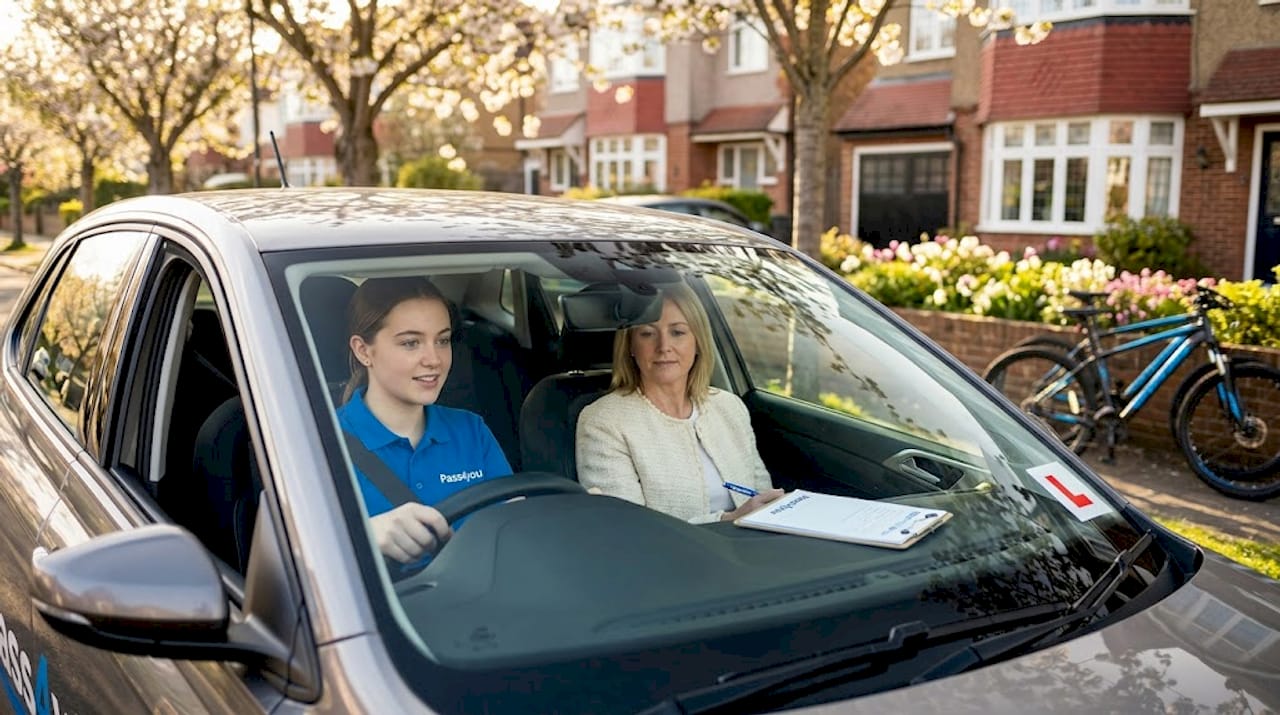
Most learners begin behind the wheel in an empty car park, practising clutch control and basic manoeuvres with no real pressure around them. That is useful. But the role of residential street driving lesson practice goes far beyond what any car park can teach. It is where real road skills actually form. Quiet neighbourhood streets introduce signage, junctions, pedestrians, and unpredictable situations in a setting that is challenging enough to matter but forgiving enough to learn from. If you are a learner driver or a parent trying to understand what proper driving progression looks like, this article explains exactly why residential streets are the most important stage of early driver training.
Table of Contents
- Key takeaways
- The role of residential street driving lessons in your progression
- Core skills built on residential streets
- Comparing residential streets with other learning environments
- Practical tips for getting the most from residential lessons
- My honest take on residential driving lessons
- Ready to build real confidence on the road?
- FAQ
Key takeaways
| Point | Details |
|---|---|
| Car parks have clear limits | Initial practice builds basic control but cannot replicate real road conditions or hazards. |
| Residential streets are the ideal middle ground | They introduce genuine road rules and traffic without the pressure of busy main roads. |
| Core skills develop here first | Speed judgement, mirror use, signalling, and hazard awareness are all formed in residential environments. |
| Structured lessons accelerate progress | A professional instructor on residential roads provides feedback that parents and self-practice simply cannot match. |
| Confidence grows through repetition | Repeated practice on familiar residential routes builds the spatial memory learners need for independent driving. |
The role of residential street driving lessons in your progression
Learning to drive follows a natural sequence, and skipping steps creates gaps that often show up on test day. Most learners start with car park sessions because there is no traffic, no time pressure, and space to make mistakes without consequences. That environment builds the basics: moving off smoothly, steering accurately, and understanding how the vehicle responds. It is a necessary foundation.
The problem is that car parks are almost nothing like real roads. There are no speed limits to observe, no junctions to read, no cyclists appearing unexpectedly from side streets. A learner who spends too long in a car park often develops a false sense of readiness. The car feels familiar, but the road still feels foreign.
Gradual movement from car parks to residential streets helps learners experience real-world situations with minimal traffic, which is exactly what makes residential streets such an effective transitional environment. You get the genuine elements of road driving, signage, parked cars, junctions, pedestrians, and light moving traffic, but at a pace and complexity level that does not overwhelm a learner who is still building their confidence.
Here is what a well-structured progression into residential streets typically looks like:
- Car park basics: Moving off, stopping, steering control, and simple manoeuvres.
- Quiet residential roads with no traffic: Learning to read road markings, signs, and junctions without the pressure of other vehicles.
- Residential streets with light traffic: Managing space, signalling, and responding to other road users in real time.
- Busier residential areas and minor roads: Handling junctions, give-way situations, and pedestrian crossings with confidence.
- Main roads and dual carriageways: High-speed environments introduced only once foundational skills are solid.
Pro Tip: If you are a parent supervising practice, choose the same two or three residential streets for the first few sessions. Familiarity with the layout lets your learner focus on technique rather than uncertainty about what comes next.
Core skills built on residential streets
This is where the importance of residential driving lessons becomes concrete. The skills a learner builds on quiet neighbourhood roads are not warm-up skills. They are the skills that appear on every DVSA driving test examiner’s checklist.
Speed management is the first real challenge. In a car park, there is no speed limit to follow. On a residential street, a learner must read the signs, adjust their speed accordingly, and understand why 20mph or 30mph limits exist. Getting this wrong in a car park has no consequences. Getting it wrong on a test or as a new independent driver absolutely does.
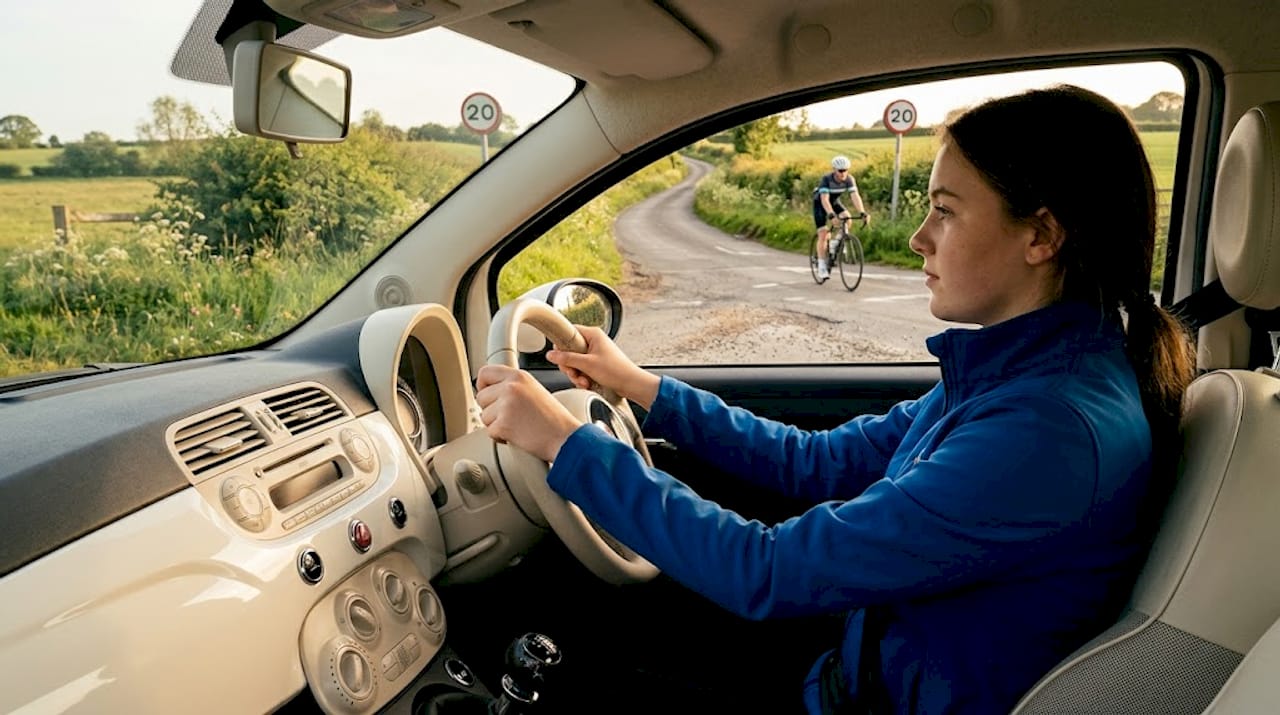
Right-of-way at junctions is another skill that only develops with genuine practice. Understanding and applying road rules in lower-stress environments prepares learners for the more complex decisions they will face on main roads later. A T-junction on a quiet estate may feel simple, but it teaches the learner to look, assess, and commit to a decision. That decision-making process is the same one they will need on a busy high street, just with more variables.
Mirrors and signalling are habits, not skills. The only way to build a habit is through repetition in context. A learner who signals correctly on a residential street because there happens to be a pedestrian watching is developing the right instinct. Practising these core rules in residential areas transfers directly to test performance and lifelong safe driving.
Then there is hazard awareness. Residential streets have a particular set of hazards that other environments simply do not replicate:
- Children stepping out from between parked cars.
- Cyclists who may ride unpredictably or without lights.
- Delivery vehicles partially blocking the road.
- Parked cars opening doors into the lane.
- Drivers reversing out of driveways with limited visibility.
Learners who practise on residential streets develop the kind of anticipatory thinking that separates safe drivers from reactive ones. This is not a skill you can practise in an empty car park.
Research from cognitive science supports this too. Repeated practice on familiar routes builds spatial memory and cognitive mapping, which means learners gradually integrate new driving information with what they already know about a neighbourhood. This is why confident drivers can hold a conversation while navigating a familiar area, and why newer drivers should start somewhere recognisable.
Pro Tip: After each session, ask your learner to describe one hazard they noticed and how they responded to it. This brief verbal review locks in awareness and encourages the reflective thinking that professional instructors call “commentary driving.”
Comparing residential streets with other learning environments
Not every practice environment serves the same purpose. Understanding where residential streets sit in relation to other options helps learners and parents make better decisions about where to spend practice time.
| Environment | Best suited for | Limitations |
|---|---|---|
| Car park | Basic vehicle control and manoeuvres | No real traffic, no road rules in context |
| Quiet rural road | Building speed confidence away from traffic | Different hazard profile, few junctions or pedestrians |
| Residential street | Developing core road skills in low-to-moderate traffic | Not ideal for high-speed or dual carriageway practice |
| Main road or town centre | Advanced driving and test-condition preparation | Too complex for early-stage learners |
Residential streets provide moderate complexity that exposes learners to signs, junctions, pedestrians, and variable conditions without the pressure of heavy traffic. Rural roads, by contrast, tend to have fewer junctions and almost no pedestrian activity, which means they do not build the same range of skills. Main roads are better saved for the later stages of training when a learner has the processing capacity to handle multiple competing demands simultaneously.
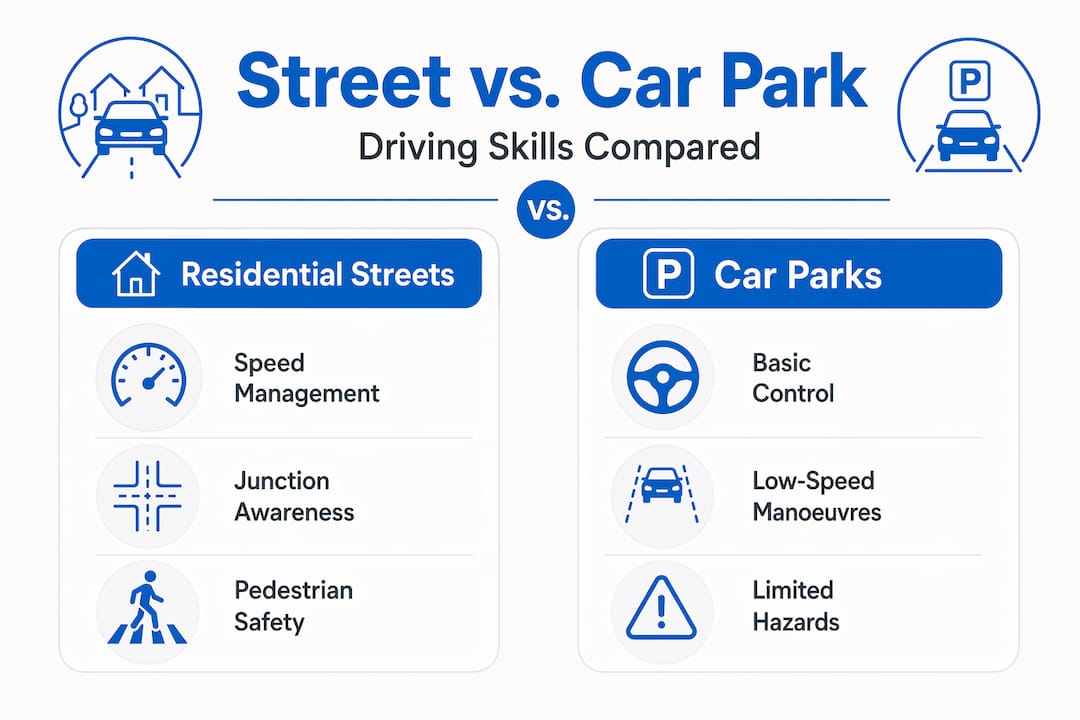
The key point here is that no single environment is sufficient on its own. Residential street practice is not the end goal. It is the critical middle stage that makes every other type of driving feel more manageable.
Practical tips for getting the most from residential lessons
Whether you are practising with a parent or working with a professional instructor, the benefits of street driving practice depend on how you approach each session.
- Choose streets that match your current ability. Start with genuinely quiet roads with minimal parked cars. As confidence grows, move to streets with more activity.
- Set a specific goal for each session. “Today we will focus on signalling at every junction” is far more productive than a general drive around the block.
- Prioritise patience over distance. Covering two kilometres with full awareness is more valuable than ten kilometres on autopilot.
- Repeated practice on familiar routes builds confidence through familiarity, reducing the hesitation and anxiety that often appear on test day.
- Give feedback after the session, not during it. Correcting a learner mid-drive creates anxiety. Save detailed feedback for when the car is stopped.
- Know when to bring in a professional. Certified instructors offer clear, unbiased feedback that helps learners progress steadily, and they remove the emotional pressure that can sometimes build between parent and child.
Pro Tip: Before each residential practice session, check that your tyre tread depth meets the legal minimum of 1.6mm. Residential roads include wet patches, sharp corners, and emergency stops. A car in poor condition undermines every skill the learner is trying to build.
Choosing quiet residential streets with realistic goals and gradual increases in difficulty is the single most effective formula for confident, test-ready learners. The structured approach taken by professional driving schools mirrors exactly this method, which is why their pass rates consistently outperform unsupervised private practice.
My honest take on residential driving lessons
I have seen learners arrive for their first lesson having logged thirty or forty hours in a car park with a parent. They can control the car beautifully. And then they freeze the moment another vehicle appears at a junction.
In my experience, the gap is almost always the same. They were never given enough time on residential streets before being pushed onto busy roads. Parents often rush this stage because the car park feels boring and the main road feels like “real driving.” But the residential street is where safe habits actually form. It is not a stepping stone you can skip.
What I have also noticed is that learners who spend time on the same residential streets repeatedly develop something you cannot teach directly: calm. Familiarity with a route lets the brain stop processing geography and start processing hazards. That shift is where confident driving begins. You can explore more resources for learners to support this kind of progressive practice.
The mistake I see parents make most often is treating residential street driving as a rehearsal for the real thing. It is not a rehearsal. It is the real thing. The habits built here become the reflexes a driver uses for life.
— Simon
Ready to build real confidence on the road?
At Pass4you, residential street practice is built into every learner programme from the very first lesson. Our instructors work with you at your pace, guiding you through quiet streets and gradually introducing more complex road environments as your ability grows.

Our learner driving courses are delivered in dual-control Volkswagen vehicles by calm, experienced instructors who know the local roads around Milton Keynes inside out. With an 83.33% first-time pass rate, we know what works. Whether you prefer a steady weekly lesson schedule or want to accelerate with an intensive course, Pass4you has the right option for you. Get in touch today to book your first lesson.
FAQ
What is the role of a residential street driving lesson?
A residential street driving lesson builds the core skills that a car park simply cannot develop, including junction awareness, hazard perception, speed management, and correct signalling in a real road environment.
When should a learner move from car park to residential streets?
Once a learner can move off smoothly, steer confidently, and stop safely, they are ready for quiet residential streets. This transition usually happens within the first two to four lessons.
How do residential lessons help with the driving test?
Residential street practice reduces test anxiety by building familiarity with real road conditions, improving decision-making at junctions, and reinforcing the mirror, signal, and manoeuvre routine that examiners assess.
Can parents teach residential street driving effectively?
Parents can be very helpful for building hours and familiarity, but certified instructors provide unbiased feedback and structured progression that parental supervision alone rarely achieves. A combination of both tends to produce the best results.
How many residential street lessons does a learner typically need?
There is no fixed number, but most learners benefit from spending a significant portion of their total training hours on residential roads before progressing to busier routes. Quality of practice matters more than quantity of hours.
Leave a Reply