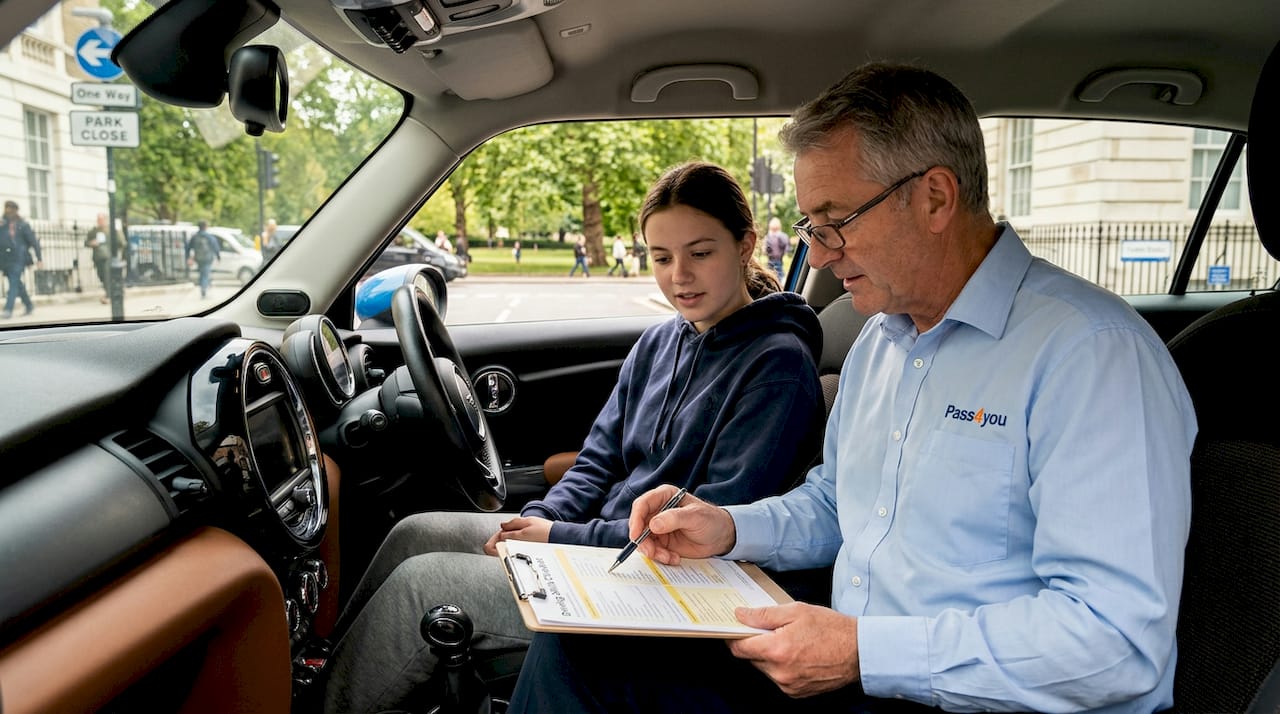
Finding the right person to teach you to drive is one of the most consequential decisions you will make as a learner. Choose wisely and you will build real confidence, develop safe habits, and pass your test without wasting time or money. Choose poorly and you could spend months feeling anxious, picking up bad technique, or stalling without progress. This guide cuts through the noise to help you choose the right driving instructor based on what actually matters: qualifications, teaching style, vehicle quality, and genuine success indicators.
Table of Contents
- Key takeaways
- How to choose the right driving instructor
- Teaching style and your learning preferences
- Manual vs automatic: matching vehicle to your goals
- Reading reviews and pass rates properly
- Practical steps to find and trial instructors
- My honest take on what actually matters
- Why Pass4you might be the right fit for you
- FAQ
Key takeaways
| Point | Details |
|---|---|
| Verify ADI status first | Always confirm your instructor holds a green ADI badge before booking a course. |
| Teaching style matters as much as credentials | An instructor who adapts to your pace will build your confidence far faster than a technically qualified one who does not. |
| Use trial lessons strategically | A single trial lesson tells you more about compatibility than any number of online profiles. |
| Read reviews critically | Look for consistent patterns across multiple genuine reviews, not just an overall star rating. |
| Logistics affect progress | Location, scheduling flexibility, and backup cover are practical factors that directly impact your learning momentum. |
How to choose the right driving instructor
Before you book a single lesson, you need to understand the difference between two types of instructors operating on UK roads. An Approved Driving Instructor (ADI) has passed all three parts of the DVSA qualifying examination and is registered on the official ADI register. They display a green badge in their windscreen. A Potential Driving Instructor (PDI) is still in training and displays a pink badge. PDIs are permitted to charge for lessons only while holding a trainee licence, and their teaching experience is understandably limited.
Accredited instructors trained via recognised programmes provide up-to-date knowledge of road laws, safe driving techniques, and adapt lessons to individual learner needs. That combination is something an informal arrangement with a family member simply cannot replicate. Teaching informally can foster bad habits and lacks the structured progression that professional instruction provides.
Key things to check when verifying driving instructor qualifications:
- ADI registration: Ask for their ADI number and cross-reference it on the official DVSA register.
- Badge colour: Green means fully qualified. Pink means trainee. Know which you are getting.
- Check sheet grade: ADIs are periodically assessed by DVSA examiners and awarded grades. A Grade A or B instructor has demonstrated strong teaching ability.
- Insurance: Fully qualified ADIs must carry appropriate professional indemnity and motor insurance. Ask directly if you are unsure.
Pro Tip: Ask your instructor when they last completed continuing professional development. The best instructors treat learning as ongoing, not something that ends once they pass their qualifying exam.
Teaching style and your learning preferences
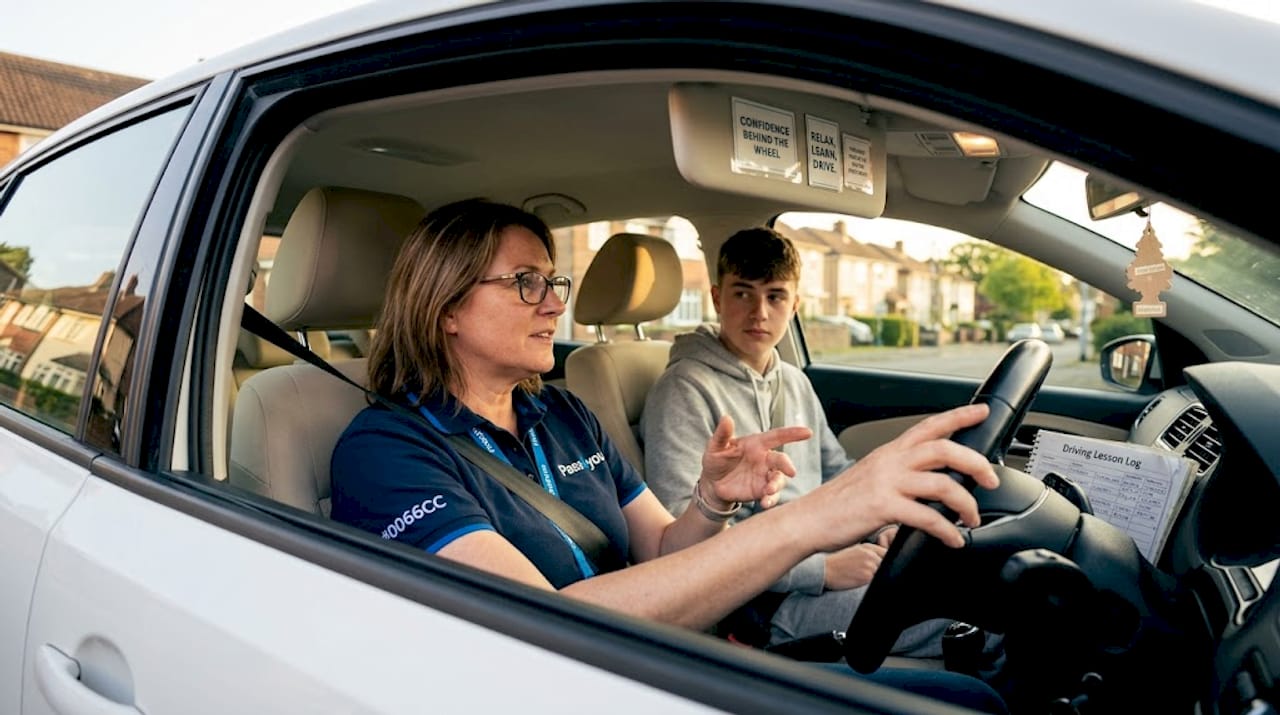
The right instructor goes beyond credentials. The personality and teaching approach of your instructor can determine whether you enjoy lessons or dread them, and ultimately whether you pass.
Instructors broadly fall into a few different camps. Some are firm and structured, favouring a precise step-by-step approach where everything is explained before you attempt it. Others are more relaxed and conversational, building rapport while guiding you to discover technique through experience. Some rely heavily on verbal instruction while others use demonstration and visual cues. None of these approaches is objectively superior. What matters is how well the style matches how you learn.
Consider these questions before and during your first lesson:
- Do you need someone calm and patient, or do you respond better to a more direct style?
- Do you prefer detailed explanations upfront, or do you learn better by doing first and reflecting after?
- How do you respond to criticism? Do you need encouragement built into feedback, or are you comfortable with blunt correction?
Instructor adaptability to learner preferences strongly influences confidence and skill acquisition. A good instructor notices when something is not working and changes their approach without being asked. A less experienced or less engaged instructor keeps repeating the same explanation in the same way, even when you clearly are not getting it.
There is also a technique worth knowing about for nervous learners. Narrating actions aloud during lessons, such as saying “mirror, signal, manoeuvre” as you do it, helps manage anxiety and builds confidence more effectively. If an instructor actively encourages this kind of technique, that is a strong sign they are thinking about your learning experience, not just ticking off topics.
Pro Tip: Book a trial lesson with two different instructors before committing to a block booking. The contrast alone will tell you a great deal about what suits you.
Manual vs automatic: matching vehicle to your goals
This is a decision that affects both which instructors you can use and what your licence allows you to do once you pass.
| Factor | Manual | Automatic |
|---|---|---|
| Licence flexibility | Pass in manual and you can drive both | Pass in automatic and you are restricted to automatics only |
| Learning curve | Steeper initially due to clutch and gear changes | Easier to pick up, faster early progress |
| Instructor availability | More instructors teach in manual vehicles | Fewer automatic instructors, but availability is growing |
| Cost | Generally similar, though varies by school | Can be slightly higher due to fewer vehicles in the fleet |
| Best suited for | Learners who want maximum flexibility | Learners with coordination challenges or those who just want to pass quickly |
The condition of the lesson car also matters considerably. It should be modern, clean, and fitted with dual controls so the instructor can intervene safely if needed. A car that is poorly maintained, cramped, or lacks dual controls is a warning sign about how seriously the instructor takes their professional standards.
When searching for local driving instructors, confirm explicitly that they teach in the transmission type you have chosen and that their vehicle is appropriate for your needs. Do not assume.
Reading reviews and pass rates properly
Many learner drivers make the mistake of focusing purely on pass rate statistics when choosing a driving school. The reality is more nuanced. Official pass rates are not publicly available for individual instructors in the UK. Any instructor advertising a specific pass rate is relying on self-reported data, which is difficult to verify independently.
That does not mean success indicators are useless. It means you need to know what to look for:
- Verified review platforms: Look for reviews on Google, Trustpilot, or Yell where submissions require an account. These are harder to fabricate than testimonials on an instructor’s own website.
- Patterns over scores: A high star rating with a handful of reviews means less than a solid rating with fifty reviews showing consistent themes. Look for repeated mentions of patience, clear explanations, and calm behaviour under pressure.
- Specific detail: Learner reviews and testimonials provide the best insight into an instructor’s reliability, patience, and teaching success. Reviews that say “passed first time, very patient” are more useful than a vague “great instructor.”
- Red flags: Be cautious of instructors who advertise suspiciously high pass rates without any context. An 83% first-time pass rate at a specific test centre, publicly stated and backed by reviews, is credible. A claim of “98% first-time passes” with no supporting detail is not.
- Response to negative reviews: How an instructor or school responds to criticism tells you a great deal about their professionalism.
Practical steps to find and trial instructors
Knowing what to look for is one thing. Actually finding good candidates is another. Here is a practical process that removes the guesswork.
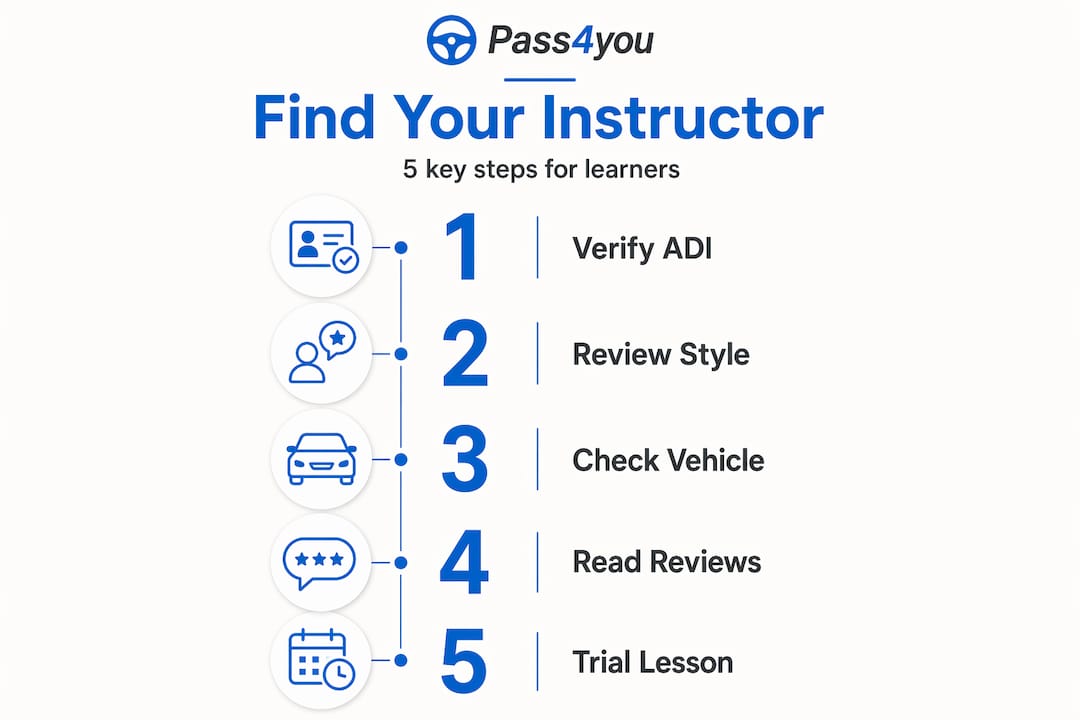
- Start with recommendations. Ask friends, family, or colleagues who have recently passed their test. First-hand experience from someone you trust carries more weight than any marketing material.
- Check the DVSA register. The official ADI register lets you find approved instructors in your area and confirm their status. Use it as your baseline, not your only source.
- Read reviews on independent platforms. Cross-reference what you find on Google and Trustpilot. Look for the patterns described above, not just the overall score.
- Contact three to four instructors. Ask about their teaching approach, lesson vehicle, availability in your area, and what happens if they are unavailable due to illness or holiday. Backup cover is something driving schools can offer that a sole trader cannot, and it matters for maintaining your learning momentum.
- Book trial lessons. Do not commit to a block of ten lessons without first experiencing at least one lesson with that instructor. Most reputable instructors offer this.
- Evaluate the lesson honestly. Did the instructor listen to you? Did they adapt when something was not working? Was the car clean and in good condition? Did you feel safe and respected?
Pro Tip: When you contact an instructor for the first time, notice how quickly and clearly they respond. Communication style before lessons are booked often reflects how they will behave during them.
A practical table for evaluating candidates:
| Criteria | What to look for |
|---|---|
| Qualification | Green ADI badge, registered on DVSA ADI register |
| Vehicle | Modern, dual controls, clean, appropriate transmission |
| Teaching flexibility | Willingness to adapt style to your pace and confidence |
| Availability | Consistent slot availability, backup if needed |
| Reviews | Verified, detailed, with recurring positive themes |
| Communication | Prompt, clear, and professional before lessons begin |
Bear in mind that beginners typically need around 45 hours of professional lessons supplemented by 20 hours of private practice. That is a significant investment of time and money, which makes choosing the right person from the start far more important than it might initially seem.
My honest take on what actually matters
In my experience watching learner drivers go through this process, the ones who progress fastest are rarely those who found the instructor with the highest advertised pass rate. They are the ones who found someone they genuinely trusted and felt comfortable with.
I have seen learners arrive with weeks of lessons behind them, technically covering the right topics but completely lacking in confidence, because their instructor was efficient but cold. The anxiety that builds up in those situations does not just slow progress. It can make a learner doubt whether they are capable at all.
What I would tell anyone going through this process is simple: pass rate numbers are a starting point, not a destination. The qualities of a good driving instructor go well beyond their DVSA grade. Patience, adaptability, genuine encouragement without false praise, and the ability to notice when you are overwhelmed before you say anything. Those are the things that separate an average instructor from one who will actually get you to where you want to be.
And if you start lessons and something feels wrong, change. There is no sunk cost worth preserving at the expense of your confidence and safety. The right instructor is out there. Do not settle because switching feels awkward.
— Simon
Why Pass4you might be the right fit for you
If you are looking for an instructor who combines genuine qualifications with the kind of calm, patient teaching style described throughout this guide, Pass4you is worth a serious look. Based in Milton Keynes, Pass4you maintains an 83.33% first-time pass rate at Bletchley, well above the local average, and backs that figure with verified Trustpilot reviews.
Lessons are delivered in modern Volkswagen vehicles equipped with dual controls, and instructors are known for adapting their approach to each learner’s pace and confidence level. Whether you are starting from scratch or looking for a more supportive environment after a difficult experience elsewhere, Pass4you offers both learner courses designed around your goals and intensive driving courses for those who want to progress faster. Booking is straightforward by phone or email, and the team can discuss which option suits your situation before you commit to anything.
FAQ
What is an ADI and why does it matter?
An ADI (Approved Driving Instructor) has passed all three parts of the DVSA qualifying exam and is listed on the official register. Choosing an ADI over an unqualified or trainee instructor means your lessons meet government standards and your instructor is properly insured.
How many lessons will I need before I am test-ready?
Most beginners need around 45 hours of professional tuition alongside roughly 20 hours of private practice, though this varies depending on how quickly you progress and how consistent your lessons are.
Can I switch instructors if things are not working out?
Yes, and you should if the fit is genuinely poor. Staying with an instructor out of loyalty when your progress has stalled or your confidence is suffering will cost you more time and money in the long run than making a change.
How do I verify a driving instructor’s qualifications?
Ask for their ADI registration number and check it against the official DVSA ADI register at gov.uk. You can also look for their green badge displayed in the car windscreen during your first lesson.
Should I prioritise pass rate or teaching style?
Teaching style and instructor compatibility are the more reliable indicators of your likely success. Pass rates from individual instructors are self-reported and unverified in the UK, so verified learner reviews and a trial lesson will tell you far more about what to expect.
Leave a Reply