
When you’re searching for the right place to learn to drive, you’ll encounter two things almost immediately: official accreditation badges and pages of online reviews. Many learners assume that accreditation is enough of a guarantee. It isn’t. Understanding what does driving school review mean, and how it differs from formal accreditation, is the difference between choosing a school that looks legitimate on paper and one that will actually get you through your test. This article breaks down both, so you can read ratings and feedback with confidence.
Table of Contents
- Key takeaways
- What does driving school review mean, and how does it differ from accreditation?
- How to interpret driving school reviews effectively
- Industry standards and what they tell you about review claims
- Using reviews and accreditation to make your choice
- My honest take on reviews and what they really reveal
- Why Pass4you stands apart in Milton Keynes
- FAQ
Key takeaways
| Point | Details |
|---|---|
| Reviews reflect real experience | Student feedback reveals instructor quality, patience, and teaching style in ways accreditation cannot. |
| Accreditation is a legitimacy filter | Official approval confirms a school can operate legally, but it does not measure how well it teaches. |
| Patterns matter more than stars | Look for recurring themes across multiple reviews rather than relying on an overall rating alone. |
| Transparency signals quality | Schools that are open about pricing, curriculum, and instructor credentials are far more trustworthy. |
| Trial lessons reduce risk | A warm-up or introductory lesson helps you assess fit before committing to a full course. |
What does driving school review mean, and how does it differ from accreditation?
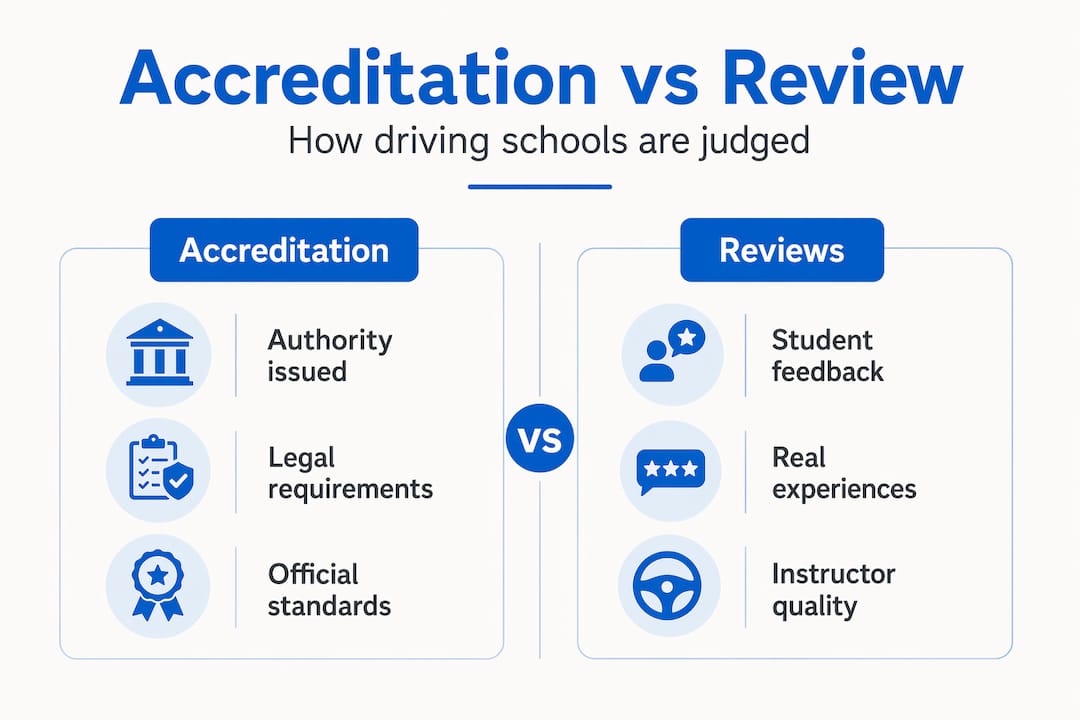
These two terms are often used interchangeably, but they measure completely different things. Accreditation confirms legitimacy; reviews provide insight into instructor patience, scheduling, and teaching effectiveness. Put simply, accreditation tells you a school is allowed to operate. Reviews tell you whether it’s worth choosing.
Accreditation is granted by a licensing or regulatory authority. In the UK, this typically means the Driving and Vehicle Standards Agency (DVSA) approves the school’s instructors and confirms the business meets minimum legal requirements. It’s a baseline, not a badge of excellence.
A driving school review, by contrast, is a public assessment written by someone who has actually paid for lessons and sat in that car. It captures things no regulator can audit: whether the instructor made you feel calm or anxious, whether the school answered the phone when you needed to reschedule, or whether the pass rate they advertised matched the reality of their teaching. That’s the driving school review significance that many learners underestimate when they first start searching.
The table below shows the key differences clearly.
| Factor | Accreditation | Reviews |
|---|---|---|
| Who provides it | Licensing authority | Past students |
| What it measures | Minimum legal standards | Actual student experience |
| Updated how often | Periodically | Continuously |
| Reflects teaching quality | Rarely | Directly |
| Useful for | Filtering out illegal schools | Evaluating quality and fit |
Pro Tip: Always verify a school’s current accreditation status directly with the relevant authority. Logos and badges on websites can be outdated, so do not take them at face value.
How to interpret driving school reviews effectively
Understanding driving school reviews means knowing what to look for beyond a star rating. A four-star average means very little if fifty of the reviews mention the same instructor keeping students waiting or pushing unnecessary extra lessons. Here’s how to read them properly.
- Look for recurring themes. A single complaint about a rescheduled lesson is forgivable. If ten different reviewers mention poor scheduling, that’s a pattern worth taking seriously. The same logic applies to praise. If multiple students specifically mention that an instructor was calm under pressure, that tells you something genuine about teaching style.
- Assess how the school responds. Patterns in negative reviews and poor response to complaints often reveal bigger issues than negative ratings alone. A school that dismisses or ignores criticism publicly is unlikely to handle your concerns differently.
- Scrutinise pass rate claims carefully. Some schools report first-time pass rates as high as 98%, but you need to ask: how many students does that figure cover? A school with three students passing in a row can claim 100%. Check whether the figure is independently verified or just self-reported marketing.
- Watch for red flags. Reputable schools are transparent about pricing, lesson structure, and instructor qualifications. Vague or evasive answers to direct questions about costs or training hours are warning signs, not minor inconveniences.
- Check instructor qualifications. Instructors should hold permanent licences and complete mandated training hours. Reviews that mention an instructor being newly qualified, unprepared, or frequently substituted with cover instructors are worth noting.
Pro Tip: When reading reviews on platforms like Trustpilot or Google, filter by “most recent” rather than relying on the default sort. School quality changes over time, and reviews from two years ago may not reflect the current team.
Industry standards and what they tell you about review claims
Knowing the baseline requirements for reputable driving schools helps you evaluate what you read in reviews. Many learners have no frame of reference for what a good school actually delivers, which makes it hard to judge whether a complaint is reasonable or whether praise is deserved.
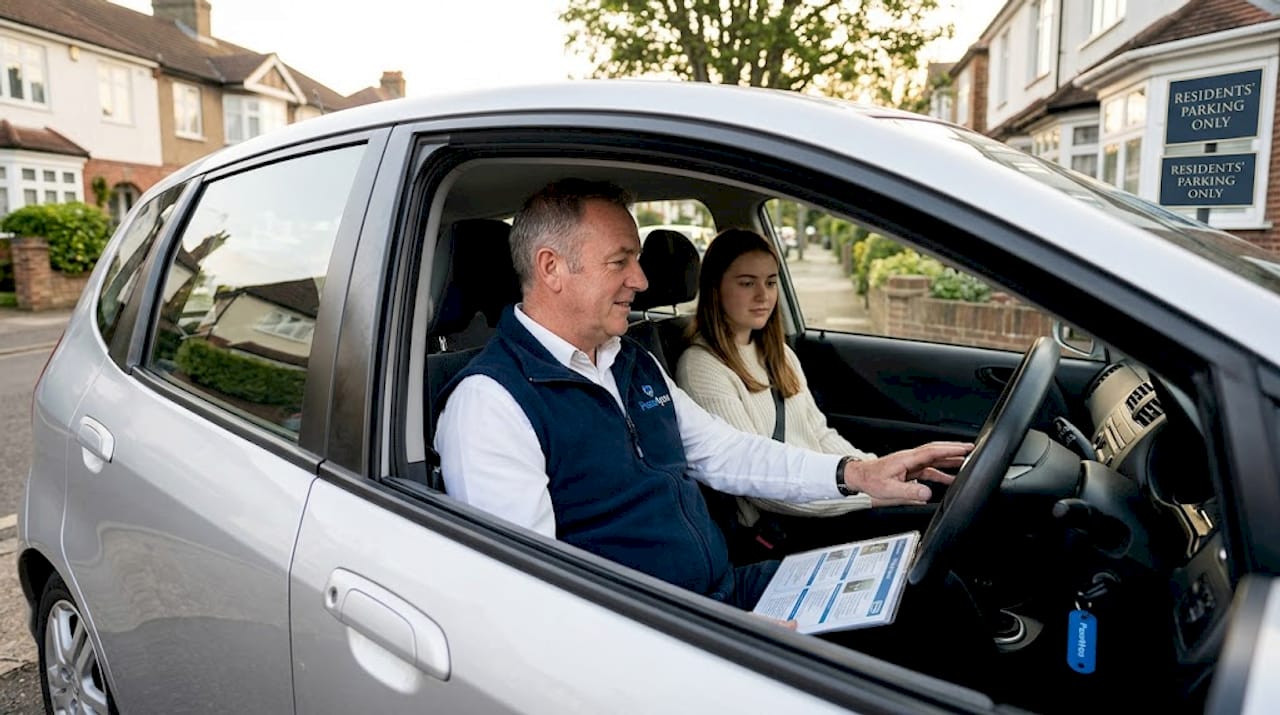
In terms of structured training, government-approved schools are typically required to deliver a minimum curriculum covering theory and in-vehicle hours. While requirements vary by country, the principle is consistent: there is a floor below which a school cannot legally operate. Audits in several jurisdictions have also found schools issuing certificates without completing the required training hours, which is precisely why accreditation alone is insufficient to judge quality.
Most beginners need between 10 and 15 hours of professional instruction to reach test standard, though this varies considerably depending on prior experience and natural aptitude. When a school’s reviews consistently mention students requiring far more hours than expected, it may signal inefficient teaching rather than pupil difficulty.
The table below outlines what you should reasonably expect from a reputable school, and what strong reviews typically confirm.
| Standard | What reputable schools deliver | What strong reviews confirm |
|---|---|---|
| Instructor qualifications | Fully licensed, trained instructors | Students mention confidence in their instructor |
| Curriculum transparency | Clear lesson plans and progress updates | Reviewers describe structured, progressive learning |
| Vehicle safety | Modern cars with dual controls | Mentions of calm, safe driving environment |
| Pricing clarity | No hidden fees or pressure to buy blocks | Positive notes on value and upfront pricing |
| Pass rate honesty | Figures backed by student data | Consistent mentions of first-time passes |
Driving schools also accept a form of duty of care toward their students. Schools should carry professional liability insurance to protect students in the event of training-related incidents. This is rarely something you’d find in a review, but it’s worth asking about directly, particularly for younger learners whose parents are involved in the decision.
Using reviews and accreditation to make your choice
With a clearer picture of what each measure tells you, here is a practical process for choosing a driving school with confidence. Think of it as a two-stage filter.
- Start with accreditation as your entry requirement. Any school you consider should be approved by the DVSA in the UK. Use the official DVSA register to confirm this before reading a single review. This removes schools operating illegally and narrows the field quickly.
- Read reviews on a verified platform. Trustpilot, Google Reviews, and similar platforms carry weight because reviews are harder to fabricate at scale. Look for schools with at least twenty reviews and a clear pattern of feedback. Fewer than that and the sample is too small to be reliable.
- Ask specific questions before booking. Use accreditation as a legitimacy filter, then use reviews to frame your questions. If multiple reviewers mention unclear pricing, call the school and ask for a full breakdown before committing. Pay attention to how quickly and clearly they respond.
- Look at what the school does not say. A school that avoids mentioning its first-time pass rate on its website, or provides no information about instructor qualifications, is worth questioning. Transparency in pricing, curriculum, and credentials is a mark of a school that has nothing to hide.
- Book a trial lesson before committing to a course. A warm-up lesson gives you direct experience of the instructor’s style, the vehicle condition, and the school’s punctuality. For intensive or accelerated driving courses, this is especially worth doing before paying for a block of hours.
You can also find useful comparison guidance and tips on the Pass4you driving blog if you want to explore what experienced learners look for when evaluating schools.
My honest take on reviews and what they really reveal
What I’ve found, after years of working in driver training, is that most learners either over-rely on accreditation or dismiss it altogether. Both are mistakes. Accreditation tells you the school cleared a minimum bar. It does not tell you that bar was high, or that the school is still clearing it today.
What I’ve seen in reviews that genuinely signals quality: specificity. When a student writes “my instructor explained clutch control three different ways until it clicked,” that’s a school delivering real teaching. When reviews say “great experience, passed first time” without any detail, I take that with a pinch of salt.
The thing that worries me more than bad reviews is silence. A school with very few reviews, or reviews that all sound slightly too polished, is often one where someone has been managing the narrative. Authentic feedback is messy. It includes a mix of praise and minor gripes, and the school’s response to the gripes tells you as much as the gripes themselves.
In my experience, the schools worth trusting are transparent about what they cannot guarantee alongside what they can. A school that promises every student will pass first time is not being honest. A school that says “our instructors will give you every tool you need, and here are the results we’ve achieved” is telling you the truth.
— Simon
Why Pass4you stands apart in Milton Keynes
If you are based in Milton Keynes and ready to start your lessons, the quality of your instructor matters more than almost anything else. Pass4you has built a reputation for exactly the kind of honest, structured teaching that strong reviews describe.
With an 83.33% first-time pass rate well above the local average, fully qualified instructors, and modern dual-control Volkswagen vehicles, Pass4you delivers the kind of experience that shows up clearly in verified Trustpilot feedback. Whether you are starting from scratch or looking to fast-track your progress, their learner driving courses are designed to build genuine confidence, not just tick boxes. Book a lesson today by phone or email and take the first step toward passing with a school that has the reviews to back up its promises.
FAQ
What does a driving school review actually measure?
A driving school review is a public assessment written by a past student, covering their real experience of instruction quality, scheduling, pricing, and overall value. Unlike accreditation, it reflects what lessons actually feel like rather than whether a school meets minimum legal standards.
What does driving school accreditation mean?
Accreditation means a regulatory authority has confirmed the school meets the minimum legal requirements to operate and provide driving tuition. It is a legitimacy filter, not a quality rating, and should always be used alongside student reviews when choosing a school.
How do I spot a trustworthy driving school review?
Look for reviews that include specific detail about the instructor, the lesson content, or the test result rather than vague praise. Also check how the school responds to negative feedback, as dismissive or absent responses are a reliable warning sign.
Can an accredited school still have poor reviews?
Yes. Audits have found that some accredited schools have issued certificates without completing required training hours, which shows that official approval does not guarantee consistent quality. Reviews often surface these problems before regulatory bodies do.
How many reviews should a driving school have before I trust them?
Aim for at least twenty verified reviews on an independent platform before drawing conclusions. Fewer than that and the sample is too small; any school can have five satisfied customers but a poor record overall.
Leave a Reply