Last Tuesday, a driver in Milton Keynes realized their project car had been sitting on the driveway for 14 days without tax, and the fear of a £1,000 DVLA fine was becoming overwhelming. If you’ve been searching for the best way to sorn my car legally and quickly, you’re in the right place to find a calm, simple solution.
We know that vehicle paperwork can feel confusing, and it’s frustrating to watch money drain away on tax and insurance for a car you aren’t even using. You deserve to feel confident that your vehicle is stored safely and legally without any hidden surprises. Our guide takes the pressure off by showing you exactly how to complete the process online, stop your tax payments, and trigger an automatic refund from the DVLA.
We’ll walk you through the latest 2026 regulations for off-road storage, explain exactly where you can legally park, and show you how to get your car back on the road when you’re ready to drive again.
Key Takeaways
- Master the legal definition of a SORN and learn how this simple declaration can save you money on road tax while your vehicle is off the road.
- Identify the “Learner Gap” and other common scenarios where declaring a SORN is the most responsible and calm choice for your car and your budget.
- Navigate the DVLA process with confidence by using our quick guide on how to sorn my car using your V5C or V11 documents.
- Avoid costly fines by understanding the specific rules for storing a SORN vehicle on private land, including specific advice for Milton Keynes residents.
- Get back behind the wheel safely with our clear instructions on how to cancel your SORN and ensure your insurance is ready for the road.
What Does SORN My Car Mean? Understanding the Statutory Off Road Notification
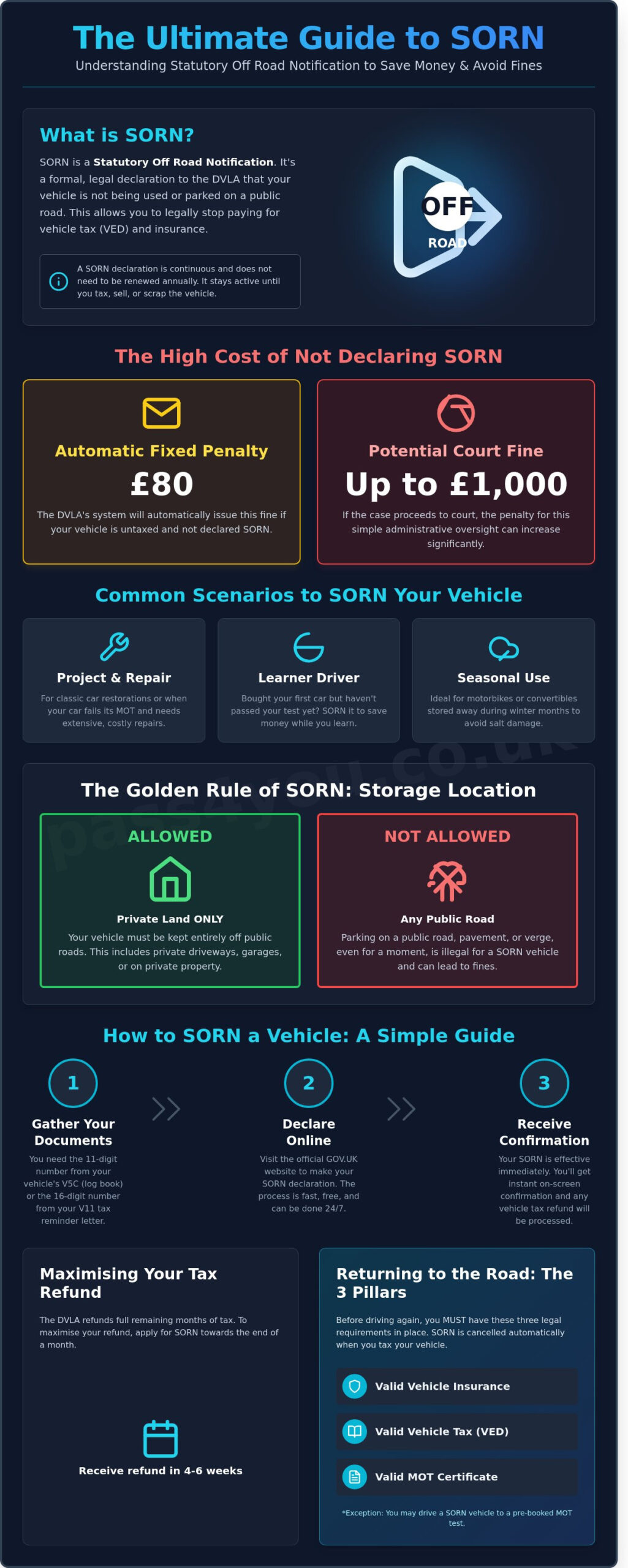
SORN stands for Statutory Off Road Notification. It’s a formal declaration you make to the Driver and Vehicle Licensing Agency (DVLA). When you decide to sorn my car, you’re telling the government that your vehicle is staying on private land and won’t be driven or parked on public highways. This isn’t just a casual choice; it’s a legal requirement if you want to stop paying for tax and insurance without facing penalties. We want you to feel confident and safe when managing your vehicle, and understanding this process is the first step toward responsible ownership.
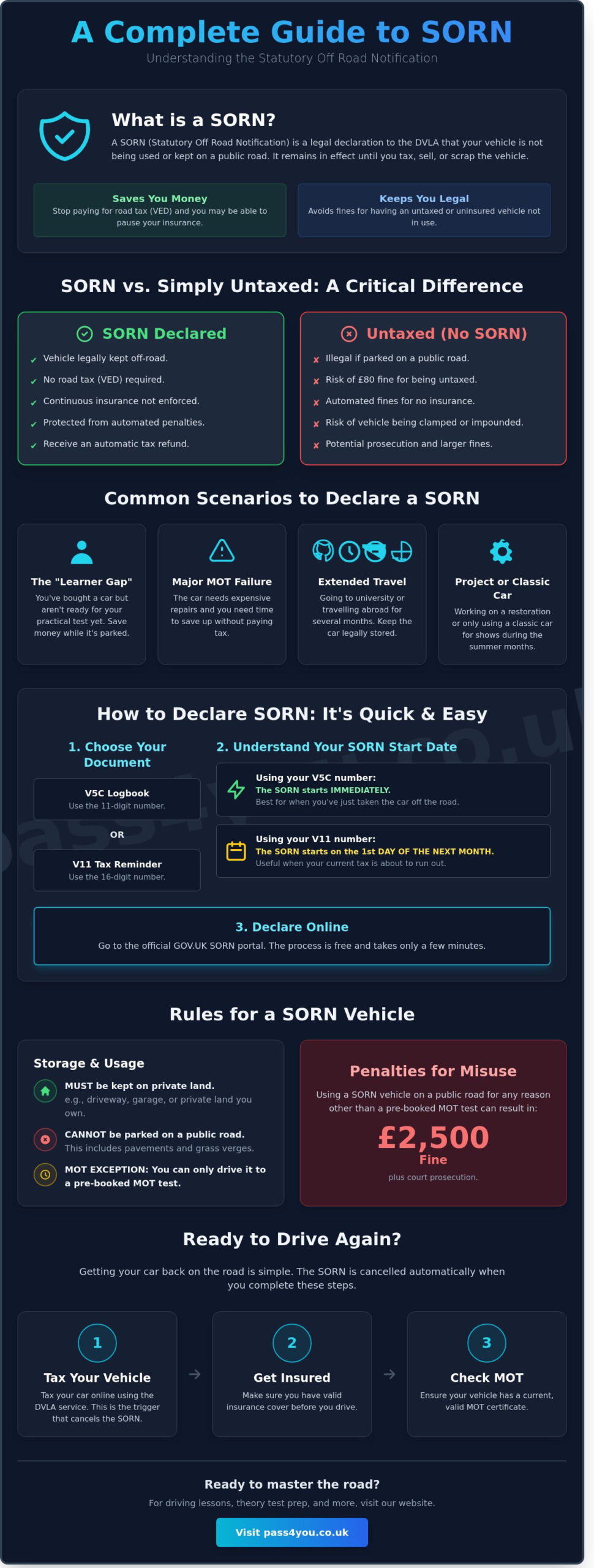
Once your SORN is processed, you’re exempt from Vehicle Excise Duty (VED), which most of us know as car tax. You’re also exempt from Continuous Insurance Enforcement (CIE) rules. This is incredibly helpful for learners who might have bought a car but aren’t ready to drive it yet, or for drivers who are taking a break from the road. In 2026, a SORN stays in place indefinitely. You don’t need to worry about annual renewals; the status only ends if you sell the vehicle, scrap it, or decide to tax it again. SORN is the legal bridge between car ownership and non-use.
The Difference Between SORN and ‘Untaxed’
It’s vital to understand that “untaxed” and “SORN” are two very different things. An untaxed car found on a public road is a legal offence that can lead to an £80 fine or even vehicle impoundment. A SORN car is a protected legal status that keeps you on the right side of the law. You can’t simply stop your insurance or tax payments and hope for the best. The Motor Insurance Database (MID) shares data with the DVLA to spot vehicles that aren’t insured. If you haven’t declared a SORN, you’ll likely receive an automated Fixed Penalty Notice through the post. Taking two minutes to sorn my car online prevents these unnecessary costs and keeps your record clean.
When Does a SORN Status Begin?
The start date of your SORN depends on the document you use during the application. If you use the 11-digit reference number from your V5C logbook, the SORN begins immediately. This is the best option if you’ve just taken the car off the road. If you use the 16-digit reference number from your V11 tax renewal reminder, the status starts on the first day of the next month. If your tax has already expired, you should apply for the SORN right away. Our team always suggests being proactive with your paperwork. It’s a simple way to stay calm and organized while you’re not using your vehicle.
- V5C Number: Starts the SORN immediately.
- V11 Number: Starts the SORN on the first day of the next calendar month.
- Duration: Valid until the vehicle is re-taxed or ownership changes.
When Should You Declare Your Vehicle SORN? Common Scenarios for Learners
Deciding when to sorn my car often comes down to timing and budget. For many learners, the most common scenario is the ‘Learner Gap’. This happens when you find a brilliant deal on a vehicle before you are actually ready for your practical driving test. If the car is sitting on a private driveway or in a garage, paying for road tax and full insurance is an unnecessary expense. Declaring SORN allows you to keep the car safely tucked away until you have that pink licence in hand.
Unexpected MOT failures are another major reason to take a vehicle off the road. If a mechanic hands you a repair bill for £900 on a car worth £1,500, you might need a few months to save up. Instead of rushing into a stressful financial decision, you can use the official DVLA SORN portal to pause your tax obligations. This gives you the breathing room to fix the car properly and ensure it is safe for the road later on.
Life changes often lead to extended breaks from driving. You might be heading off to university in a city where parking is impossible, or perhaps you are planning to travel for six months. Similarly, if you inherit a vehicle but don’t have your licence yet, SORN is the most responsible way to manage the asset. It keeps you compliant with the law while the car stays stationary on private land.
Saving Money While You Learn to Drive
The costs of getting on the road add up quickly. If you choose to sorn my car for six months while you study, the savings are significant. For a typical small hatchback, you could save over £90 in tax and potentially hundreds in insurance premiums. We always suggest that students invest these savings into high-quality driving lessons in Milton Keynes. Professional tuition is the fastest way to build confidence and secure a first time pass.
Avoiding the temptation of ‘fronting’ is also vital. This is the illegal practice of naming an experienced driver as the main policyholder to lower costs. It is much safer and more honest to SORN the vehicle until you can afford your own policy. If you feel unsure about the process, booking a lesson with a patient instructor can help you understand all the responsibilities of car ownership.
Restoring a Classic or Project Car
If you are a car enthusiast working on a restoration project, the vehicle might be in pieces for years. Even if the car has no engine or wheels, the DVLA requires a SORN if it isn’t taxed and insured. You must keep your V5C logbook updated with your current address during this time. Statutory Off Road Notifications apply to all vehicle types, including motorbikes, vans, and even three-wheeled vehicles.
How to SORN a Vehicle: A Step-by-Step Guide to the DVLA Process
Taking your car off the road shouldn’t feel like a stressful hurdle. It’s a simple administrative task designed to save you money when you aren’t using your vehicle. To sorn my car effectively, you first need to gather the right paperwork. You’ll require either the 11-digit reference number from your V5C log book or the 16-digit number found on your V11 tax reminder letter. If you use the V11 number, the SORN will officially start on the first day of the following month. Using the V5C allows the declaration to take effect immediately.
While the process is straightforward, it’s vital to stay organized. For a deeper look at the practicalities of vehicle storage, this guide to SORN from AXA offers excellent insights into insurance implications. Once you have your documents ready, the fastest route is the official GOV.UK portal, which is available 24 hours a day.
Applying Online: The 2026 Digital Process
The GOV.UK digital service remains the most efficient way to notify the DVLA. In 2026, the interface is even more accessible for learners and experienced drivers alike. You simply enter your registration number followed by your document reference. If you’ve recently moved, you must update your address with the DVLA before you start. Using an outdated address can lead to complications with your confirmation. If you’ve misplaced your provisional licence UK or your V5C, you’ll need to order a replacement to get your reference numbers. The online system provides an instant email receipt, which acts as your initial proof of status.
Applying Without a Log Book (V5C)
New owners often find themselves in a position where they haven’t received their V5C yet. You can’t sorn my car online without that specific 11-digit code. In this case, you’ll need to apply by post using form V890. If the vehicle isn’t yet registered in your name, you should also include form V62 to apply for a new log book. As of March 2026, the fee for a replacement V5C is £25. This postal process can take up to four weeks to process, so don’t leave it until the last minute if your tax is about to expire.
If you prefer a different method, you can use the DVLA’s automated phone service at 0300 123 4321. Regardless of the method you choose, look out for a formal confirmation letter or email. If you haven’t received anything within 28 days, it’s a good idea to contact the DVLA to double-check. Having this confirmation gives you peace of mind that you’re following the law and keeping your driving record clean.
Rules for SORN Vehicles: Storage, Insurance, and the MOT Exception
Once you decide to sorn my car, you must follow strict storage rules to avoid heavy fines. The law is clear: the vehicle cannot touch any part of the public highway. This includes the road outside your house, public car parks, and even grass verges maintained by the local council. Keeping your car on the road without tax or insurance is a risk that can lead to your vehicle being clamped or even crushed.
Where is it Legal to Park?
You can legally store your vehicle on a private driveway, inside a private garage, or on a piece of land that you own. For residents in Milton Keynes, this requires extra care. Many housing estates feature “adopted” roads and verges that belong to the council. If any part of your car hangs over onto a public pavement or sits on a council-owned verge, you risk a fine of up to £2,500. Rented plots or private gated areas are safe options, but residential permit zones are still considered public highway. Always ensure the entire vehicle is within the boundaries of your private property.
Driving to an MOT Appointment
There is only one legal way to drive a vehicle after you sorn my car, and that’s to a pre-booked MOT appointment. You can’t just decide to take it for a spin to “clear the pipes.” The appointment must be confirmed by the garage in advance. If the police stop you, they will use ANPR technology to check your status and then verify with the test centre immediately. You must take the most direct route possible. Stopping at a shop or a friend’s house on the way will result in a penalty.
Safety is our priority at Pass4you, and we always remind our students that a SORN vehicle must still be roadworthy for this trip. Check your tyres, lights, and brakes before setting off. Even if the car doesn’t have a valid MOT yet, it shouldn’t be a danger to others. If you’re caught driving an unroadworthy vehicle, the SORN exception won’t protect you from points on your licence.
Insurance and Protection
While you don’t legally need insurance for a SORN car under Continuous Insurance Enforcement (CIE) rules, keeping “laid-up” cover is a wise choice. This specific type of policy protects you against fire, theft, or accidental damage while the car is stationary. If a tree falls on your garage during a storm, a standard SORN declaration won’t help you recover the costs. Most specialist providers offer these policies at a lower rate since the car isn’t being driven.
Getting Back on the Road: How to Cancel SORN and Start Driving
Ending a SORN is much easier than the initial declaration. You don’t need to fill out a cancellation form or call the DVLA to “undo” the status. The process is as simple as taxing your vehicle again. As soon as you pay your vehicle excise duty online or at a Post Office, the SORN is automatically cancelled. However, before you hit the “pay” button, you must ensure your car is legally ready for the road.
Safety is the priority here. You must have active insurance in place before you attempt to tax the car. The DVLA database checks for valid insurance and a current MOT certificate instantly. If your MOT expired while the car was off the road, you can only drive it to a pre-booked MOT appointment. Driving for any other reason without a valid certificate is illegal and unsafe. Once the paperwork is sorted, perform these vital physical checks:
- Battery Health: If the car sat for over three months, the battery might be flat. You may need a trickle charger or a jump start.
- Tyre Pressure: Tyres lose air over time and can develop flat spots. Check the pressures against the manufacturer’s guide before your first trip.
- Fluid Levels: Check your oil, coolant, and brake fluid. Look under the car for any fresh leaks that might have developed during storage.
When you decide it’s time to stop saying “I’ll sorn my car” and get back behind the wheel, taking these steps ensures you’re doing it the right way.
Preparing for Your First Lesson Back
If your car has been off the road for a long time, your driving skills might feel a bit rusty. It’s completely natural to feel a little anxious about returning to busy traffic. Booking a refresher lesson with driving instructors near me is a brilliant way to regain your confidence in a calm environment. Our team at Pass4you specialises in helping nervous learners and returning drivers feel safe again.
Simon’s tip: don’t jump straight back into a dual carriageway after your car has been SORNed. Start with quiet residential streets to get used to the clutch and brake biting points again. We’ve helped hundreds of drivers in Milton Keynes transition back to daily driving with patience and professional guidance.
Selling a SORN Vehicle
If you choose to sell your vehicle while it’s off the road, remember that SORN status does not transfer to the new owner. The buyer must either tax the car or declare a new SORN immediately upon purchase. You must notify the DVLA of the sale using the V5C logbook or the online portal to end your liability for the vehicle.
Once the sale is processed, the DVLA will automatically send you a refund for any full months of remaining tax. This usually arrives as a cheque within six weeks. It’s a clean way to close the chapter on your vehicle while staying fully compliant with UK regulations. If you’re selling because you’re moving to a new car, we can help you get comfortable with your new controls so you stay a safe driver for life.
Get Back on the Road with Confidence
Managing a vehicle off the road shouldn’t be a source of stress. Whether you’re a learner waiting for the perfect moment to start or a car owner taking a temporary break, knowing when to sorn my car keeps you compliant with DVLA rules and avoids automatic fines. Just remember that once you’re ready to drive again, you must have your tax, insurance, and MOT in order before hitting the pavement. A SORN stays in place until you tax the vehicle, so there’s no need to renew it every year.
If your car has been tucked away while you prepare for your test, now’s the time to turn that ambition into a reality. At Pass4you, we specialise in helping nervous learners find their feet. Simon offers calm and patient instruction, ensuring you feel safe and supported every step of the way. You’ll learn in modern Volkswagen tuition vehicles designed for comfort and ease of use. Our proven methods have helped us achieve an 83.33% first-time pass rate, giving you the best possible chance of success on your big day.
Ready to get back on the road? Book your driving lessons in Milton Keynes with Pass4you today!
We’re here to help you move from the driveway to the motorway as a safe and confident driver for life.
Frequently Asked Questions
Does a SORN expire or need to be renewed every year?
Your SORN doesn’t expire and you don’t need to renew it every year. Once you’ve notified the DVLA, the status remains in place until you tax the vehicle again, sell it, or scrap it. This change was introduced in 2013 to make life much easier for vehicle owners. You can feel confident that your car is legally off the road without worrying about annual paperwork.
Can I drive my SORN car to a garage for repairs?
You can’t drive a SORN vehicle to a garage for general repairs. The only legal exception is driving to a pre-booked MOT appointment. If your car needs work to pass that MOT, you must use a trailer or recovery truck to move it. Driving on public roads for any other reason could lead to a court prosecution and a fine of up to £2,500.
Do I get a refund on my car tax when I declare SORN?
You’ll receive a refund for any full months of remaining car tax after you sorn my car. The DVLA processes this automatically once they receive your notification. They’ll send a cheque to the name and address on the V5C log book within 6 weeks. It’s a simple way to save money if you know you won’t be using your vehicle for a while.
Can I keep a SORN car on a driveway if it’s visible from the road?
You can keep your car on a private driveway even if passers-by can see it from the street. The law requires the vehicle to be off the public highway at all times. This includes private garages, driveways, or land you own. As long as no part of the car touches a public road or pavement, you’re following the rules and staying safe from penalties.
What is the fine for driving a SORN vehicle on a public road?
Driving a SORN vehicle on a public road can result in a fine of up to £2,500. You might also face an out-of-court settlement fine of £30 plus one and a half times the outstanding tax. Staying informed about these regulations helps you avoid unnecessary stress and keeps your driving record clean. It’s always best to stay on the right side of the law to remain a safe driver.
Do I still need to insure my car if it is SORN?
You don’t legally have to insure a vehicle that has a valid SORN under Continuous Insurance Enforcement rules. However, many owners choose to keep “laid-up” cover to protect against fire or theft while it’s stored. Without insurance, you’d have to pay the full cost of repairs or replacement if something happened. Keeping a basic policy provides peace of mind while your car is tucked away.
Can I SORN my car if I don’t have the V5C log book?
You can’t complete the process online without the 11-digit reference number from your V5C log book or the 16-digit number from a V11 reminder. If you’ve lost these, you’ll need to apply for a replacement V5C for £25. Being prepared with the right documents makes the process much smoother and less stressful. You can then sorn my car via the post using form V890.
How long does it take for a SORN to show up on the DVLA system?
An online notification shows up on the DVLA system almost instantly. If you choose to notify them by post using a V890 form, it can take up to 4 weeks to process and update. Checking the status on the GOV.UK website after 24 hours is a great way to confirm everything is correct. This quick confirmation helps you feel calm and sure that your records are up to date.