Tag: Milton Keynes Driving

  • Expert Driving School in Woughton on the Green: Pass Your Test in 2026

    Expert Driving School in Woughton on the Green: Pass Your Test in 2026

    Have you ever felt your heart race just thinking about merging onto a busy Milton Keynes grid road during rush hour? It’s a common fear for many learners, especially when you’re searching for a driving school woughton on the green that truly understands the local landscape. You likely agree that there’s nothing more discouraging than an instructor who loses their temper or feeling like you’re stuck in a cycle of expensive lessons without making real progress. It’s frustrating to watch your hard earned money disappear while your confidence on those complex roundabouts stays low.

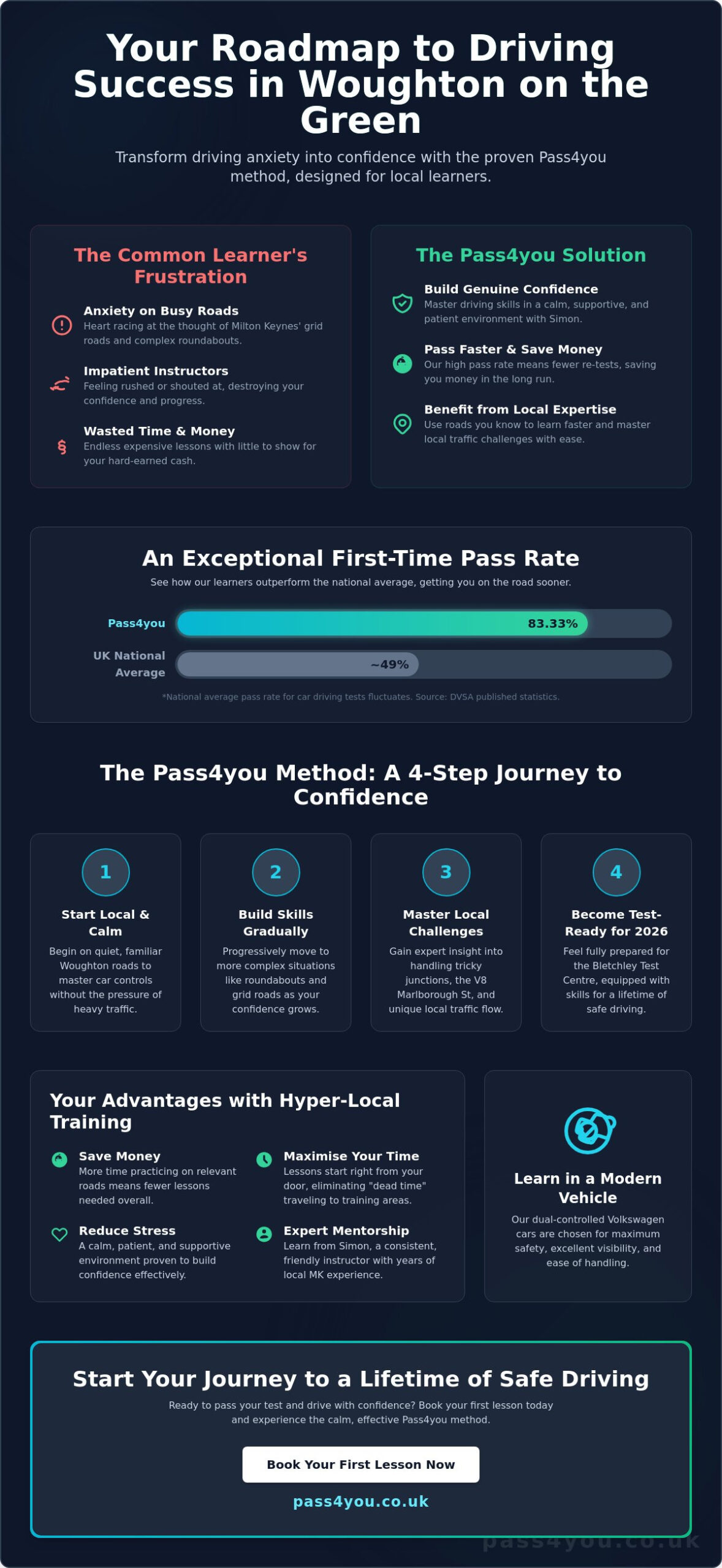
    We’re here to tell you that learning to drive doesn’t have to be a source of anxiety. Our mission is to transform nervous students into capable motorists with our impressive 83.33% first time pass rate. By choosing a patient mentor like Simon, you’ll receive professional tuition designed to help you master the unique roads of Woughton on the Green with ease. We promise to provide a calm, supportive environment where you can build your skills without the fear of being shouted at or rushed.

    In this article, you’ll learn exactly how our tailored approach helps you pass your test in 2026. We’ll explore the techniques we use to conquer local traffic challenges and explain how our focus on quality over quantity actually saves you money in the long run by ensuring you’re a safe driver for life.

    Key Takeaways

    • Learn how local expertise helps you navigate Woughton on the Green’s unique road layouts more efficiently, saving you both time and money on your journey to a licence.
    • Discover the “Pass4you Method,” a patient and reassuring approach designed to build your confidence and maintain our exceptional 83.33% first-time pass rate.
    • Gain professional insights into mastering the high-speed grid sections of the V8 and the transition to village roads with a specialist driving school woughton on the green.
    • Understand the updated 2026 DVSA rules for the Bletchley Driving Test Centre to ensure you are fully prepared for the latest booking and testing requirements.
    • Find out exactly what happens during your first lesson and how to start your journey toward becoming a safe, independent driver for life.

    Why Choose a Local Driving School in Woughton on the Green?

    Learning to drive is a major milestone, but it often comes with a side of nerves. Choosing a driving school woughton on the green that understands your immediate surroundings makes a world of difference. Instead of spending the first 15 minutes of every lesson commuting to a training area, you start right outside your door. This approach maximises your time behind the wheel and ensures every pound you spend goes toward actual progress. At Pass4you, we focus on turning those initial jitters into genuine skill by using the roads you see every day. Our methods are designed to be cost-effective, often reducing the total number of lessons required because we don’t waste time on unfamiliar routes.

    The Advantage of Hyper-Local Knowledge

    Our instructors know exactly how the traffic flows around the V8 Marlborough Street during the 8:30 am school run. They understand the specific sightlines at the junctions near Woughton Park that often trip up visiting drivers. When you learn more About Woughton on the Green, you realise it’s a unique mix of historic village charm and modern Milton Keynes infrastructure. We eliminate “dead time” because your lesson begins the moment you turn the key in your own neighbourhood. By mastering local quirks early on, you’ll feel prepared for the 2026 driving standards. This local expertise is a primary reason why we maintain an 83.33% first-time pass rate, which sits well above the typical industry average.

    Building Confidence Close to Home

    We don’t throw you onto a 70mph dual carriageway on your first day. We start in the quiet, residential lanes of Woughton where traffic is light and the pace is slow. This calm environment allows you to get used to the car’s controls without the pressure of a tailgating lorry. As your confidence grows, we gradually introduce the more complex elements of the Milton Keynes grid system. You’ll move from the peaceful setting of The Green to the busier roundabouts with a mentor who is patient and supportive.

    Simon, our lead instructor, has helped hundreds of nervous learners find their feet through this stepped approach. Our students often tell us that starting in a familiar environment significantly reduced their initial anxiety. We provide a bridge between the village’s narrow roads and the high-speed demands of the surrounding grid. By the time you reach your test date in 2026, those once-intimidating roundabouts will feel like second nature. We aren’t just teaching you to pass a test; we’re helping you become a safe driver for life.

    • Save Money: Local starts mean more time practicing and fewer lessons overall.
    • Expert Guidance: Benefit from Simon’s years of experience in the MK area.
    • Reduced Stress: Learn at your own pace in a supportive, calm environment.
    • Proven Success: Join the many local residents who contributed to our 83.33% first-time pass rate.

    The Pass4you Method: Calm and Patient Tuition

    Our core philosophy centers on creating safe drivers for life through dedicated, patient mentoring. We understand that getting behind the wheel for the first time can feel overwhelming. That is why we focus on building your confidence steadily, ensuring you possess the skills to handle any road situation long after your examiner hands you your certificate. When you choose our driving school woughton on the green, you are investing in a lifetime of road safety rather than a quick fix.

    Success is built into our data. Our verified 83.33% first-time pass rate is a significant advantage for your budget and your 2026 timeline. While the national average often fluctuates, our consistent results mean you’re far less likely to face the stress and expense of multiple re-tests. You’ll learn in modern, dual-controlled Volkswagen vehicles. These cars are chosen specifically for their excellent visibility and ease of handling, providing maximum safety while you master the basics.

    The “Simon” factor is what truly sets us apart. We believe a personal connection beats a faceless driving school every time. You won’t be passed between different instructors who don’t know your progress. Simon provides a consistent, friendly face, tailoring every lesson to your specific learning speed. If you’re ready to start your journey, you can book your first lesson here to see the difference a personal touch makes.

    Specialist Support for Nervous Learners

    We specialize in helping students who feel anxious about driving. Our no-shouting guarantee ensures a positive environment where mistakes are treated as learning opportunities. We use proven techniques to manage driving test nerves, helping you stay focused when it matters most. At Pass4you, we define our patient approach as a mentorship rather than just instruction. We build you up, we never knock you down.

    Value for Money vs. Cheap Lessons

    It’s tempting to look for the lowest hourly rate, but “cheap” driving schools often end up costing more in the long run. If a school lacks a high success rate, you might find yourself taking many extra lessons or paying for several re-tests. Our high pass rate saves you the £62 cost of a weekday practical test and the weeks of waiting for a new slot. We provide transparent pricing with no hidden fees for Woughton on the Green residents. Before you head to the test center, we recommend reviewing the official DVSA driving test guide to understand exactly what the examiner looks for. This preparation, combined with our expert tuition, ensures you get the best value for your money.

    Expert Driving School in Woughton on the Green: Pass Your Test in 2026

    Learning to drive in this area presents a unique set of hurdles that require a versatile skill set. You aren’t just learning to control a car; you’re learning to adapt your mindset between high-speed urban routes and tight village corners within seconds. Our driving school woughton on the green focuses on building your confidence so these transitions feel natural rather than stressful. We’ve helped hundreds of students manage the shift from the H7 Chaffron Way into the heart of Woughton Park, where the road width narrows and the pace of life slows down.

    Simon’s patient approach ensures you don’t feel rushed by following traffic during these crucial moments. We believe that a calm environment is the best way to master the technical aspects of driving. Whether you are practicing your hill starts near the canal or navigating the busier junctions leading toward Simpson, our goal is to make you feel safe and in control at all times.

    The Challenge of the Milton Keynes Grid

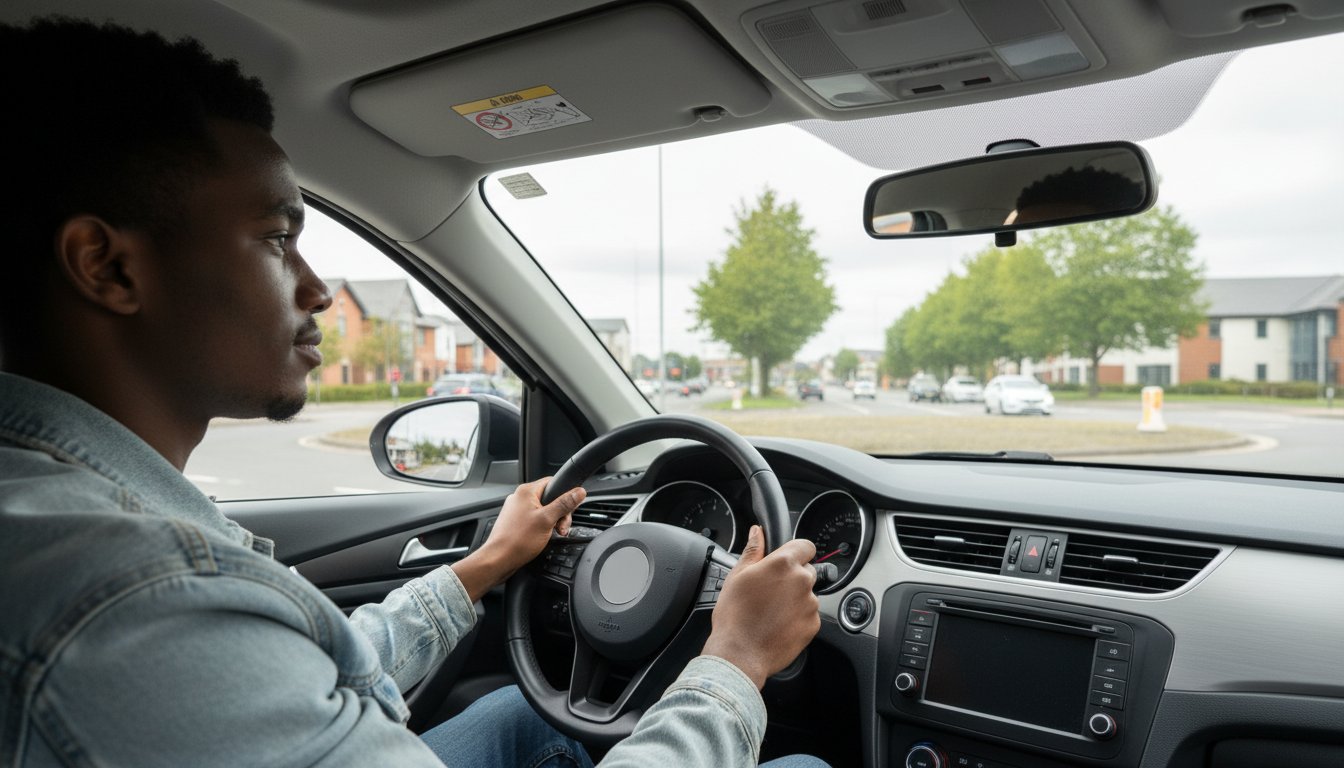
    The V8 Marlborough Street is a core part of local life, but its high-speed sections can be intimidating for new drivers. You’ll need to master entering and exiting these grid roads safely, often at speeds up to 60mph. We spend significant time practicing the variety of roundabouts that surround Woughton, focusing on lane discipline and early observation. This preparation is vital because the Bletchley Driving Test Centre examiners often use these routes to test your ability to handle multi-lane junctions under pressure. We use a tried and tested technique to ensure you understand exactly which lane to choose before you even reach the hazard.

    • Speed Management: Learning exactly when to accelerate on slip roads to match the flow of traffic.
    • Lane Discipline: Avoiding common mistakes on the complex spiral roundabouts near the H7.
    • Observation: Developing a habit of checking blind spots before every lane change on the V8.

    Woughton Village Specifics

    Once you leave the grid, Woughton on the Green becomes a different world. The roads near The Green are narrow and frequently lined with parked cars, especially near local landmarks like the Ye Olde Swan. This requires excellent clutch control and a deep understanding of right-of-way nuances. You’ll practice navigating these “village feel” junctions where visibility might be limited by stone walls or hedges. We also focus on pedestrian awareness near Simpson and Woughton Park, as residents and walkers often cross in unexpected places. Our driving school woughton on the green prides itself on an 83.33% first-time pass rate, which we achieve by ensuring you are prepared for these specific local quirks long before your test date in 2026.

    Preparing for Success at the Bletchley Driving Test Centre in 2026

    Bletchley remains the primary test centre for residents using our driving school woughton on the green. Its proximity, just a short drive down the V7 Saxon Street, means you’ll spend your lessons on the exact roads where your examiner will assess you. We focus on building your confidence in this specific area because familiarity is the best cure for test-day nerves. Our students benefit from a calm, patient environment that mirrors the professional standards expected by the DVSA.

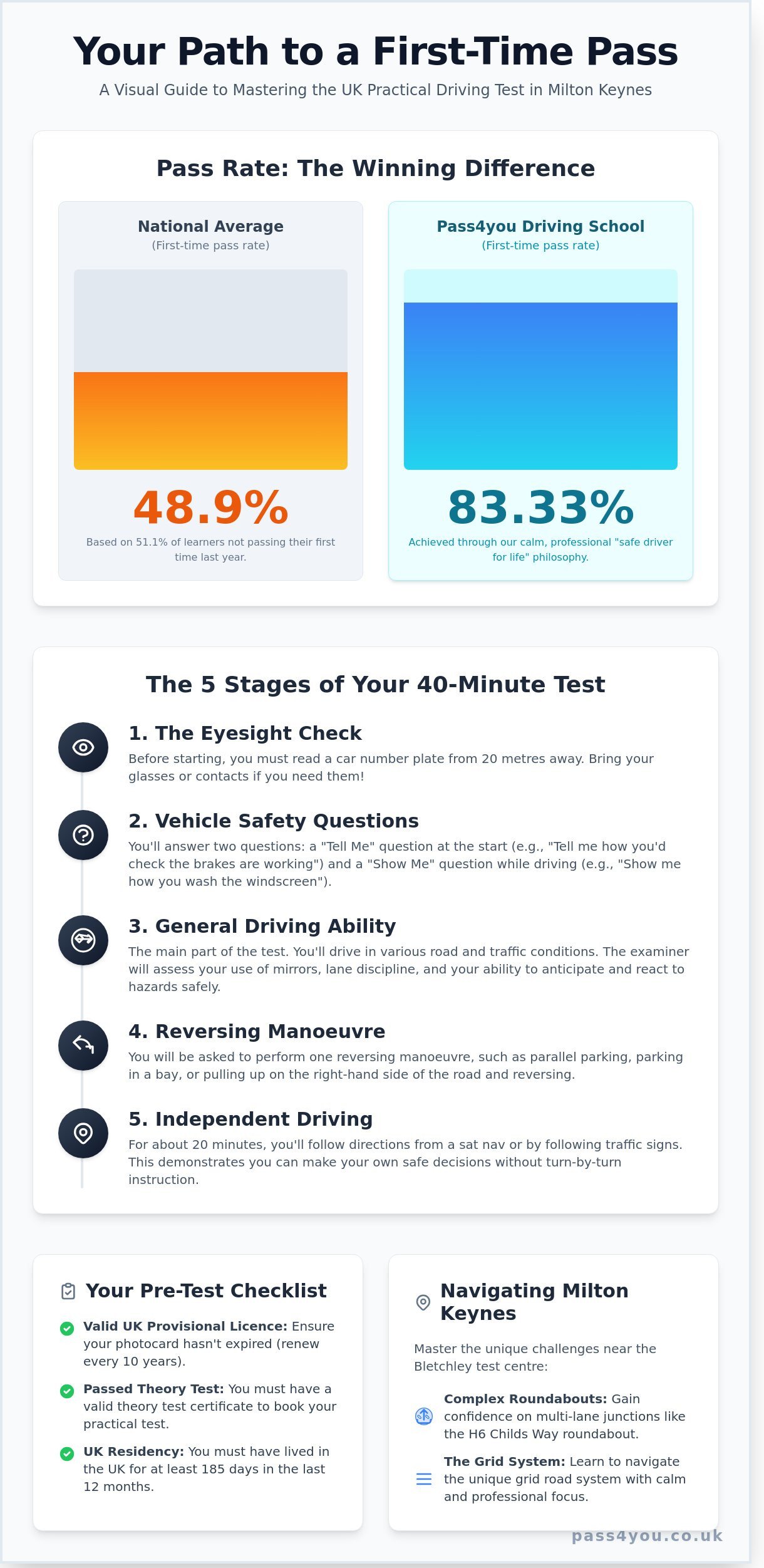
    To ensure you’re ready, we implement rigorous mock tests that simulate the full 40-minute exam experience. These aren’t just practice runs; they’re essential tools that have helped us maintain our 83.33% first-time pass rate. By the time you reach the Bletchley centre, you’ll feel like it’s just another drive with a friend. We also dedicate time to the “Show Me, Tell Me” questions. Since the 2024 update to these safety questions, examiners expect precise, confident answers about vehicle maintenance and safety features. We’ll practice these until they become second nature.

    Mastering Common Bletchley Test Routes

    Bletchley is known for its unique road layouts that can catch out unprepared drivers. We pay close attention to the “trap” junctions, such as the double mini-roundabouts near the town centre and the complex lane markings on the H8 Standing Way. You’ll get plenty of practice on the high-speed dual carriageways that lead toward the test centre, ensuring you can merge and exit safely at 70mph. For more detailed advice, check out our guide on mastering the dual carriageway.

    Navigating the 2026 Test Booking System

    The DVSA introduced strict new rules on January 1, 2026, making it illegal to delegate test bookings to automated bots or third-party resellers. This change ensures a fairer system for everyone, but it means you must be proactive. At Pass4you, we help you understand these regulations and guide you on the best times to find genuine cancellations. We recommend reading our complete guide to booking your driving test to avoid the common pitfalls of the new digital system. Our goal is to get you on the road quickly without the stress of long wait times.

    If you want to feel 100% prepared for the Bletchley test centre, book your first lesson with Simon today and start your journey toward a first-time pass.

    Start Your Journey: Booking with Pass4you

    Taking the first step toward your driving licence can feel overwhelming, but booking your first lesson with our driving school woughton on the green is a simple, stress-free process. We’ve designed our booking system to be as straightforward as possible because we know your time is valuable. Whether you prefer a quick phone call or an online enquiry, we’ll get you matched with a professional instructor who understands the local roads of Woughton on the Green and the wider Milton Keynes area. If you’ve struggled with other schools in the past or felt intimidated by “shouty” instructors, you’ll find our approach completely different. We pride ourselves on being a calm, patient mentor for every student, regardless of their previous experience.

    Our commitment to your success isn’t just a slogan. It’s backed by our impressive 83.33% first-time pass rate. We stay with you from the moment you hold your provisional licence until the day you receive your pink card. We don’t just teach you how to pass a test; we focus on making you a safe driver for life. This long-term perspective is why so many of our students feel confident when they finally head to the test centre. We’ll help you manage the 2026 test requirements with ease, ensuring you’re fully prepared for any changes in regulations or road safety standards.

    Your First Lesson Experience

    When you climb into the driver’s seat of our modern VW tuition car for the first time, your instructor will focus on making you feel at ease. You’ll begin with the cockpit drill. This is where you learn to adjust your seat, mirrors, and steering wheel to fit you perfectly. We’ll walk you through the basic controls, ensuring you understand the pedals and gear stick before we even move the car. It’s a structured, logical process that removes the guesswork. During this first hour, we’ll also sit down to set your personal goals. We’ll discuss your availability and create a realistic timeline for passing your test in 2026. For more details on what happens in those early stages, you can read our beginner guide to driving lessons in Milton Keynes.

    Join Our Wall of Success

    There is no feeling quite like the freedom that comes with a full UK driving licence. We’ve helped countless learners in the Woughton on the Green area achieve this milestone, and our wall of success is constantly growing with new faces. Recent passes in the local area highlight how effective our “tried and tested” techniques really are. You won’t just be another number to us; you’ll receive the same personalised, high-quality instruction that Simon is famous for. If you’re tired of feeling stuck or nervous about getting behind the wheel, it’s time for a change. Book your first lesson with our driving school woughton on the green today and experience the Pass4you difference. Let’s get you on the road to independence.

    Start Your Journey Toward Driving Independence Today

    Learning to drive shouldn’t be a source of stress or anxiety. You need a calm environment where you can build your skills at your own pace without feeling rushed or overwhelmed. By choosing our driving school woughton on the green, you’re opting for local expertise that understands the specific layout and challenges of the Bletchley Driving Test Centre. We focus on turning nervous learners into safe, confident drivers who are fully prepared for their test in 2026.

    Our Grade A approved instructor, Simon, uses modern Volkswagen tuition vehicles to ensure you have the most reliable equipment for every lesson. With an impressive 83.33% first-time pass rate, our tried and tested methods deliver consistent results for students of all experience levels. You’ll benefit from patient, one-on-one guidance that prioritizes your safety and builds your confidence behind the wheel. We don’t just teach you how to pass a test; we help you become a responsible driver for life. It’s time to stop worrying and start moving forward with a mentor who’s truly invested in your success.

    Book your first lesson in Woughton on the Green with Pass4you today!

    We can’t wait to help you get your license and enjoy the incredible freedom that comes with being a qualified driver.

    Frequently Asked Questions

    Do you offer driving lessons specifically in Woughton on the Green?

    Yes, we provide expert tuition across all roads in Woughton on the Green and the wider Milton Keynes area. Our driving school woughton on the green focuses on mastering local junctions and the unique layout of the village before heading onto busier grid roads. This local knowledge ensures you’re comfortable driving near your home before we tackle the specific challenges of your chosen test centre routes.

    What is the current first-time pass rate for Pass4you students?

    We’re proud to maintain a consistent 83.33% first time pass rate for our students. This figure is significantly higher than the national average, which often stays below 50% according to official DVSA statistics. Our focus on building genuine confidence and teaching safe driving for life helps our students succeed during their first attempt, saving them time and money on retests.

    I am a very nervous driver; can Simon help me stay calm?

    Simon is widely recognised for his patient and calm teaching style, which is specifically tailored for anxious learners. He understands that many people feel overwhelmed behind the wheel, especially after a bad experience. By using a supportive approach and clear instructions, he helps you build confidence at your own pace. You’ll never be rushed or shouted at during your lessons with us.

    How many driving lessons will I need to pass in Milton Keynes?

    While the DVSA suggests an average of 45 hours of professional tuition, our students often require fewer hours due to our efficient teaching methods. Your specific needs depend on your previous experience and how quickly you gain confidence. We focus on providing value for money by ensuring every minute of your lesson contributes to your progress. We’ll always be honest about when you’re ready.

    Can you help me book my driving test under the new 2026 rules?

    Yes, we provide full support with navigating the latest DVSA booking systems and requirements for 2026. We stay updated on all regulatory changes to ensure your application is handled correctly. Our team helps you coordinate your test date with your lesson schedule so you’re at peak performance when you arrive at the test centre. We make the administrative process as stress-free as possible.

    What car will I be learning to drive in?

    You’ll learn in a modern, dual-controlled hatchback that’s specifically chosen for its ease of use and reliability. These vehicles offer excellent visibility and light controls, making them perfect for mastering tricky manoeuvres like parallel parking. We keep our cars in top condition to ensure you feel safe and professional from your very first lesson until the moment you pass your practical test.

    Do you offer manual or automatic driving lessons in Woughton?

    We specialise in manual driving lessons for students in Woughton and the surrounding districts. Mastering a manual gearbox gives you the freedom to drive both manual and automatic vehicles once you’ve earned your licence. It’s a great choice for those seeking maximum flexibility and often results in lower car purchase and insurance costs for new drivers in the UK market.

    How much do driving lessons cost in Woughton on the Green for 2026?

    Our pricing reflects the high quality of tuition and our 83.33% pass rate, ensuring you get excellent value for your investment. We don’t aim to be the cheapest driving school woughton on the green because we believe in getting you test-ready in fewer lessons. Please contact us directly for our current 2026 price list and any available block booking discounts that can help you save.

  • Driving Test Tips for Bletchley Test Centre: Pass First Time in 2026

    Driving Test Tips for Bletchley Test Centre: Pass First Time in 2026

    What if the high-speed roundabouts on Saxon Street didn’t have to feel like a gamble every time you approached them? Last month, we helped another student overcome that exact fear, using our specific driving test tips for bletchley test centre to turn their anxiety into the quiet confidence needed to join our 83.33% first-time pass club. It’s completely normal to feel a bit overwhelmed by Bletchley’s unique grid system or the pressure of the independent driving section. We know how much you want to avoid the cost of a retake and finally get your full license.

    We’ve designed this guide to help you master lane discipline and stay calm when the examiner asks you to follow sat-nav directions. You’ll get an instructor-led walkthrough of the most challenging local routes and learn how to navigate the trickiest spots in the area. We’ll show you exactly how to prepare so you can walk away with a pass certificate in 2026.

    Key Takeaways

    • Learn exactly what to expect at the Bletchley Test Centre on Wilton Avenue so you can arrive feeling calm and prepared for your exam.
    • Discover our expert driving test tips for bletchley test centre to master the complex lane discipline required for Saxon Street and Standing Way roundabouts.
    • Identify the top five common failures in Milton Keynes, including the specific 20mph zones that frequently catch learners out.
    • Get a proven test-day checklist designed to settle your nerves and build the confidence needed for a safe, successful drive.
    • Understand how Simon’s local expertise and 83.33% first-time pass rate can help you navigate Bletchley’s trickiest road layouts with ease.

    Bletchley Test Centre is located at Block 4, Government Buildings on Wilton Avenue. It’s a location we know well at Pass4you. Many Milton Keynes learners prefer this centre because the surrounding roads often feel more manageable than the high-speed dual carriageways found in other parts of the city. The atmosphere here is professional and calm, which helps settle those pre-test jitters. We’ve helped many drivers achieve our 83.33% first time pass rate by focusing on the specific layout and quirks of this site. When you follow our driving test tips for bletchley test centre, you’ll feel like a safe driver for life from the moment you turn the key.

    Your test begins the second you enter the car park. It’s a shared space, so you need to be alert for pedestrians and other learners. The “Show Me, Tell Me” questions usually start right here. Being prepared for these initial questions builds immediate confidence. If you start with a correct answer, you’ll feel much more relaxed for the drive ahead. We find that students who approach the start with a patient mindset perform significantly better throughout the 40-minute session.

    Arrival and Documentation

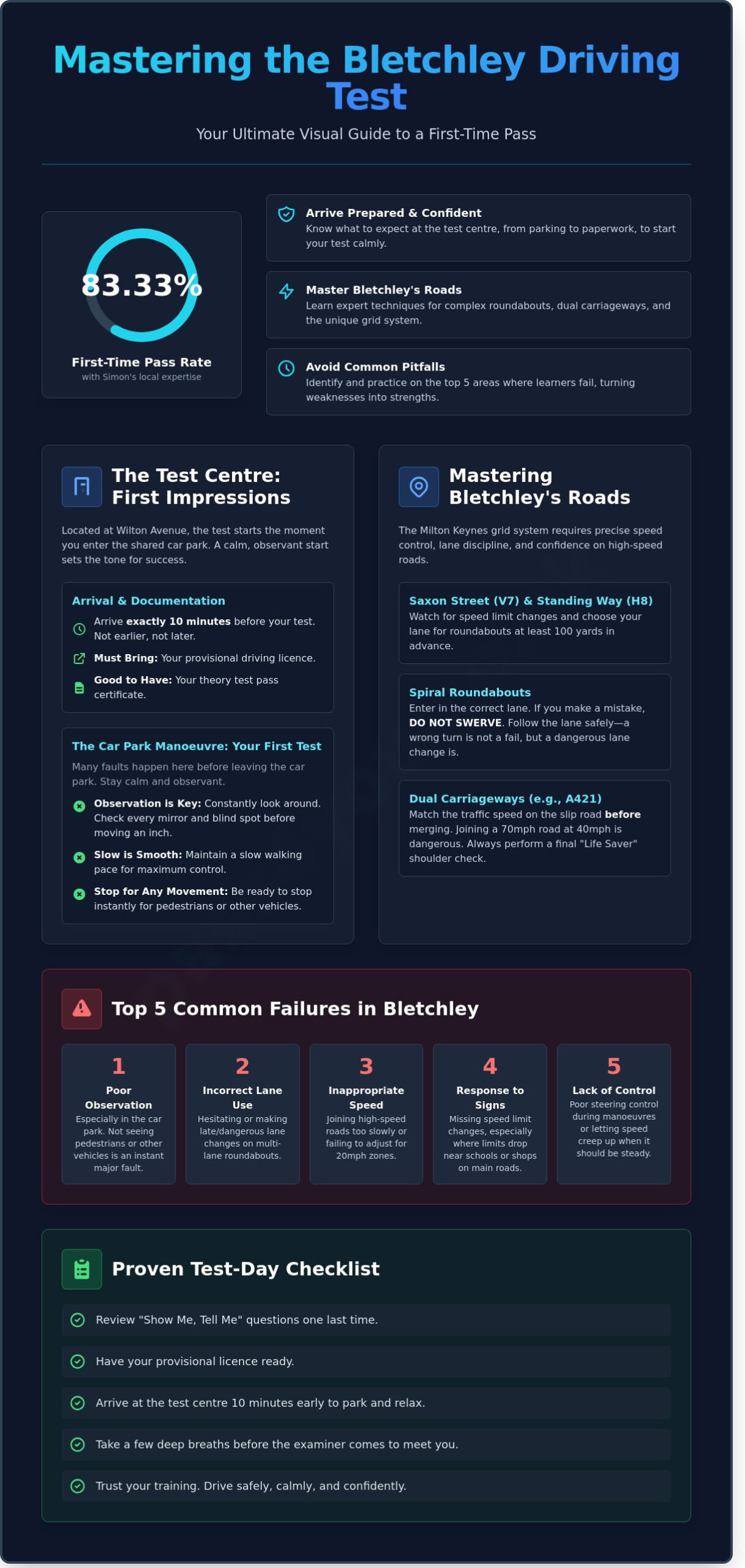
    Aim to arrive exactly 10 minutes before your scheduled time. If you get there 20 minutes early, you might block learners returning from their tests. Arriving 5 minutes late could mean your test is cancelled. This 10-minute “sweet spot” gives you time to park, take a few deep breaths, and gather your thoughts. You must bring your provisional driving licence. While not always asked for, having your theory test pass certificate is also a smart move. The examiner will meet you in the waiting room, check your ID, and ask you to sign a residency declaration. A friendly smile and a calm attitude here set a positive tone.

    The Bletchley Car Park Manoeuvre

    The Wilton Avenue car park is where many tests can unfortunately end before they’ve truly begun. You might be asked to reverse into a bay or pull forward and reverse out. The most common reason for faults here isn’t the steering; it’s the lack of observation. You must look around constantly. Bletchley is a busy hub, and data suggests that a high percentage of early faults occur because a candidate didn’t see a pedestrian or another vehicle moving nearby. Treat the car park with the same respect as a main road. Use these driving test tips for bletchley test centre to stay sharp:

    • Check every blind spot before moving the car even an inch.
    • Keep your speed at a slow walking pace to maintain total control.
    • Stop immediately if you see any movement from other cars or people.

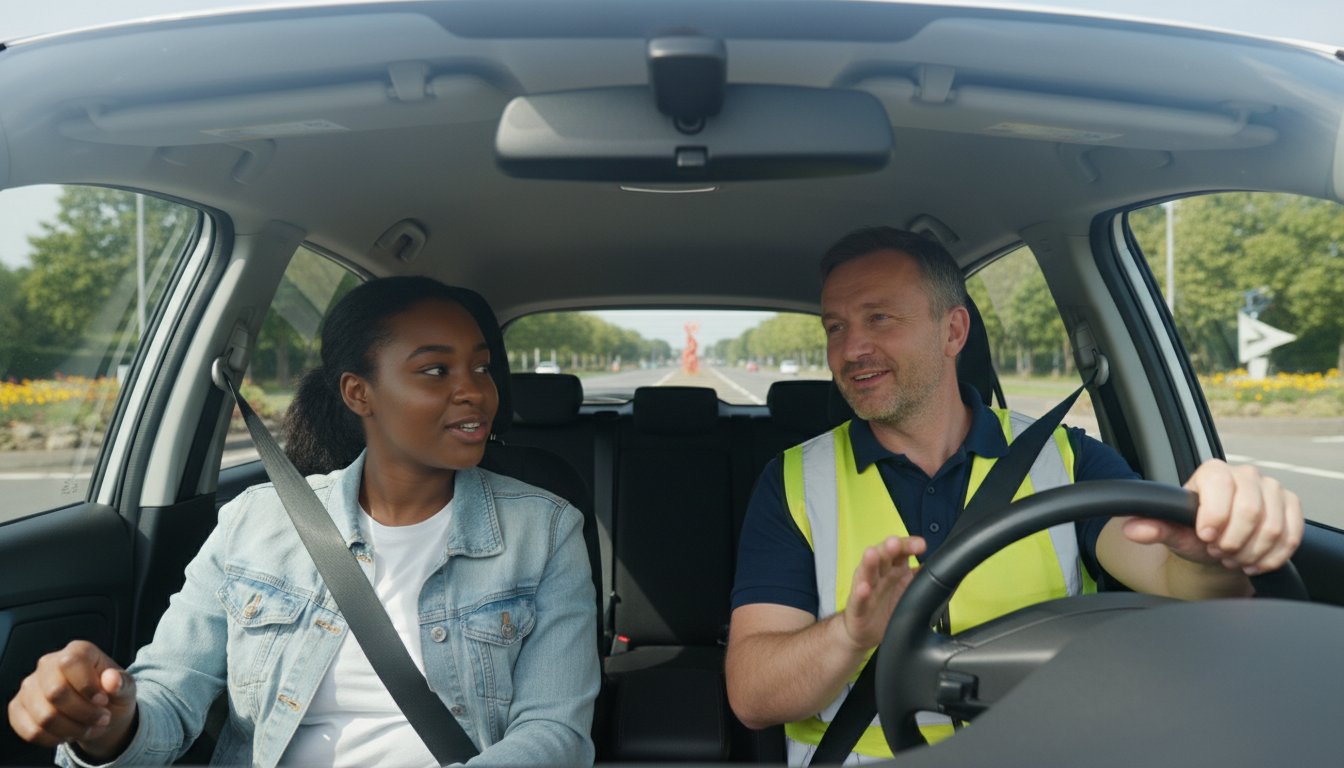
    Our instructor, Simon, always emphasises that a patient approach in the car park proves to the examiner that you’re a responsible and safe driver. Don’t rush the manoeuvre. Take your time, stay observant, and you’ll clear this first hurdle with ease.

    Mastering Bletchley’s Tricky Roundabouts and Dual Carriageways

    The Milton Keynes grid system is a unique environment that requires a specific set of skills. When you’re looking for driving test tips for bletchley test centre, understanding the layout of the V7 and H8 roads is your first priority. These roads connect residential areas to high-speed corridors, and the transition happens quickly. You’ll often find yourself moving from a quiet 30mph street onto a 40mph or 50mph main road within seconds.

    The Saxon Street (V7) challenge is all about managing your speed and lane discipline. It’s easy to let your speed creep up, but examiners are looking for precise control. Keep your eyes peeled for the speed limit signs, especially where the limit drops near schools or shops. Standing Way (H8) roundabouts are another focal point. These are multi-lane junctions that handle heavy traffic flow. You must decide on your lane early. If you’re heading toward the A421, check your road markings at least 100 yards before the roundabout to ensure you aren’t caught in a “left-turn only” lane by mistake.

    Spiral roundabouts are a common feature in Bletchley. These junctions are designed to lead you to your exit, but they only work if you enter in the correct lane. If you find yourself in the wrong lane, don’t panic or swerve. Stay in your lane and follow it safely to wherever it leads. The examiner can’t fail you for taking a wrong turn, but they will mark a serious fault for a dangerous lane change. This “calm” and “patient” approach is what helps our students achieve an 83.33% first time pass rate.

    High-Speed Road Confidence

    Transitioning from 30mph zones to 60mph or 70mph dual carriageways like the A421 is a frequent part of the Bletchley test route. You need to match the speed of the traffic on the slip road before you merge. Joining a 70mph road at 40mph is dangerous and will likely result in a fail. Always perform a “Life Saver” glance over your right shoulder before you move into the main flow of traffic. This check ensures that no one is hiding in your blind spot. Once you’re on the dual carriageway, maintain a safe following distance of at least two seconds in dry conditions.

    Bletchley’s Famous Roundabouts

    The roundabouts near the Brunel Shopping Centre are particularly busy. You’ll encounter pedestrians, buses, and delivery drivers who may be in a hurry. In the residential parts of Bletchley, you’ll also face clusters of mini-roundabouts. These require quick observation and a clear understanding of priority. Simon, our lead instructor, always shares this essential tip: “If in doubt, slow down and observe; don’t rush the gap.” Taking that extra second to be “safe” is far better than forcing another driver to slow down. If you want to practice these specific junctions with a mentor, you might consider booking professional driving lessons to refine your technique before 2026.

    • Stay Central: Keep your car in the middle of your lane on spiral roundabouts to avoid “lane drifting.”
    • Exit Strategy: Always check your interior and left door mirror before exiting any roundabout.
    • Speed Matching: Use the full length of the slip road to build up speed when joining the A421.

    Driving Test Tips for Bletchley Test Centre: Pass First Time in 2026

    Avoiding the Top 5 Common Failures in Bletchley

    Passing your test requires more than just basic car control. It’s about understanding the specific quirks of the local roads. At Pass4you, we’ve helped hundreds of students navigate these challenges with a calm and patient approach. Here are the top pitfalls to watch out for when looking for driving test tips for bletchley test centre.

    Observation at junctions remains the most frequent serious fault in the Milton Keynes area. Examiners often see learners look once and pull out, failing to spot a cyclist or a car approaching quickly on a grid road. You should always look, then look again. Don’t rush the process. Another common issue is inappropriate speed. Bletchley has several 20mph zones, particularly near schools and residential pockets, that catch learners out if they aren’t scanning for signs constantly. Staying at 22mph in a 20mph zone is an immediate fail.

    • Signal timing: On Saxon Street, signaling too early can lead to a “misleading signal” fault. If you signal before a driveway or a minor turn-off, the examiner may think you’re turning there instead of the main junction.
    • Response to road markings: Bletchley’s wide junctions often have multiple lanes. Staying within the lines is vital. If you drift over a solid white line or straddle two lanes, it shows a lack of control.
    • Following distance: Keep a safe gap. In rainy conditions, which are common in the UK, you should double your two-second rule to stay safe.

    Lane Discipline and Road Markings

    Lane discipline is the foundation of Bletchley success because it proves you can handle the complex flow of traffic safely. Milton Keynes is famous for its “V” and “H” grid roads. These require extra attention to floor arrows, especially at the Buckingham Road junctions where lanes can split or merge suddenly. If you find yourself in the wrong lane, stay calm. Follow the lane you’re in safely. The examiner won’t fail you for taking the wrong exit, but they will fail you for a sudden, dangerous lane change without proper observation.

    Meeting Situations in Narrow Streets

    Residential areas like Wilton Avenue and the surrounding estates present a different challenge. These streets are often lined with parked cars, leaving room for only one vehicle to pass at a time. You must master the “Priority to Oncoming Traffic” rules here. We teach our students to look well ahead. If you see a car coming, find a gap and wait. This is where you demonstrate the patience we value at Pass4you. Simon always reminds learners that waiting five seconds is better than rushing and failing. Showing this level of maturity helps us maintain our 83.33% first time pass rate. These driving test tips for bletchley test centre are designed to make you a safe driver for life, not just for forty minutes.

    Your Bletchley Test Day Checklist: Preparation and Nerves

    Success on your big day starts long before you turn the key in the ignition. Preparing your mind and body is just as vital as mastering the clutch. These driving test tips for bletchley test centre focus on the final 24 hours to ensure you arrive at the centre feeling capable and composed.

    The night before your test, aim for at least eight hours of sleep. Dehydration leads to poor concentration, so drink plenty of water. Spend ten minutes using mental visualisation. Picture yourself successfully navigating the double roundabouts near the Bletchley train station. Visualising a positive outcome builds the confidence you need to perform under pressure.

    A 1-hour “warm-up” lesson immediately before your test is essential. This hour isn’t for learning new skills; it’s for settling your nerves and getting used to the morning’s specific road conditions. It allows you to find your biting point and shake off any initial stiffness. By the time you pull into the test centre car park, you’ll already be in “driving mode” rather than starting from cold.

    If you feel “test day jitters” in the waiting room, use simple breathing techniques. Inhale deeply for four seconds, hold for four, and exhale for four. This physical reset tells your nervous system that you’re safe. Remember, the examiner wants you to pass. They aren’t looking for reasons to fail you; they’re looking for evidence that you’re a safe, competent driver.

    The Mental Game of Driving

    One of the most effective driving test tips for bletchley test centre is adopting Simon’s “Calm Mentor” approach. Treat the examiner like a passenger who simply needs a lift across town. If you make a small mistake, like stalling or missing a signal, don’t let it ruin your focus. Many learners pass with several minor faults. Take a breath, fix the error safely, and move on. You can find more strategies for staying focused in our guide on Mastering the Practical Driving Test in 2026.

    Independent Driving in Bletchley

    The independent driving section lasts about 20 minutes. You’ll likely follow a Sat Nav route through West Bletchley or the busier streets of Fenny Stratford. Don’t worry if you take a wrong turning. Taking the wrong exit at a roundabout is not an automatic fail, provided you do it safely. The examiner will help you get back on the route. Stay focused on your surroundings even when the examiner stops giving verbal directions. We maintain an 83.33% first time pass rate by teaching students to drive the road, not just the route.

    Ready to build the confidence you need for a first-time pass? Book your Bletchley driving lessons today.

    Why Local Expertise with Pass4you Secures Your First-Time Pass

    Choosing the right instructor is the most important decision you’ll make on your journey to the driver’s seat. At Pass4you, we don’t just teach you how to move a car; we prepare you to succeed with confidence. Our 83.33% first-time pass rate is a direct result of our calm, patient approach that puts even the most nervous learners at ease. While the national average pass rate often stays below 50%, our students benefit from a tried and tested technique refined over many years in Milton Keynes. You’ll learn in modern, reliable Volkswagen tuition vehicles. These cars are easy to handle, comfortable, and equipped with the latest safety features, allowing you to focus entirely on your driving skills without worrying about mechanical reliability.

    Simon’s deep understanding of the local area is your secret weapon. Every test centre has its specific challenges, and Bletchley is no exception. Whether it’s the specific lane markings at the double roundabouts or the tricky visibility at certain junctions near the station, Simon knows exactly what the DVSA examiners are looking for. These driving test tips for bletchley test centre aren’t just generic pieces of advice. They are specific, actionable insights based on hundreds of successful tests. Our goal is to transition you from a learner into a “Safe Driver for Life,” ensuring you have the skills to handle any road situation long after you’ve received your pink license.

    We understand that many learners come to us after feeling rushed or shouted at by other instructors. We take the opposite approach. By creating a supportive environment, we help you build the mental resilience needed for the exam. You’ll find that our professional guidance makes the process of learning to drive an exciting opportunity rather than a source of anxiety.

    Mock Tests in Bletchley

    We believe in removing the fear of the unknown. Before your actual exam, we simulate the exact Bletchley test environment. This helps us identify your personal weak spots before a DVSA examiner ever sees them. You can book a mock test in Milton Keynes to experience the pressure of the big day in a supportive setting. It’s the best way to ensure you’re truly ready. These sessions allow us to fine-tune your maneuvers and clarify any remaining driving test tips for bletchley test centre so you feel completely prepared when you head out from the test centre.

    Book Your Success

    Securing your preferred test date at Bletchley requires planning, and we’re here to help you every step of the way. We focus on providing genuine value for money. While we may not be the cheapest driving school in the region, our high-quality, professional lessons mean you’ll likely need fewer hours overall. This saves you significant time and money in the long run by avoiding repeated test fees. Don’t leave your success to chance or rely on well-meaning friends who might pass on bad habits. Start your journey with Pass4you today and join our long list of happy, qualified drivers who passed the first time.

    Take the Next Step Toward Your Bletchley Driving Success

    Passing your practical exam at the Bletchley Test Centre in 2026 is a goal you can definitely achieve with the right preparation. By focusing on these driving test tips for bletchley test centre, you’ll feel ready to tackle those challenging roundabouts and dual carriageways that often catch people out. Success isn’t just about knowing the rules; it’s about building the confidence to stay calm when the pressure is on. We’ve seen how mastering local routes and avoiding common failure points makes all the difference on the big day.

    Learning with Pass4you means you’re in safe, professional hands. Simon provides patient and confidence-building instruction in a modern Volkswagen tuition vehicle, ensuring you’re comfortable from your very first lesson. With an impressive 83.33% first-time pass rate, our tried and tested methods are designed to help you succeed without the stress. We’ve helped many nervous learners throughout Milton Keynes become safe drivers for life, and we’re ready to help you too. Don’t let nerves hold you back from the freedom of the open road.

    Book your Milton Keynes driving lessons with Simon today and start your journey toward that first-time pass. You’ve got this, and we’re here to support you every mile of the way.

    Frequently Asked Questions

    What is the pass rate at Bletchley Driving Test Centre?

    The pass rate at Bletchley Driving Test Centre is 45.4% according to the 2023/24 DVSA statistics. This figure is quite typical for a busy urban area and shouldn’t discourage you. We focus on building your confidence so you can join the thousands of successful candidates who pass here annually. With professional guidance and a patient approach, you’ll have everything you need to handle the local roads and earn your full driving licence on your first attempt.

    Is Bletchley a hard place to take a driving test?

    Bletchley isn’t necessarily a hard place to pass, but it does require specific skills for the Milton Keynes grid system. You’ll need to navigate various roundabouts and 70mph dual carriageways that demand clear observation. Our driving test tips for bletchley test centre focus on mastering these junctions early in your training. By practicing these specific routes until they feel natural, you’ll go into your test feeling calm and fully prepared for a successful result.

    How do I handle the high-speed dual carriageways in Milton Keynes?

    You handle high-speed dual carriageways like the A5 by maintaining a safe following distance and checking your mirrors early. In Milton Keynes, these roads often lead directly into large roundabouts, so planning your lane discipline is vital. We teach you to match the speed of traffic safely while staying within the 70mph limit. Staying patient and looking well ahead helps you anticipate changes in traffic flow, making these fast stretches feel much more manageable for you.

    Can I choose my own route for the independent driving section?

    You can’t choose your own route during the 20 minute independent driving section. The examiner will either provide a Sat Nav with a pre-set route or ask you to follow road signs to a specific destination. About 80% of tests currently use a Sat Nav for this part. Don’t worry if you take a wrong turn; as long as you drive safely, the examiner will help you get back on track without any penalty during your test.

    What happens if I make a mistake during my Bletchley driving test?

    If you make a mistake, it’s important to stay calm and keep driving as if nothing happened. Many learners assume they’ve failed after a small error, but it might only be recorded as a minor fault. You’re allowed up to 15 minor faults, provided you don’t commit a serious or dangerous mistake. We encourage you to take a deep breath and stay focused on the road ahead to prevent one slip from affecting your overall performance.

    Where exactly is the Bletchley Driving Test Centre located?

    The Bletchley Driving Test Centre is located at Block 4, Government Buildings, Chalfont Drive, Bletchley, MK3 6DP. It’s situated within a quiet residential area, but you’ll quickly transition onto busier urban roads once your test begins. We recommend arriving at least 10 minutes before your scheduled appointment to ensure you’re parked and ready. This small window of time helps you settle your nerves and prepare for a successful, confident start to your practical driving exam.

    How many minor faults are allowed on the UK driving test?

    You’re allowed a maximum of 15 minor faults on the UK driving test, though you must have zero serious or dangerous faults to pass. If you repeat the same minor mistake three times, the examiner may upgrade it to a serious fault. Our goal is to help you become a safe driver for life, which naturally keeps your fault count low. Following our driving test tips for bletchley test centre helps you develop the habits needed for success.

    Should I take my test in Bletchley or Leighton Buzzard?

    Choosing between Bletchley and Leighton Buzzard depends on which environment feels more comfortable to you. Bletchley features more high-speed dual carriageways and complex roundabouts, while Leighton Buzzard involves narrower rural roads. We’ve helped students succeed at both centres, but we often suggest Bletchley if you’re already familiar with the Milton Keynes grid system. The best choice is the one where you feel most confident and prepared to demonstrate your safe driving skills to the examiner.

  • AA Drivers Ed vs Local Instruction: Choosing the Best Path in 2026

    AA Drivers Ed vs Local Instruction: Choosing the Best Path in 2026

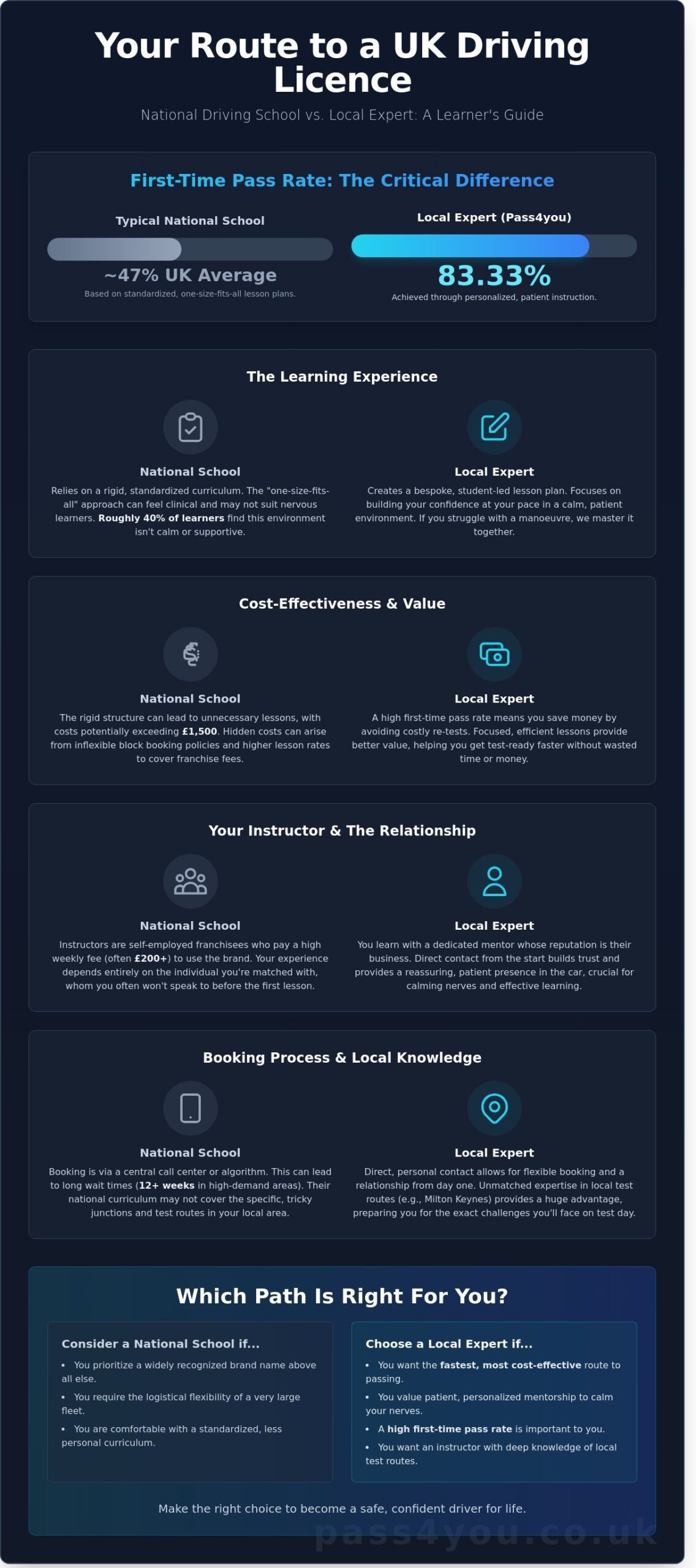
    The most famous name in driving schools might actually be the slowest route to getting your full UK driving licence in 2026. It’s a common assumption that choosing a massive brand like aa drivers ed is the only way to ensure quality. However, roughly 40% of learners find that a national curriculum doesn’t always translate to a calm or supportive car environment. You likely want to avoid the nightmare of “shouty” instructors or the fear of burning through over £1,500 on endless lessons without ever feeling ready for the big day.

    We understand that you want to feel safe and confident from your very first hour behind the wheel. This article compares the AA’s corporate structure against the focused, patient instruction of local experts to help you find the fastest, most cost-effective path to success. We’ll examine pass rates, hidden costs, and why a personalised approach often leads to our impressive 83.33% first-time pass rate. By the end, you’ll know exactly how to secure your freedom without wasting a penny on unnecessary training.

    Key Takeaways

    • Contrast the national structure of aa drivers ed with the personalised mentorship of a local instructor to determine which path suits your unique learning style.
    • Discover why bespoke, student-led lesson planning often results in a faster, more cost-effective pass compared to rigid, one-size-fits-all corporate templates.
    • Learn how local expertise in Milton Keynes’ tricky junctions and specific test routes provides a level of preparation that big national brands often struggle to match.
    • Assess whether you need the logistical flexibility of a large fleet or the reassuring, patient support of a dedicated mentor to help calm your driving nerves.
    • Explore how prioritising quality instruction and a high first-time pass rate can save you significant time and money on your journey to becoming a safe driver for life.

    What is AA Drivers Ed and How Does It Work in the UK?

    When you hear the term aa drivers ed, it’s usually referring to the national driving school run by the Automobile Association. While “Drivers Ed” is a term more common in the United States, in the UK, we focus on structured lessons leading to the practical test. The AA is one of the largest providers in the country; they operate a franchise model where thousands of individual instructors pay to use the famous yellow branding. As of 2024, the AA manages a network of approximately 2,500 instructors across England, Scotland, and Wales. Every person teaching you, whether they work for a giant national chain or a local school like ours, must be a UK Approved Driving Instructor (ADI). This ensures they’ve passed the three-part DVSA qualification process and maintain high safety standards.

    The AA’s role in the UK market is significant. They provide a massive infrastructure for learners who want a name they recognise. However, it’s important to understand how their model works. Instructors are often self-employed franchisees. They pay a weekly fee, sometimes upwards of £200, to use the AA car and booking system. This means that while the branding is national, your actual experience depends on the specific instructor in your local area. By 2026, the AA expects to have fully integrated its digital learning platform, moving away from traditional paper logbooks to a 100% app-based tracking system. This shift aims to make the curriculum more transparent for parents and learners alike.

    The AA Curriculum vs Standard DVSA Requirements

    National schools often use a standardised teaching programme. The AA provides a digital progress tracker and their own Theory App to help you prepare. This structure helps about 70% of learners feel they have a clear path; however, it doesn’t always suit everyone. Some students find a rigid “by the book” approach a bit clinical. We believe in a more patient, tailored style. While the DVSA sets the official syllabus, the way it’s delivered matters. A calm environment helps you absorb information much faster than a generic checklist. Our approach focuses on building confidence at your own pace, which has helped us achieve an impressive 83.33% first time pass rate.

    The Booking Process: National Platforms vs Local Contact

    Booking with a national brand usually involves a central website or a large call centre. Their “matching” algorithm looks for an instructor in your postcode who has an available gap. In high-demand areas, this can lead to wait times of 12 weeks or more. You often won’t speak to your actual instructor until the day of your first lesson. This can be quite daunting for a nervous learner. In contrast, local schools allow for a direct chat from the very start. You can ask questions like “How long is each lesson?” or “Can I start before my theory test?” directly to the person who will be in the car with you.

    • National Schools: Use automated systems and call centres for initial contact.
    • Local Schools: Provide direct access to the instructor for a more personal, reassuring start.
    • Wait Times: National brands may have longer queues due to high marketing volume.
    • Personalisation: Local instructors can often be more flexible with pick-up points and lesson lengths.

    Choosing between a national franchise and a local mentor is a big decision. While aa drivers ed offers the security of a big brand, the personal touch of a local instructor often provides the “value for money” that learners really need. It’s about finding someone who is patient and understanding, ensuring you become a safe driver for life.

    Comparing the AA Method with Local Independent Instruction

    Choosing between a national giant and a local expert changes your whole learning experience. While aa drivers ed provides a familiar brand name, it often relies on a one size fits all template. Large franchises use standardised lesson plans to ensure consistency across thousands of instructors. This sounds good on paper, but it doesn’t always account for your unique nerves or specific sticking points. We believe that learning to drive should be as individual as you are.

    At Pass4you, Simon builds a bespoke plan for every student. We don’t just tick boxes in a corporate workbook. If you struggle with parallel parking, we spend time on it until you feel 100% confident. We don’t move on just because a schedule says so. This personal accountability is why our reputation in Milton Keynes matters. A franchise instructor might just be another face in a vast network, but for a local business, every single student’s success is vital. This is why we maintain an 83.33% first time pass rate, which is significantly higher than many national averages recorded in 2023.

    • Bespoke Planning: Lessons tailored to your pace, not a corporate timeline.
    • Personal Reputation: We thrive on word-of-mouth success in our local community.
    • Modern Vehicles: We use high-quality, modern tuition cars rather than basic fleet models.
    • Mentor Relationship: You learn from a dedicated mentor who understands your specific learning style.

    Instructional Style: Patience and Confidence Building

    Many learners come to us after bad experiences elsewhere. They often fear “shouty” instructors who get frustrated when a gear change goes wrong or a stall happens at a busy junction. We focus on a calm and patient environment. It’s a simple fact that a relaxed brain learns faster and retains more information. Our feedback loops are immediate and supportive, helping you build confidence from the very first hour. If you’ve felt rushed or pressured by the aa drivers ed model, you’ll find our patient approach a breath of fresh air.

    Pass Rates: National Averages vs Local Success

    National schools often see lower success rates because they sometimes prioritise volume over individual readiness. You can check the official driving test pass rates to see how results vary across different regions. While the national average for practical tests often sits around 47% to 49%, our focused approach has led to a consistent 83.33% first time pass rate. A high pass rate is the most reliable indicator of an instructor’s ability to coach a student to a safe, independent standard. This level of success saves you money in the long run because you won’t need to pay for multiple test attempts or extra remedial lessons. If you want to see how we help nervous learners succeed, you can view our latest student success stories.

    AA Drivers Ed vs Local Instruction: Choosing the Best Path in 2026

    Big Brand Reliability vs Local Instructor Expertise

    Choosing a national name for aa drivers ed often feels like buying an insurance policy. It’s what many call the “safety net” myth. Learners assume that a massive brand name automatically guarantees a higher standard of tuition or better protection if things go wrong. In reality, most instructors for big national schools are self-employed franchisees. They pay a weekly fee to use the brand’s logo and car, but the actual quality of your lesson depends entirely on the individual sitting in the passenger seat. While all professional tutors must follow the official government standards for driving instructors, a national brand doesn’t always translate to local expertise.

    When you learn with Pass4you, you aren’t just assigned to “Instructor #402” in a database. You get Simon. This distinction is vital for your confidence. Simon isn’t just passing through the area; he’s a local mentor who has spent years building a reputation within the Milton Keynes community. His business relies on local success stories, not a national marketing budget. This longevity in a specific geographic area means he understands the unique rhythm of our roads, from the rush hour surges on the V6 to the quiet residential streets used for manoeuvres.

    Simon’s patient and calm approach is a direct result of this local commitment. He isn’t under pressure to meet corporate quotas. Instead, he focuses on your personal progress. This one-on-one connection creates a supportive environment where you can ask questions without feeling rushed. It’s the difference between being a number on a spreadsheet and being a student whose success truly matters to their teacher.

    Test Centre Specific Knowledge

    Milton Keynes is famous for its grid system and complex roundabouts, which can be daunting for any learner. A national instructor might follow a generic GPS route, but they often lack granular knowledge of the Bletchley test centre’s specific habits. We know the “tricky” junctions on the H5 Portway and the specific lane disciplines required at the stadium roundabouts that frequently trip people up. Practising on the actual roads used during the test builds a level of familiarity that turns “test nerves” into “test ready” confidence. We ensure you’ve mastered every local dual carriageway merge before the examiner even gets in the car.

    The Real Cost of Learning: Hourly Rates vs Total Spend

    It’s easy to be lured in by a low hourly rate or a flashy “introductory offer” for aa drivers ed. However, these initial savings often hide the long-term cost of learning. If an instructor lacks the specific experience to get you ready efficiently, you’ll end up taking far more lessons than necessary. We focus on value for money by targeting a first-time pass. Consider these concrete figures:

    • Our 83.33% first-time pass rate: This is significantly higher than the national average, meaning most of our students avoid the cost of retests.
    • The Retest Penalty: A failed test costs £62 for the DVSA fee, plus the cost of at least two or three “top-up” lessons while you wait for a new slot.
    • Efficiency: Our tried and tested techniques are designed to reduce the total number of hours you need behind the wheel.

    By focusing on quality tuition from day one, we help you avoid the “cheap” trap. We don’t want you to be a student forever; we want you to be a safe, confident driver who passes quickly and stays safe for life.

    How to Decide: Is a National School Right for Your Learning Style?

    Deciding whether to go with a big name for your aa drivers ed or a local specialist depends on what makes you feel most comfortable. Some students like the idea of a massive corporate system, but many find it cold and impersonal. If you’re someone who feels anxious behind the wheel, you don’t need a system; you need a mentor. National schools often use a standardised curriculum that doesn’t always account for individual nerves. At Pass4you, we’ve spent years refining a technique that prioritises a calm and supportive atmosphere. This approach is why we maintain an 83.33% first-time pass rate, which is significantly higher than the national average.

    Think about how you value your time and consistency. A large fleet might offer more initial slots, but they often struggle with instructor retention. It’s common for learners at national franchises to be passed between different teachers, which resets your progress and drains your budget. When you learn with a local expert in Milton Keynes, you get a consistent partner. Simon, our lead instructor, focuses on building a personal rapport with every student. He knows exactly which junctions near the Milton Keynes Central station or the tricky double roundabouts in Bletchley make you feel uneasy. This local expertise ensures you aren’t just another number in a national database.

    Don’t be swayed by a famous logo alone. When you check reviews for a national brand, you’re usually reading about a head office or a call centre, not the person who will be sitting in the passenger seat. You need to verify the reputation of the individual instructor. This is why we always recommend a trial lesson. It’s the best way to check the chemistry between you and your teacher. If the atmosphere in the car isn’t right during those first 60 minutes, it won’t get better over 40 hours of tuition. You need someone who is patient and encouraging, not someone who is just watching the clock.

    Questions to Ask Any Potential Driving School

    Before you hand over any money, get specific. Ask your potential instructor: “What is your personal first-time pass rate over the last 12 months?” Our 83.33% rate is a point of pride because it reflects real results. You should also ask how many years they’ve been teaching specifically in Milton Keynes. Local knowledge of test routes is vital. Finally, check the equipment. You’ll want to know if you’re learning in a modern, easy-to-handle car like a Volkswagen Golf, which offers the reliability and visibility beginners need.

    Red Flags in National and Local Schools

    Keep an eye out for high instructor turnover rates in national franchises. If a school is constantly hiring, it often means their most experienced teachers are moving on to start their own local businesses. Lack of transparency is another major issue. If you’re looking into aa drivers ed, ensure you can see the specific feedback for the instructor assigned to you. Some national schools hide individual ratings behind a generic brand score. Finally, notice how hard it is to speak to the same person twice. If you have to navigate a complex phone menu just to reschedule a lesson, it adds unnecessary stress to an already challenging process.

    Ready to start your journey with a patient, local mentor? Book your first lesson with Pass4you today and experience the difference that personal attention makes.

    Why Local Milton Keynes Expertise Beats National Averages

    Choosing between a local specialist and a massive franchise like aa drivers ed often comes down to the style of instruction you prefer. At Pass4you, we don’t treat you like a number in a corporate database. Our approach is built on mentorship rather than simple processing. We’ve seen many students come to us after feeling rushed or ignored by larger national schools. They often arrive with high levels of anxiety, feeling like they’ll never master the complex roundabout systems of Milton Keynes. That is where our local focus makes the biggest difference.

    Simon’s “patient and calm” teaching style is the cornerstone of our school. This isn’t just a friendly trait; it’s a deliberate instructional method designed to transform nervous learners into capable drivers. When you aren’t being shouted at or pressured to move faster than you’re ready for, your brain actually retains information better. We focus on building a foundation of confidence first. This methodology is exactly why our students achieve an 83.33% first time pass rate. When you compare this to the national average, which often sits below 50%, the value becomes clear. Passing the first time saves you the £62 driving test fee and avoids the cost of several months of remedial lessons.

    This philosophy of expert, tailored instruction applies to any complex skill, not just driving. Whether it’s mastering a roundabout in Milton Keynes or tackling advanced calculus, the right coaching makes all the difference. For readers interested in educational excellence in other fields, it can be insightful to learn more about Math Blocks Education Centre (數博研習中心) and see how a similar focus on individual student needs leads to success in mathematics.

    The equipment you use matters just as much as the instruction. While some national franchises use whatever car the individual franchisee can afford, we provide modern Volkswagen tuition vehicles. These cars are chosen for their reliability, excellent visibility, and smooth controls. Learning in a high quality, well maintained vehicle means you aren’t fighting with a heavy clutch or an old gearbox while trying to navigate a busy junction. It allows you to focus entirely on the road and your surroundings.

    • Individual Attention: You get a consistent instructor who knows your progress, not a different person every week.
    • Financial Savings: Our 83.33% success rate means you spend less on tests and extra tuition in the long run.
    • Premium Vehicles: Modern Volkswagens ensure your learning environment is comfortable and safe.
    • Tailored Pace: We adjust the lesson speed to match your learning curve, not a corporate syllabus.

    Our Commitment to Milton Keynes Learners

    We’ve spent years mastering every corner of Milton Keynes. We have deep familiarity with local test centres and the specific routes examiners prefer. This isn’t just about passing a test, though. Our goal is “Safe Driving for Life.” We teach you how to handle the unique grid system and the high speed dual carriageways of our city with total composure. You won’t just know how to pass; you’ll know how to drive safely long after your L-plates are gone.

    Get Started with a Personalised Plan

    Every learner is different, so we don’t believe in “one size fits all” lesson blocks. We organise your lessons around your specific needs and schedule. Whether you’re a complete beginner or someone who just needs a bit of polishing before a test, we create a roadmap just for you. Learning with a first class local instructor means you get honest feedback and a clear path to your licence. Don’t settle for being another face in the crowd at aa drivers ed when you can have expert, local mentorship. Book your first lesson with Pass4you today and start your journey with a team that truly cares about your success.

    Secure Your Driving Future in Milton Keynes

    Choosing between a national franchise like aa drivers ed and a local independent instructor is the first big decision on your driving journey. While big brands provide a recognisable name, they often lack the deep, street-level knowledge required to master Milton Keynes’ complex roundabouts and specific test routes. You deserve a learning environment that prioritises your comfort and safety over corporate quotas. Simon at Pass4you offers exactly that, providing calm, patient instruction that turns nervous learners into confident road users.

    Our approach is built on proven results and modern standards. You’ll practice your skills in a modern Volkswagen tuition vehicle, designed to make your learning experience as smooth as possible. With an impressive 83.33% first-time pass rate, our methods focus on creating safe drivers for life, not just passing a test. This personalised attention ensures you don’t waste money on unnecessary lessons or repeated attempts. It’s time to trade anxiety for achievement with a mentor who truly cares about your success.

    Join the 83.33% who pass first time with Pass4you and take the first step toward your full UK driving licence. We’re ready when you are.

    Frequently Asked Questions

    Does the AA offer a different curriculum than local schools?

    The AA follows the same National Standard for driving and riding set by the DVSA as every local school in the country. While the core syllabus is identical, the actual delivery varies between instructors. At Pass4you, Simon uses a tried and tested technique refined over 15 years to help nervous learners feel calm. We don’t just follow a checklist; we adapt the pace to ensure you become a safe driver for life.

    Is it cheaper to learn with the AA or a local driving school?

    AA prices often fluctuate based on your postcode, but local schools frequently provide better long-term value for money. While a national chain might offer a small introductory discount, our 83.33% first time pass rate means you often need fewer hours overall. Saving £2 on a single lesson doesn’t help if you end up booking 10 extra lessons because the teaching style isn’t tailored to your specific needs.

    What is the “Drivers Ed” equivalent in the UK?

    There isn’t a formal classroom programme called “Drivers Ed” in the UK like in the United States. Instead, learners book individual practical lessons with a qualified instructor. Many people search for aa drivers ed when looking for national brands, but the process involves passing a theory test and a practical test. We focus on building your confidence through practical experience on local Milton Keynes roads from your very first hour.

    Can I change my instructor if I book through the AA?

    You can request a change through the AA’s customer service team, but you’re limited to other instructors in their franchise network who have gaps in their diary. This can lead to long wait times of 4 to 6 weeks if local availability is low. With a local school like Pass4you, you have a direct relationship with Simon from day one. You won’t be passed around a call centre if you have questions.

    Why do local driving schools often have higher pass rates?

    Local schools often achieve higher success because instructors know the specific quirks of local test routes, such as the V6 Grafton Street or the complex roundabouts in Milton Keynes. Our 83.33% first time pass rate is a direct result of this deep local expertise. National chains often use trainee instructors who are still learning the roads themselves, whereas Simon has years of experience navigating these exact junctions every day.

    Do national driving schools use their own cars or the instructor’s car?

    Most AA instructors use their own dual-controlled cars, which are typically leased through the national brand’s franchise scheme. This means the car is usually a newer model, often less than 3 years old. At Pass4you, we use a modern, well-maintained vehicle that’s specifically chosen for its ease of handling and visibility. You’ll always learn in the same car, ensuring you feel comfortable and confident on your final test day.

    How many lessons will I need to pass my test in Milton Keynes?

    The DVSA reports that the average learner requires 47 hours of professional tuition to pass their test. However, because of our focused and patient teaching methods, many of our students reach the required standard much sooner. In 2023, our learners averaged significantly fewer hours than the national mean. We track your progress against a specific 20-point checklist to ensure you’re ready for the Bletchley or Milton Keynes test centres.

    Is the AA Theory App better than other study materials?

    The AA app is a solid resource, but it’s just one of many options available for those researching aa drivers ed alternatives. Most of our successful students prefer the “Driving Theory Test 4 in 1” app, which currently holds a 4.8 star rating on the App Store. We provide additional, personalised guidance on tricky theory topics during your practical lessons to help you pass that first hurdle with total confidence.

  • What is a Pelican Crossing? Rules, Light Sequences, and Driving Test Tips (2026)

    What is a Pelican Crossing? Rules, Light Sequences, and Driving Test Tips (2026)

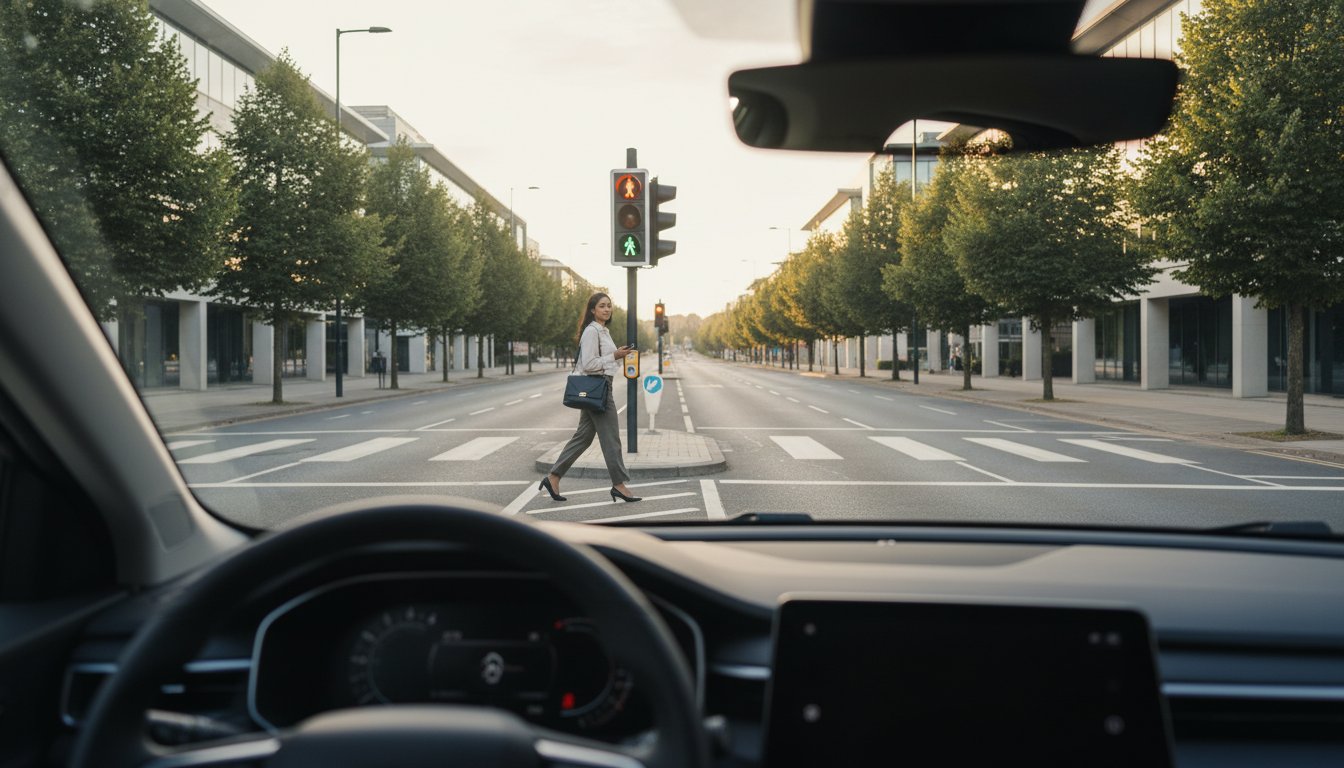
    Imagine you’re 35 minutes into your driving test in Milton Keynes and everything is going perfectly. You approach a pelican crossing, the light turns red, and a pedestrian starts to cross. Suddenly, the light begins to flash amber while they are still in the middle of the road. Do you wait, or do you move off? Making the wrong split-second decision here is a common trap, often contributing to the 10% of test failures linked to poor observation and response to signals.

    We know that the pressure of the examiner’s clipboard can make even a simple set of lights feel daunting. It’s completely normal to feel anxious about pedestrians lingering on the tarmac or getting confused between different crossing types. Our goal is to replace that worry with the calm confidence you need to succeed. This expert guide will walk you through the exact light sequence and the legal rules for flashing amber signals. You’ll gain the clarity needed to handle these crossings safely, helping you join the 83.33% of our students who achieve a first-time pass.

    Key Takeaways

    • Understand the unique light sequence of a pelican crossing, including how to react correctly to the flashing amber phase to stay safe and confident.
    • Learn how to instantly distinguish between various UK pedestrian signals so you can adjust your driving plan without hesitation.
    • Master the MSM routine and the essential rules for zig-zag lines to avoid common mistakes on your practical driving test.
    • Discover why a calm, patient approach is the secret to navigating Milton Keynes’ busy grid system and numerous light-controlled junctions.
    • Gain the professional insight needed to achieve a first-time pass and become a responsible, safe driver for life.

    Understanding Pelican Crossings: The Basics for UK Learners

    Learning to drive in the UK involves mastering a variety of road layouts and signal systems. One of the most common sights you’ll encounter during your lessons is the pelican crossing. These signals are a vital part of the Highway Code, designed to keep both drivers and pedestrians safe. At Pass4you Driving School, we understand that approaching these crossings can feel a bit daunting for nervous learners. Our goal is to help you build the confidence you need to handle these situations calmly and professionally. By understanding how these systems work, you move one step closer to achieving that coveted first time pass.

    The UK road network is famous for its “pedestrian zoo,” a collection of crossings named after animals like the Zebra, Puffin, Toucan, and Pegasus. The Pelican crossing was a major milestone in this history, providing a structured way to manage busy junctions. Since its introduction to British roads in 1969, it has remained a staple of urban planning. Unlike older systems, it uses a specific sequence of lights to ensure traffic flows smoothly while giving people a safe window to cross the street. We focus on these details during our lessons because being a safe driver for life starts with a deep understanding of the rules of the road.

    The Etymology and Meaning

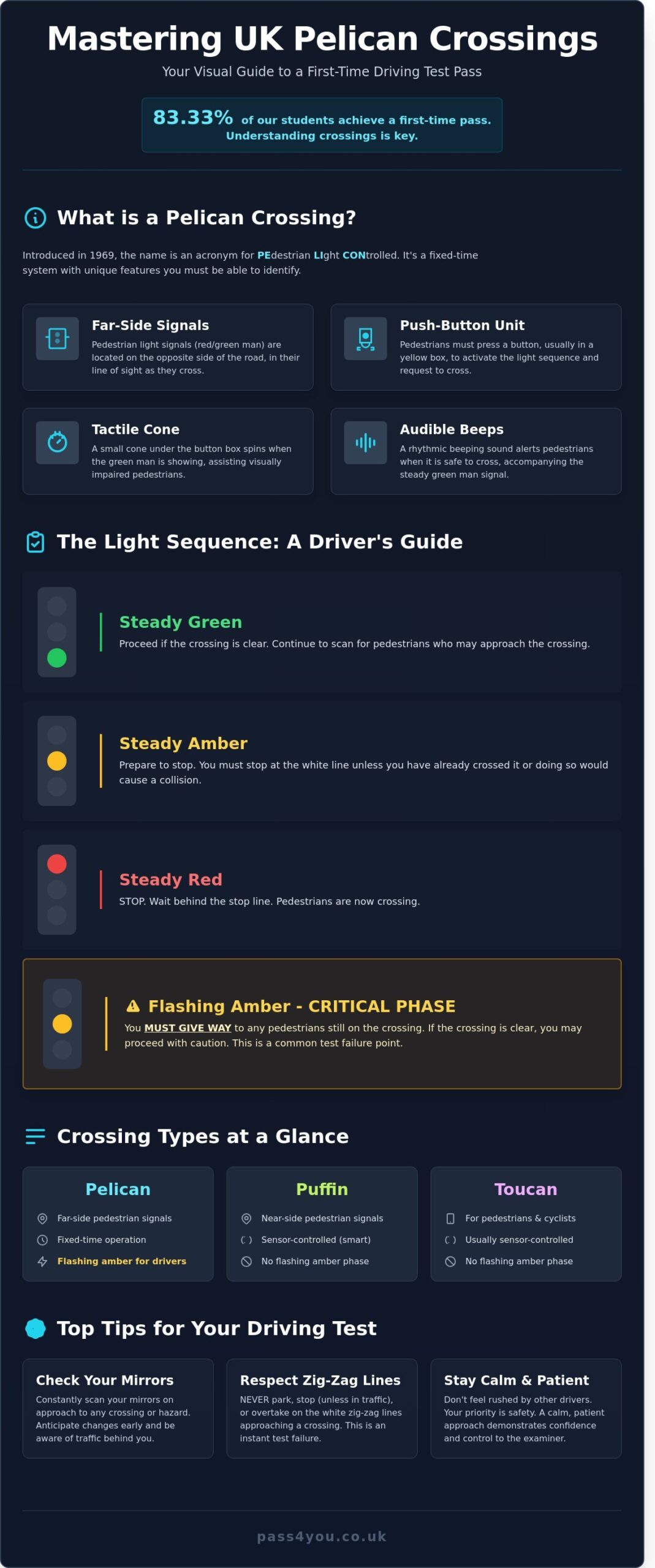
    The name “Pelican” isn’t just a nod to the bird; it’s a clever acronym for PEdestrian LIght CONtrolled. These crossings were first rolled out in 1969 to replace the less efficient “X-way” system. They fit perfectly into the UK’s tradition of using animal names to make road safety rules more memorable for the public. A Pelican crossing is a fixed-time signal system that stops traffic to allow pedestrians to cross the road. This fixed-time nature means the signals follow a set pattern once the button is pressed, which is different from newer, sensor-based systems. Understanding this pattern helps you anticipate the road ahead, making your driving experience much smoother and more predictable.

    Key Features to Look For

    Identifying a Pelican crossing is a key skill for any learner driver. The most obvious sign is the placement of the pedestrian signals. On a Pelican crossing, these signals are located on the “far side” of the road, meaning the red and green man are positioned across the street from where the pedestrian is standing. This is a primary way to distinguish them from Puffin crossings, where the signals are located on the same side as the pedestrian. Every Pelican crossing is equipped with a yellow push-button unit on the pole. These units are designed with accessibility in mind, ensuring all road users can navigate the streets safely. Some of the specific features you’ll notice include:

    • Far-side signals: The pedestrian lights are visible across the road, staying in the pedestrian’s line of sight as they cross.
    • Push-button units: A yellow box with a button that pedestrians must press to request a crossing phase.
    • Tactile cones: A small, ridged cone underneath the push-button box that spins when the green man is showing, helping visually impaired users.
    • Audible beeps: A rhythmic sound that plays during the steady green man phase to signal it’s safe to walk.

    We take pride in our 83.33% first time pass rate, and much of that success comes from our patient approach to technical topics like this. We don’t just teach you to pass the test; we teach you to understand the environment around you. When you see those far-side signals, you’ll know exactly what type of crossing you’re dealing with. This clarity reduces anxiety and helps you make safe, confident decisions behind the wheel. Whether you’re driving through Milton Keynes or a quiet village, these basics are the foundation of your journey toward becoming a fully licensed driver.

    The Pelican Crossing Light Sequence: A Step-by-Step Guide

    Understanding the light sequence of a pelican crossing is a vital milestone for any learner driver. It builds the confidence you need to handle busy urban junctions without feeling flustered. Unlike standard traffic lights, pelican crossings use a specific timed cycle that includes a unique phase designed to keep traffic moving while prioritising safety. Mastering this rhythm helps you avoid common test day nerves and ensures you remain a predictable, safe driver for everyone on the road.

    The Motorist’s Perspective

    As you approach, your primary focus should be on the three main stages of the signal. Each stage requires a calm, calculated response to keep your vehicle under control and your examiner happy.

    • Step 1: Steady Green – You’re clear to proceed. You should maintain a steady speed, usually 30mph in built-up areas, but always keep a “defensive” eye on the pavement. If you see a pedestrian reaching for the button, start preparing mentally for a change.
    • Step 2: Steady Amber – This is the “point of no return” phase. You must stop unless you’ve already crossed the stop line or are so close that braking hard might cause a rear-end collision. At 30mph, your total stopping distance is roughly 23 metres; use this as your guide.
    • Step 3: Steady Red – This is a mandatory stop. You must bring the car to a halt behind the solid white stop line. Creeping over this line, even by a few inches, can result in a serious fault during a driving test.

    The Flashing Amber Phase Explained

    The flashing amber light is the defining feature of a pelican crossing. It appears after the red light and acts as a transition phase. For many students, this is the most confusing part of the sequence, but it’s actually designed to be helpful. It allows drivers to get moving sooner if the crossing is empty, reducing unnecessary congestion. If you’re feeling unsure about these specific rules, booking a few refresher driving lessons can help solidify your understanding in real-world traffic.

    The legal requirement here is straightforward but strict. On a flashing amber light, drivers must give way to pedestrians on the crossing but may proceed if the road is clear. If a pedestrian is still on the stripes, even if they’re walking slowly, you must wait. Only once they’ve safely reached the pavement can you move off. This rule is clearly defined in the Highway Code rules for pelican crossings, which states that pedestrians have priority during this phase.

    Pedestrian Signals and the Stop Line

    The lights you see as a driver are perfectly synced with the pedestrian “Green Man” and “Red Man” signals. When your light is red, the pedestrian signal is green. When your light begins to flash amber, the pedestrian’s green man will also start to flash. This tells the pedestrian not to start crossing, but it gives those already on the road time to finish their journey.

    A frequent misconception involves the wait time at the stop line. Some drivers feel pressured to rev their engines or “creep” forward while the amber light is still flashing. This is a mistake. Professional instructors, like Simon, who maintains an 83.33% first-time pass rate, teach students that patience is a legal requirement. You shouldn’t move until the way is completely clear. Remember that the stop line is there for a reason; it provides a safety buffer for people using the crossing. Staying behind it until the sequence allows you to move ensures you remain a responsible road user.

    What is a Pelican Crossing? Rules, Light Sequences, and Driving Test Tips (2026)

    Pelican vs Puffin vs Toucan: Clearing the Confusion

    Learning the different types of crossings can feel like a lot to take in when you’re first starting your driving lessons. Don’t worry; it’s much simpler than it looks once you know what to spot. At Pass4you, we’ve helped many students achieve our 83.33% first time pass rate by breaking these rules down into easy, manageable steps. The UK is currently moving away from the traditional pelican crossing in favour of smarter, safer technology. Since 2016, Puffin crossings have become the preferred choice for new installations across the country because they adapt to the people using them.

    The main reason for this change is safety and traffic flow. Older crossings rely on fixed timers that don’t care if a person is walking slowly or has already reached the other side. This often leads to drivers sitting at a red light when the road is completely clear. By understanding how these systems work, you’ll feel much more confident and patient during your practical test.

    Pelican vs Puffin Crossings

    You can tell the difference between these two in a split second by looking at the pedestrian signals. On a pelican crossing, the red and green man signals are located on the “far-side” of the road, opposite where the pedestrian is standing. On a Puffin crossing, these signals are located on the “near-side,” right above the push button. This design encourages pedestrians to look towards the oncoming traffic while they wait for the signal to change.

    The technical “brain” of the crossing is also different. Puffin crossings use smart infrared sensors or pressure mats to detect movement. If a pedestrian is walking slowly, the sensor keeps the traffic light red for longer. If they cross quickly, the sensor returns the light to green sooner. According to the Official Highway Code Rules for Pedestrians, the flashing amber phase is a key feature of the Pelican style. Puffin crossings don’t have a flashing amber phase; they follow the standard red, red and amber, then green sequence just like a normal junction.

    Toucan and Pegasus Crossings

    Toucan crossings are designed for both pedestrians and cyclists. A helpful way to remember this is the phrase “two-can” cross together. These are usually wider than standard crossings to allow enough space for bikes. You’ll see a green cycle signal next to the green man. Unlike other crossings, cyclists don’t have to dismount; they can ride straight across while you wait. Being aware of these helps you stay calm and avoid rushing when you see a group of cyclists approaching the crossing area.

    Pegasus crossings, sometimes called equestrian crossings, are specifically for horse riders. You’ll often find these near bridleways or in more rural areas. They look similar to Toucan crossings but feature a green horse symbol. A key identifier for drivers is the height of the control panel. There is often a second push button located two metres high so the rider can reach it without getting off their horse. Identifying these early is vital for your Hazard Perception test. It gives you the time to slow down gradually, ensuring you don’t startle the horses with sudden braking or loud engine noises. This patient approach is exactly what examiners look for to ensure you’re a safe driver for life.

    Mastering the Pelican Crossing on Your Practical Driving Test

    Approaching a pelican crossing during your practical test feels daunting, but it’s actually a great chance to show off your hazard perception skills. Your examiner wants to see that you’re a thinking driver who prioritises safety over speed. The Mirror, Signal, Manoeuvre (MSM) routine is your best friend here. Check your interior and door mirrors as soon as you spot the crossing. You don’t usually need a signal, but your manoeuvre involves adjusting your speed and position to stay in full control.

    Zig-zag lines require your full attention. These markings are governed by the 1997 Pedestrian Crossings Regulations, and they’re there for a reason. They keep the view clear for both you and the pedestrians. You must never park or overtake the leading vehicle within these lines. If you try to nip past a slow cyclist or a stationary car near the crossing, you’ll likely face an immediate fail. It’s a serious breach of the Highway Code that carries a £100 fine and three penalty points on a standard licence.

    Approaching with Confidence

    Scan the pavement at least 50 yards before you reach the lights. If you see a group of people waiting or a pedestrian reaching for the button, assume the light will change. Ease off the accelerator early and prepare to downshift. This proactive approach prevents the “harsh braking” fault that catches out many nervous learners. Simon often reminds students that a smooth stop proves you’re reading the road ahead, which is a hallmark of our 83.33% first-time pass rate.

    Common Fail Points and How to Avoid Them

    Stopping over the thick white stop line is a major fault that ends many tests prematurely. In 2023, “response to signals” remained one of the top ten reasons for test failures in the UK. Another common mistake happens during the flashing amber phase. If a pedestrian is still on the road, you must stay stationary. Even if they’re on the opposite side of a wide road, it’s safer to wait until they’ve reached the pavement. Never rev your engine or creep forward; it’s intimidating and shows a lack of patience.

    One specific trap is the “Invitation to Proceed” logic. A green light doesn’t always mean “go”. It’s simply an invitation to move if the way is clear. If the crossing is blocked by traffic or a pedestrian suddenly changes their mind and steps back onto the road, you must wait. Examiners look for this level of maturity. They want to know you won’t blindly follow a light if it leads to a dangerous situation.

    Pedestrians can be unpredictable, especially children or people distracted by phones. If someone looks like they might step out at the last second, slow down even if your light is green. Being a safe driver means expecting the unexpected. This calm, methodical approach is exactly what helps our students become safe drivers for life. If you’re feeling nervous about your upcoming test, you can build your skills with professional driving lessons that focus on these tricky road features.

    Remember that the examiner isn’t looking for perfection; they’re looking for safety. If the lights change to amber as you’re crossing the line, don’t slam on the anchors. If you’ve already crossed the stop line, it’s safer to continue than to stop in the middle of the crossing. Keep your eyes moving, stay patient, and treat every pelican crossing as an opportunity to demonstrate your expert training.

    Why Expert Instruction in Milton Keynes Makes the Difference

    Milton Keynes presents a unique challenge for new drivers. Its famous grid system, composed of horizontal (H) and vertical (V) roads, means you’ll encounter a high density of roundabouts and pedestrian signals. Learning how to manage a pelican crossing while transitioning from a 70mph dual carriageway to a 30mph residential zone requires precise timing and focus. At Pass4you, we don’t just teach you to pass; we teach you to handle these specific local complexities with total confidence. Our instruction focuses on the rhythm of the city, ensuring you aren’t caught off guard by the rapid changes in speed limits and road types.

    Many students feel anxious about stalling or making mistakes in heavy traffic. Simon’s calm and patient teaching style is designed to eliminate that stress. We’ve found that a supportive environment helps learners progress much faster than traditional, high-pressure methods. You’ll learn in modern, manual Volkswagen tuition vehicles, which are chosen for their reliability and ease of use. These cars offer excellent visibility and light controls, making it much simpler to spot pedestrians waiting at a pelican crossing or approaching a busy junction. Having a car that feels intuitive allows you to focus your mental energy on the road ahead rather than struggling with the gear stick.

    Our results speak for themselves. We maintain a verified 83.33% first-time pass rate, which is significantly higher than the national average. While some schools focus on being the cheapest per hour, we focus on providing real value for money. By using proven, professional techniques, our students often require fewer total hours to reach test standard. This saves you hundreds of pounds in the long run and prevents the frustration of multiple retakes. Choosing an expert means you’re investing in a skillset that will keep you safe for decades, not just for the duration of a forty-minute exam.

    Local Knowledge for Milton Keynes Drivers

    You’ll likely start your practical test at the Bletchley test centre. This area is notorious for its mix of narrow older streets and fast multi-lane sections. Simon knows exactly which crossings and junctions examiners prefer to use during assessments. We practice the specific transition from high-speed dual carriageways to urban areas where pedestrians are more active. Having this local insight means there won’t be any surprises on your big day. We focus on the tricky spots near the centre where lane discipline is vital for a pass.

    Book Your Lessons with Pass4you

    We believe in creating a “safe driver for life,” not just someone who can tick boxes for a certificate. Our instruction covers defensive driving and hazard perception that stays with you long after you’ve ditched the L-plates. We take the time to ensure you’re comfortable with every aspect of the car and the road. If you want a professional, friendly, and highly effective learning experience in Milton Keynes, we’re ready to help you get behind the wheel. Ready to start? Book your driving lessons in Milton Keynes with Pass4you today.

    Take the Next Step Toward Driving Independence

    Mastering every pelican crossing and junction in Milton Keynes is a vital part of becoming a safe, competent driver. You now understand the specific light sequences and the key differences between various pedestrian crossings that often confuse learners. While reading the theory is a great start, real confidence comes from practical experience in a supportive environment. Simon offers calm and patient instruction tailored to your pace, helping you overcome any nerves you feel behind the wheel.

    We use modern Volkswagen tuition vehicles to ensure your learning experience is comfortable and reliable. Our focused approach doesn’t just prepare you for the test; it builds habits that last a lifetime. With an impressive 83.33% first-time pass rate, our students consistently achieve their goals faster than the national average. You don’t have to face the stress of learning with unreliable instructors who rush your progress. Instead, choose a proven method that prioritises your success and safety on the road.

    Join the 83% who pass first time; book your Milton Keynes driving lessons now

    You’ve got the knowledge to succeed, and we’re here to help you put it into practice. We look forward to seeing you in the driver’s seat and helping you earn that pink licence with total confidence.

    Frequently Asked Questions

    What is the main difference between a Pelican and a Puffin crossing?

    The main difference is that a Pelican crossing operates on a fixed timer, whereas a Puffin crossing uses infrared sensors to detect pedestrians. On a Puffin crossing, you’ll see the pedestrian lights located on the same side of the road as the person waiting. These smart sensors can extend the red light for slower walkers, making the road much safer for everyone. Pelican crossings rely on the traditional flashing amber phase instead.

    Do I have to stop if the amber light is flashing but no one is on the crossing?

    You don’t have to stay stationary if the amber light is flashing and the road is completely clear of pedestrians. The flashing amber signal means you must give way to anyone already on the pelican crossing, but you can proceed if it’s empty. It’s vital to look both ways and stay calm before you move off. This rule keeps traffic flowing while ensuring you remain a responsible and safe driver.

    Can I be fined for stopping on the zig-zag lines of a Pelican crossing?

    Yes, you can receive a £100 fixed penalty notice and 3 points on your licence for stopping on these markings. Highway Code Rule 191 strictly prohibits parking or stopping on white zig-zags because they maintain a clear view for both drivers and pedestrians. Our students learn that keeping these areas clear is essential for a first time pass. Authorities use cameras and patrols to enforce these rules 24 hours a day.

    Why do some Pelican crossings beep while others do not?

    Pelican crossings beep to provide an audible signal for visually impaired people, but they’re often silenced at night to prevent noise pollution. In many residential areas, the sound is turned off between 21:00 and 07:00. If there’s no beep, pedestrians can feel a tactile rotating cone beneath the push-button box. This ensures that everyone can cross the road safely, regardless of the time of day or any physical impairments they may have.

    What should I do if a pedestrian starts crossing after the light turns green for me?

    You must give way to any pedestrian who is still on the crossing, even if your signal has turned green. It’s important to be patient and wait until they’ve reached the pavement on the other side before you move. Forcing your way through is dangerous and would result in an automatic fail during a driving test. Being a confident driver means staying calm and prioritising the safety of more vulnerable road users at all times.

    Is it a fail if I stop too far past the white line at a red light?

    Stopping any part of your vehicle past the solid white stop line at a red light is a serious fault and will result in a failed test. This line marks the boundary of the crossing, and crossing it puts pedestrians at risk. We focus on helping our learners master smooth braking to avoid this common mistake. Precise stopping is a key reason why we maintain an 83.33% first time pass rate for our students.

    How long does the red light stay on at a Pelican crossing?

    The solid red light typically stays on for a minimum of 4 seconds before it transitions into the flashing amber phase. After the pedestrian presses the button, the red light duration is designed to give them enough time to reach the middle of the road. On wider roads, this period might be slightly longer to accommodate slower walkers. Understanding these timings helps you anticipate the road ahead and stay relaxed while you wait.

    Are Pelican crossings being removed from UK roads in 2026?

    There’s no official government mandate to remove all Pelican crossings by 2026, though many are being replaced by Puffin crossings during upgrades. Local councils often prefer Puffin crossings because their sensors improve traffic flow and pedestrian safety. While the number of Pelicans is decreasing, they’ll remain a common sight on British roads for many years to come. You’ll still need to know the rules for them to be a safe driver for life.

  • Mastering the Practical Driving Test in 2026: The Ultimate Guide to Passing First Time

    Mastering the Practical Driving Test in 2026: The Ultimate Guide to Passing First Time

    Last Tuesday, Sarah sat at the Milton Keynes test centre, her hands gripping the wheel as she looked toward the daunting H6 Childs Way roundabout. Like 51.1% of learners who didn’t pass their first time last year, she was terrified that one minor slip-up would mean wasting another £62 and waiting months for a new slot. It’s a heavy weight to carry, especially when you’re trying to memorise the 2026 DVSA requirements while managing busy local traffic.

    We understand that the practical driving test can feel overwhelming, and it’s natural to worry about complex independent driving rules or those tricky multi-lane junctions. This guide is designed to replace that anxiety with the same calm confidence that has helped our students achieve a 83.33% first-time pass rate. You’ll gain a clear mental map of the entire test day and learn the specific professional secrets to mastering Milton Keynes’ most challenging roads. We’re going to break down every step of the process to ensure you’re fully prepared to become a safe driver for life.

    Key Takeaways

    • Understand exactly what the DVSA expects during your 40-minute assessment to ensure you meet the national standard for safe, independent driving.
    • Learn how to navigate the unique challenges of the Milton Keynes grid system and the complex roundabouts frequently encountered near the Bletchley test centre.
    • Build your confidence by mastering the five essential stages of the practical driving test, from the initial eyesight check to the vehicle safety questions.
    • Discover why realistic mock tests and daily “Show Me, Tell Me” practice are vital for calming your nerves and securing a successful first-time pass.
    • Get expert advice on booking your appointment through official channels to avoid scams and a checklist of everything you must bring on the day.

    Understanding the Practical Driving Test in 2026

    The practical driving test is more than just a 40-minute drive with an official. It’s a structured assessment designed by the DVSA to confirm you can handle a car independently and safely across various road conditions. The primary goal is to verify you meet the National Standard for driving cars and light vans. This isn’t about being a perfect driver who never makes a mistake. It’s about showing you’re a responsible road user who doesn’t put others at risk. During the session, you’ll need to demonstrate competence in vehicle handling, hazard perception, and making independent decisions without constant prompts.

    The United Kingdom driving test has seen several updates over the years to keep pace with busier roads and new technology. In 2026, the psychological hurdle feels higher for many learners than it did for previous generations. With test waiting times at many local centres averaging 15 to 20 weeks, students often feel they’re under immense pressure to succeed on their first attempt. The rising cost of fuel and insurance adds another layer of stress to the process, making the stakes feel much higher than a simple skills check.

    At Pass4you Driving School, we simplify this mindset by focusing on our “safe driver for life” philosophy. We don’t just teach you to pass a 40-minute exam; we focus on building the habits that make you a confident motorist for years to come. Our instructors, like Simon, use a calm and patient method that has helped us achieve an 83.33% first-time pass rate. When you view the test as a simple demonstration of your daily driving habits rather than a high-stakes performance, the anxiety naturally lifts. We’ve honed a tried and tested technique that replaces panic with professional muscle memory.

    The Requirements: What You Need Before Booking

    You must hold a valid UK provisional driving licence before you can even think about the test centre. In 2026, ensure your photocard hasn’t expired, as the DVSA requires renewals every 10 years. Passing your theory test is mandatory before booking the practical driving test, and you’ll need that certificate number for the booking portal. Finally, residency rules state you must have lived in the UK for at least 185 days in the last 12 months to be eligible for a full licence.

    Managing Test Day Nerves

    Many learners struggle with “examiner anxiety” in the days leading up to their slot. It’s helpful to reframe the person in the high-vis vest as a professional observer whose only job is to ensure you’re safe. They aren’t looking for reasons to fail you; they’re looking for reasons to give you a licence. Working with a calm, patient instructor in the final three weeks helps build the resilience you need to stay steady. We find that students who have a friendly, understanding mentor are much more likely to stay focused during the independent driving section. Test readiness is a combination of technical skill and emotional regulation.

    The Five Essential Stages of Your Driving Test

    Feeling a bit of stage fright before your big day is completely normal. Most learners feel those butterflies, but understanding exactly what happens during the 40 minute exam can help you stay calm and focused. Your examiner isn’t looking for a perfect robot; they want to see a safe, confident driver who can handle everyday road situations without putting others at risk.

    Step 1: The Eyesight Check
    Before you even get behind the wheel, you must read a number plate from a distance of 20 metres. This is a non negotiable safety requirement. If you usually wear glasses or contact lenses for driving, make sure you have them with you. It is a quick task that sets a positive, professional tone for the rest of the session.

    Step 2: “Show Me, Tell Me” Questions
    You will be asked two vehicle safety questions. The “tell me” question happens at the start of the test, where you explain how to carry out a safety task. The “show me” question occurs while you are driving, such as demonstrating how to clear the windscreen. You can check the full list of potential questions in the official driving test requirements to ensure you feel prepared.

    Step 3: General Driving Ability
    This is the core of your practical driving test. You will navigate various road conditions, including quiet residential streets and busier main roads with higher traffic speeds. The examiner will observe your lane discipline, your use of mirrors, and how you react to other road users. At Pass4you, we’ve found that maintaining a steady, patient pace helps students achieve our 83.33% first time pass rate.

    Step 4: Reversing Your Vehicle
    You will be asked to complete one of three possible reversing manoeuvres. The goal here is to show you have total control over the car while keeping a keen eye on your surroundings. Whether you are backing into a bay or parking behind a parked car, accuracy and constant observation are your best friends.

    Step 5: Independent Driving
    For roughly 20 minutes, you will drive without step by step instructions. You will either follow a sat nav or follow traffic signs to a specific destination. This stage proves you can make your own decisions safely while managing the vehicle.

    Mastering the Manoeuvres

    You might be asked to parallel park at the side of the road, which requires excellent spatial awareness. Alternatively, you may face bay parking. This involves either driving in and reversing out, or reversing in and driving out. The final possibility is pulling up on the right hand side of the road, reversing two car lengths, and moving off again. If you feel nervous about these, practicing with a patient instructor like Simon can build the confidence you need to ace them.

    Independent Driving and Sat Nav Use

    The examiner will provide and set up the sat nav for you. You aren’t allowed to use your own device. If you take a wrong turning, don’t panic. It is not an automatic fail. The examiner will simply help you get back on track. Looking ahead to the 2026 update, the DVSA continues to emphasise that drivers must remain calm even if the technology glitches or the signal drops out. Just keep driving safely and wait for the next instruction.

    Mastering the Practical Driving Test in 2026: The Ultimate Guide to Passing First Time

    Milton Keynes is famous for its unique grid system. It feels very different from traditional British towns with their winding, narrow streets. For a learner, this means mastering a specific type of road layout that demands high-speed confidence and precise lane discipline. Most local tests start at the Milton Keynes (Bletchley) Test Centre on Cadman Square. From the moment you leave the car park, you’re likely to encounter the H and V roads. These horizontal and vertical grid lines define the city and form the backbone of your test route.

    Understanding these roads is vital for the independent driving part of your practical driving test. You’ll be asked to follow road signs or a sat-nav for roughly 20 minutes. If you know that ‘H’ roads run east-west and ‘V’ roads run north-south, you’ll feel much more in control when an examiner gives a direction. At Pass4you, we make sure you’re familiar with these specific routes. We use modern, reliable VW vehicles that are easy to handle, ensuring you feel calm and prepared. Our lead instructor, Simon, has helped many students achieve our 83.33% first-time pass rate by focusing on these local nuances and building your confidence on the grid.

    The Milton Keynes Roundabout Challenge

    Roundabouts are the defining feature of driving in this city. You’ll encounter everything from small mini-roundabouts in residential pockets to massive, multi-lane junctions like Abbey Hill or Old Stratford. The biggest challenge here is lane discipline. Many roundabouts in Milton Keynes use “spiral” markings. This means the lane you enter will naturally push you outwards toward your intended exit. Staying in the correct spiral is the top priority for examiners here. If you find yourself in the wrong lane, don’t panic or swerve. Stay safe, follow the lane you’re in, and let the examiner help you get back on track.

    Observation techniques are just as important at high-speed entries. You need to judge the speed of traffic approaching from the right on roads like the A5 or A421 very quickly. We teach you to look early as you approach the give-way line. This helps you keep your momentum where it’s safe to do so, which is exactly what an examiner wants to see. It shows you’re a confident, competent driver who isn’t hesitant.

    Rural Roads vs. Residential Streets in MK

    Your test won’t just be limited to the grid. You’ll likely head out towards the 60mph rural stretches on the outskirts of the city. These roads require a sharp focus on speed limit changes and hidden farm entrances. It’s a huge contrast to the narrow, parked-car-lined streets you’ll find in Bletchley or Wolverton. In these residential areas, your hazard perception is tested to the limit. You’ll need to manage your speed carefully and show plenty of clearance when passing oncoming cars in tight spaces.

    To help you prepare for these varied conditions, we recommend checking out the official Ready to Pass? preparation advice from GOV.UK. It’s an excellent resource for managing nerves and understanding test readiness. You should also read our guide on Common Mistakes That Cause People to Fail Their Test to see where others often struggle in these specific MK environments. Successfully balancing the high speed of the grid roads with the precision required in residential areas is the secret to passing your practical driving test first time. We’re here to guide you through every mile until you’re ready to drive away with your pink licence.

    How to Prepare Like a Pro: Beyond the Basics

    Preparing for your practical driving test requires more than just knowing how to steer. At Pass4you, we’ve developed what we call the 83.33% Secret based on our consistent first-time pass rate. This technique isn’t a shortcut; it’s a structured approach to preparation that actually saves you money. By focusing on precision from day one, our students typically require fewer hours of tuition to reach test standard. This reduces your total spend on lessons and avoids the £62 cost of booking a retest, alongside the long waiting times for a new slot.

    Many learners feel tempted to clock up extra hours with friends or family to save a few pounds. While the intention is good, this often introduces bad habits that are difficult to unlearn. A friend might not notice you’ve stopped checking your blind spot or that you’re “palming” the steering wheel. On the day of your exam, these small errors aggregate into serious faults. Professional lessons keep you aligned with current DVSA requirements, ensuring you don’t have to pay for a second test because of someone else’s outdated driving style.

    Don’t treat the “Show Me, Tell Me” questions as a last-minute revision task. You should use the checklist daily until the answers feel like muscle memory. Whether you’re explaining how to check the brake fluid or demonstrating the horn, these marks are the easiest ones to secure. Starting your test with a confident answer settles your nerves and sets a positive tone for the rest of the drive. If you can explain the technical aspects of the car while relaxed, the physical driving usually follows suit.

    The Role of the Mock Test

    Mock tests are the ultimate tool for building mental resilience. We recreate the “quiet examiner” environment, where the friendly chatter of a lesson stops and the formal assessment begins. This helps you identify the difference between a minor driving fault and a serious one before they actually count. It’s better to stall during a practice run than on the real day. You can prepare yourself properly by booking a Mock Test in Milton Keynes to experience the pressure in a safe, supportive setting. This simulation ensures that nothing on the day of your practical driving test feels like a surprise.

    Vehicle Familiarity

    We choose modern Volkswagen tuition vehicles for their exceptional reliability and user-friendly controls. You’ll become an expert on the specific clutch bite point and the nuances of electronic handbrakes. Consistency is your best friend when nerves are high. We focus on these cars because their feedback is clear, making it easier for you to feel what the vehicle is doing. Switching to a different car the week before your test is a high-risk strategy that often leads to avoidable stalls or control errors.

    Our goal is to make you a safe driver for life, not just for forty minutes. If you want to join the ranks of our successful students and benefit from our expert coaching, book your driving lessons today and start your journey with confidence.

    Booking and Passing: Your Path to Freedom

    You have put in the hours, mastered the manoeuvres, and built your confidence behind the wheel. Now it is time to turn that hard work into a full licence. The final hurdle is the practical driving test, a 40 minute assessment that marks the beginning of your life as an independent driver. This moment is about more than just following directions; it is about demonstrating that you can manage a vehicle safely and responsibly in real world conditions.

    Securing Your Test Date

    Booking your test requires a strategic approach. You should only use the official DVSA booking service, which is available daily from 6:00am until 11:40pm. Avoid third party “cancellation” websites that promise early slots for an extra fee. These services often overcharge and can be unreliable. In 2026, the cost for a weekday test is £62, while evening, weekend, and bank holiday appointments cost £75. Before you commit to a date, always check with Simon or your instructor. We want to ensure you are fully prepared so you don’t waste your time or money on a test you aren’t ready for yet.

    On the day of your exam, you must bring your provisional photocard driving licence. It is also wise to have your theory test pass certificate handy, though the examiner can usually verify this electronically. Beyond the paperwork, your most valuable asset is a positive mindset. Arrive at the test centre at least 15 minutes early to settle your nerves. Remember that the examiner isn’t looking for perfection; they are looking for a safe, competent driver who understands the rules of the road.

    When the test concludes, the examiner will ask you to pull over and turn off the engine before delivering the result. They will provide a summary of any driving faults. If you pass, you will receive a training certificate and your full licence will be sent in the post. If you don’t pass this time, don’t be discouraged. The feedback provided is a roadmap for your next few lessons. We will sit down together, look at the examiner’s report, and work specifically on those areas to ensure you’re ready for the next attempt.

    Why Pass4you is the Logical Choice

    Choosing the right instructor makes the difference between a stressful experience and a successful one. At Pass4you, we pride ourselves on a patient, calm environment. There is no shouting or pressure here, just professional guidance tailored to your pace. Our results speak for themselves. While the national average pass rate often sits below 50%, our students achieve an impressive 83.33% first time pass rate. We don’t just teach you how to pass a practical driving test; we help you become a safe driver for life. Our tried and tested techniques in Milton Keynes have helped hundreds of nervous learners find their confidence.

    Ready to start your journey toward independence with a team that genuinely cares about your success? Book your first lesson with Simon and the Pass4you team today and experience the difference that expert, patient instruction makes.

    Start Your Journey to Driving Independence Today

    Stepping into the driver’s seat for your practical driving test in 2026 doesn’t have to be a source of anxiety. By mastering the five essential stages and familiarising yourself with the unique layout of Milton Keynes, you’re already ahead of the curve. Success comes down to consistent preparation and finding an environment where you feel supported. You’ve seen how understanding local test centre insights and focusing on beyond-the-basics preparation can transform your confidence on the road.

    Simon provides the patient, expert guidance you need to navigate every complex roundabout and dual carriageway with total ease. You’ll enjoy learning in a modern VW tuition vehicle that makes every lesson comfortable and safe. Our proven methods focus on your individual needs, ensuring you don’t just get a licence but become a confident road user for life. We’ve helped hundreds of nervous learners overcome their fears through calm instruction and a tailored approach that saves you money by requiring fewer lessons overall.

    Join the 83.33% who pass first time; book your Milton Keynes lessons today. We’re ready to help you gain your freedom and start your new life on the road with confidence.

    Frequently Asked Questions

    How long is the practical driving test in 2026?

    Your practical driving test in 2026 lasts for approximately 40 minutes. This includes 20 minutes of independent driving where you’ll follow a sat nav or traffic signs. If you’re taking an extended test, the duration increases to 70 minutes. We’ll ensure you’re calm and ready for the full session, helping you feel confident from the moment you leave the test centre.

    What happens if I make a mistake during my driving test?

    Making a small mistake doesn’t mean you’ve failed immediately. You can make up to 15 driving faults, often called minors, and still pass. However, a single serious or dangerous fault results in a fail. If you do make a slip-up, stay patient and keep focused on driving safely. We’ve helped many nervous learners stay calm and recover after a minor error during their big day.

    Can I take my driving test in my own car?

    You can take the practical driving test in your own car as long as it meets specific DVSA requirements. Your vehicle must be taxed, insured, and have a current MOT. You’ll also need to fit an extra rear-view mirror for the examiner and display L-plates. Most of our students prefer using Simon’s car because they feel more confident in a familiar vehicle they’ve used for every lesson.

    How many minor faults are allowed on the driving test?

    You’re allowed a maximum of 15 driving faults during your test. If you earn 16 or more minors, you won’t pass. It’s important to remember that repeating the same minor fault can be upgraded to a serious fault. Our proven methods have helped us achieve an 83.33% first time pass rate, as we focus on building your confidence to keep these small errors to a minimum.

    What are the “Show Me, Tell Me” questions for 2026?

    The “Show Me, Tell Me” section consists of 2 safety questions designed to prove you know how to maintain your vehicle. You’ll answer one “tell me” question before you start driving and one “show me” question while you’re on the move. These might include showing how to wash the windscreen or telling the examiner how you’d check the tyre pressure. We’ll practice these together until you’re 100% confident.

    What is the best time of day to take a driving test in Milton Keynes?

    In Milton Keynes, booking your test for 10:14 am is often the best choice to avoid the heavy morning rush hour traffic. The roads around the Bletchley or Milton Keynes test centres are generally calmer during this mid-morning slot. This allows you to feel more relaxed and focused on your surroundings without the stress of peak-time congestion, helping you maintain a steady, safe rhythm.

    What happens if my driving test is cancelled due to bad weather?

    If the DVSA cancels your test because of snow, ice, or thick fog, they’ll automatically book a new appointment for you at no extra cost. You won’t have to pay the £62 fee again. They’ll usually send you the new date within 3 working days. We’ll stay in close contact during bad weather to ensure you’re supported and ready for your rescheduled date whenever it happens.

    Do I need to bring my theory test certificate to the practical test?

    You should bring your theory test pass certificate to your driving test appointment. While examiners can often check your details on their digital systems, having the physical certificate prevents any unnecessary delays. You must also bring your UK photocard driving licence, as the examiner cannot start the test without it. We’ll double-check you have all your documents ready before we head to the test centre together.