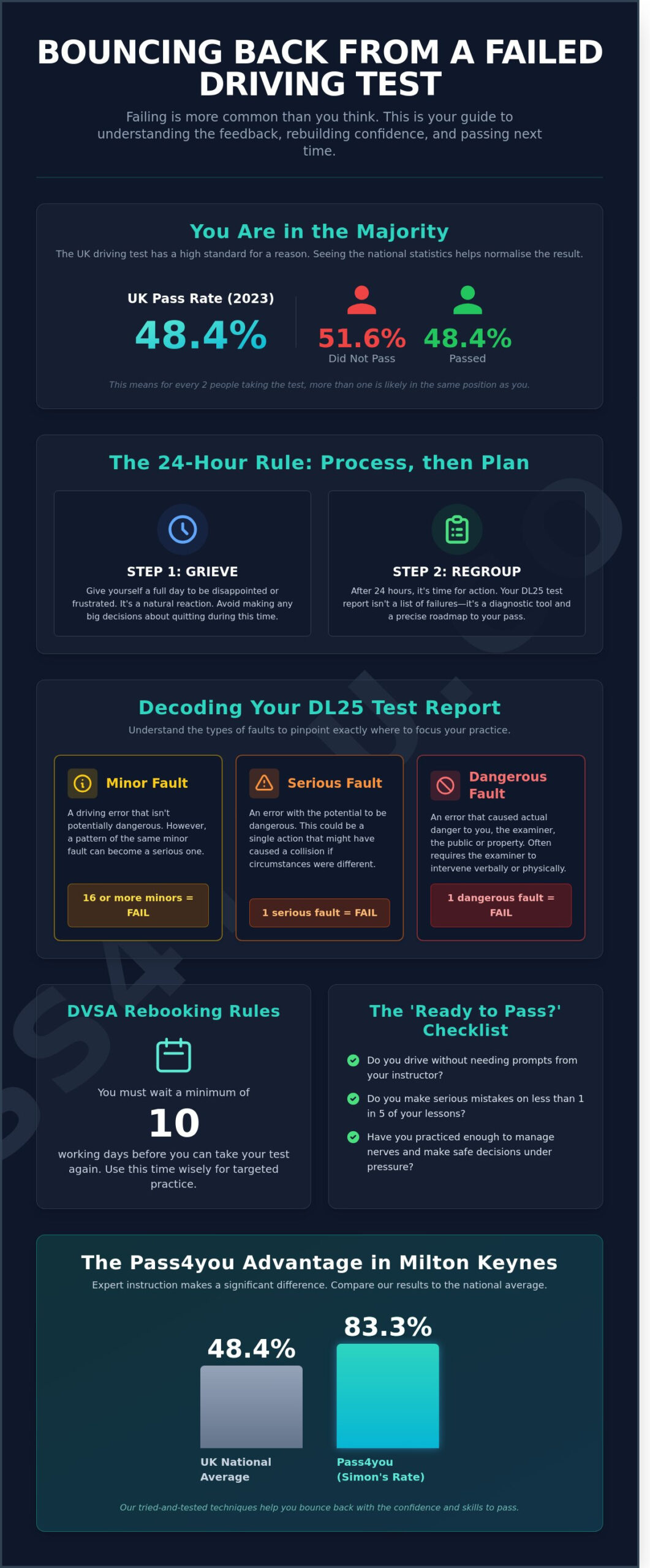
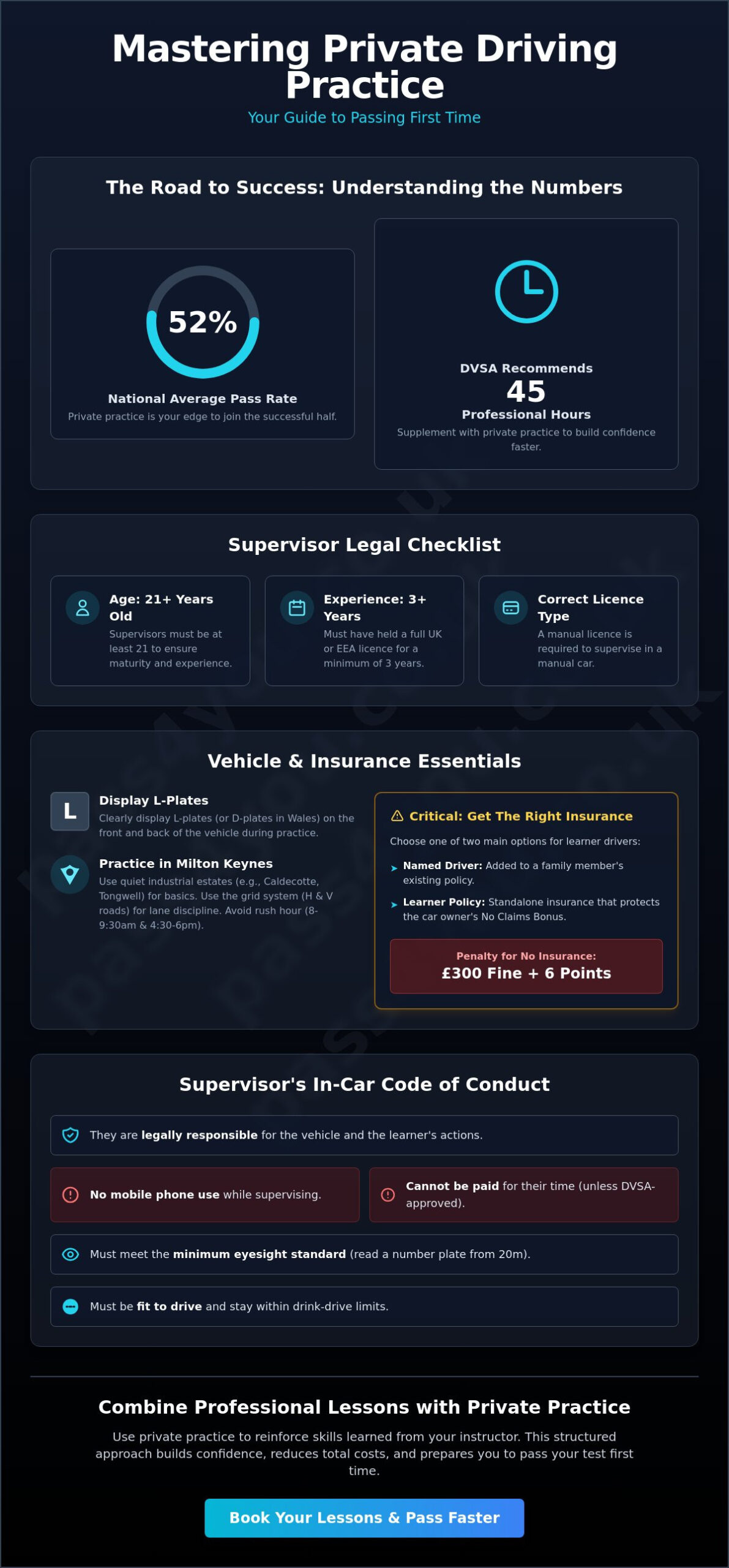
Did you know that the national average pass rate for the practical driving test is currently around 52%? While the DVSA recommends about 45 hours of professional tuition, the secret to joining the successful half of learners often lies in what you do outside of those scheduled hours. Learning how to practice driving between lessons is the most effective way to bridge the gap between being a student and becoming a safe, independent driver. It’s natural to feel a bit of tension about driving with a parent or worry about picking up their old habits. However, with the right structure, these private sessions become your greatest asset.
We understand that the thought of driving a non-tuition car can be daunting, but you are in safe, professional hands. You might feel anxious about different clutch points or confused by the 2026 insurance and supervisor regulations. This guide is designed to replace that uncertainty with a calm, step by step plan. You’ll learn how to master private practice to build your confidence, save money, and prepare yourself to pass first time. We’ll walk you through the essential legal rules, tips for a stress-free relationship with your supervisor, and the best local routes to help you feel completely at home behind the wheel.
Key Takeaways
- Confirm the 2026 legal essentials for your supervisor, including the requirement to be at least 21 years old with three years of driving experience.
- Identify the most effective practice routes in Milton Keynes, using the unique grid system and quiet industrial areas to build your confidence.
- Learn how to practice driving between lessons with a structured approach that focuses on refining a single skill from your last professional session.
- Establish a calm and supportive atmosphere in the car by setting clear expectations and a “no shouting” agreement with your supervising driver.
- Discover how private practice acts as a tactical supplement to professional lessons, helping you reach test-readiness faster while saving on total costs.
The Legal Essentials: Who Can Supervise Your Driving Practice?
Before you turn the ignition for your first private session, you must ensure your practice is legal and safe. It’s about more than just having a willing volunteer in the passenger seat; the law has very specific requirements for who can supervise a learner. Understanding these rules is the first step in learning how to practice driving between lessons without the stress of accidental legal slip-ups. To start, your supervisor must be at least 21 years old. This age limit ensures they have the maturity and road experience to guide you through tricky situations.
The “3-year rule” is another non-negotiable part of UK driving licence regulations. Your supervisor must have held a full UK or EEA licence for at least 36 months. This duration matters because it guarantees your mentor has moved past the “new driver” phase and has a solid grasp of road safety. You should also check their licence type. If you are practicing in a manual car, your supervisor must hold a full manual licence. If they only have an automatic licence, they cannot legally supervise you in a manual vehicle, even if they have decades of experience.
Visibility is your final legal hurdle. You must display L-plates (or D-plates in Wales) clearly on the front and back of the car. These plates should be removed or covered when a qualified driver is using the vehicle. It’s a simple step that keeps you on the right side of the law while alerting other road users to be patient as you build your skills.
Insurance Requirements for Private Practice
Driving without the correct insurance can lead to a fixed penalty of £300 and six points on your provisional licence. You generally have two options: being added as a named driver to a family member’s policy or taking out a standalone learner driver policy. Standalone policies are often more cost-effective because they protect the car owner’s No Claims Bonus if you have a minor bump. If you’ve bought your own car, look for “Owner-Supervised” policies which are specifically designed for learners who want to practice in their own vehicle before passing the test.
The Supervising Driver’s Responsibilities
Your supervisor is legally responsible for the vehicle. This means they must follow the same rules as if they were behind the wheel themselves. They cannot use a mobile phone, and they must stay within the legal drink-drive limits. They also need to meet the standard eyesight requirement, which involves being able to read a car number plate from a distance of 20 metres. Finally, remember that it’s illegal to pay a friend or family member for supervision. Only DVSA-approved instructors can charge for driving lessons; paying an amateur supervisor will void your insurance and could lead to prosecution.
Choosing the Best Practice Routes in Milton Keynes
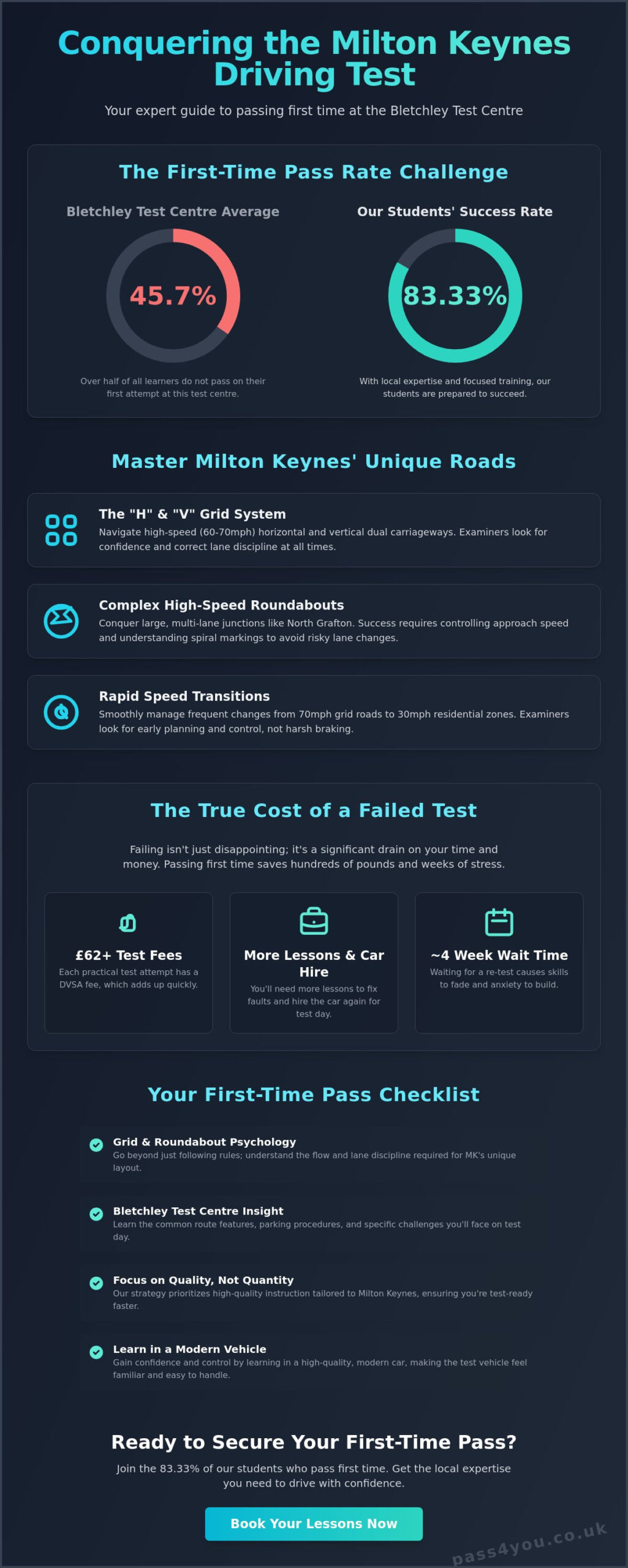
Milton Keynes is a unique place to learn. Its famous grid system and high density of roundabouts can feel a bit overwhelming at first, but they offer an incredible training ground. When you are deciding how to practice driving between lessons, the key is to use the local geography to your advantage. The city is built on a series of H (horizontal) and V (vertical) roads. These provide long, straight stretches that are perfect for practicing lane discipline and maintaining a steady speed. By sticking to these grid roads during quiet hours, you can build a solid foundation before tackling more complex urban environments.
For those just starting out, industrial estates are your best friend. Areas like Caldecotte or Tongwell are often deserted on Sunday afternoons. These locations offer wide roads and plenty of space to practice your clutch control or parking without the pressure of following traffic. Your supervisor might find it helpful to review the RAC’s guide on how to teach a learner driver to ensure your sessions stay productive and calm. Once you feel comfortable in these quiet zones, you can progressively increase the difficulty by moving toward busier residential areas and eventually Central Milton Keynes.
Timing is everything. Even the most confident learner can feel rattled by the MK rush hour. Try to avoid the main V-roads between 8:00 am and 9:30 am, or 4:30 pm and 6:00 pm. Driving when the roads are clearer allows you to focus on your technique rather than worrying about aggressive commuters. While these private sessions are vital for building muscle memory, our professional driving lessons ensure you are applying these skills with the precision required for the test.
Practicing Roundabouts the Milton Keynes Way
You can’t drive in MK without mastering roundabouts. It’s best to start small. Head to residential areas like Monkston or Emerson Valley to practice mini roundabouts. These help you get used to looking right and choosing gaps. As you progress, move on to the larger, multi-lane roundabouts. Focus on early signalling and choosing the correct lane well in advance. Private practice is the perfect time to desensitise yourself to the city’s unique traffic flow, making the big roundabouts feel like second nature.
Using Sat Nav vs. Road Signs
The practical test requires you to drive independently for about 20 minutes. Most learners will be asked to follow a Sat Nav. During your private practice, try setting up a destination and following the verbal prompts. This helps you get used to the device’s timing and voice. Don’t worry if you take a wrong turn. In fact, practicing “lost” scenarios is incredibly helpful. It teaches you how to recover safely and find your way back to the route without panicking, which is exactly what an examiner looks for.
Structured Practice: What to Actually Do Behind the Wheel
Private practice is most effective when it follows a clear, logical plan. Aimless driving can actually reinforce mistakes or lead to a lack of focus. When you are learning how to practice driving between lessons, you should treat every session like a mini-tutorial. This structured approach helps you build muscle memory and ensures that the time you spend with a supervisor directly supports your professional training. It turns “just driving around” into a tactical bridge toward your full licence.
Every session should begin with a 10-minute warm-up. This isn’t just about driving; it’s about getting settled in the vehicle. Start with your cockpit drills, ensuring your seat, mirrors, and headrest are perfectly adjusted. This is vital if you are switching between a tuition car and a family vehicle. Practice moving off and stopping several times in a quiet area. This brief period allows you to find the biting point and get a feel for the brakes before you head into busier traffic.
Your professional instructor is your best guide for what to do next. Identify the “weak link” from your last lesson. If you struggled with lane discipline on the grid roads, make that your primary focus. Spend 20 minutes specifically working on that one skill. While you drive, focus on making the “mirror-signal-manoeuvre” routine second nature. High-quality observation is the foundation of safe driving. It’s often the difference between a pass and a fail, as examiners look for consistent, active awareness of your surroundings.
Dedicated time for maneuvers is also essential. Use the quiet industrial areas we mentioned earlier to practice parallel parking or bay parking. Don’t rush these. Take your time to fix your position if it isn’t perfect. You are allowed to pass the test with up to 15 minor faults, but a serious error during a maneuver is an immediate fail. Frequent, calm repetition in private practice is the best way to ensure you stay composed during the real exam.
Refining Your Clutch Control and Gears
Different cars have different personalities. The biting point on a family hatchback might feel very different from your instructor’s diesel car. Use your private sessions to master hill starts and smooth braking in this new environment. You should also practice “block changing” your gears. This means going from 5th gear directly to 3rd, or 4th to 2nd, when appropriate. This modern technique improves fuel efficiency and is a key part of showing the examiner you have full control over the vehicle’s speed and momentum.
The “Mock Test” Approach
Once you feel confident, ask your supervisor to conduct a 20-minute independent driving segment. They can give you a series of directions or ask you to follow road signs to a specific destination. Use a checklist to track any faults. This helps you identify patterns in your driving that might need professional correction. Before your actual exam date, it’s a great idea to book a mock test in Milton Keynes with a professional. This gives you a realistic preview of the test environment and ensures you are truly ready to pass first time.
Managing the Relationship with Your Supervising Driver
Learning how to practice driving between lessons is often as much about communication as it is about car control. When you move from a professional tuition vehicle into a family car, the dynamic in the cabin changes significantly. Your supervisor is likely a parent or close friend, which can bring a different emotional weight to the session. To ensure these hours remain productive, you must manage this relationship with the same care you apply to your steering. A calm atmosphere is the foundation of a successful practice session.
Start every drive with a quick pre-drive briefing. Agree on exactly how feedback will be given. For example, you might ask your supervisor to only speak up for safety-critical issues while you are moving, saving general advice for when the car is stationary. This helps maintain a calm, Pass4you-style environment where you can focus on your progress without feeling overwhelmed. A “No Shouting” pact is essential for both parties. If either person feels their stress levels rising, it’s best to pull over safely and take a five-minute break to reset.
It is also vital to remind your supervisor about “dual-control displacement.” In a professional lesson, the instructor has a brake pedal. In a private car, they don’t. This lack of physical control can make supervisors feel vulnerable, which sometimes leads them to give instructions too early or in a panicked tone. Acknowledging this helps the supervisor stay mindful of their reactions. Once the drive is finished, have a short debrief. Always discuss what went well before focusing on areas for improvement. This positive reinforcement builds the emotional stability needed to pass your test with confidence.
Dealing with “Old School” Advice
Road rules and driving techniques have evolved over the years. You might find your supervisor suggesting outdated habits like coasting in neutral or using hand-over-hand steering. While they mean well, these techniques can lead to faults on your practical test. Always treat your instructor’s guidance as the final word. If there is a disagreement about a specific technique, invite your supervisor to sit in the back during one of your professional driving lessons. This allows them to see modern instructional methods first-hand.
Building Confidence vs. Overconfidence
As you log more hours, you’ll eventually enter the “danger zone.” This is the point where you feel so comfortable on familiar local roads that you might stop observing as sharply as you should. Your supervisor should act as a second pair of eyes, helping you stay alert to hazards you might have missed. True confidence comes from consistent, high-quality observation, not just being able to operate the vehicle. Stay focused, stay calm, and remember that every mile you drive is a step toward your independence.
Why Private Practice Should Complement Professional Lessons
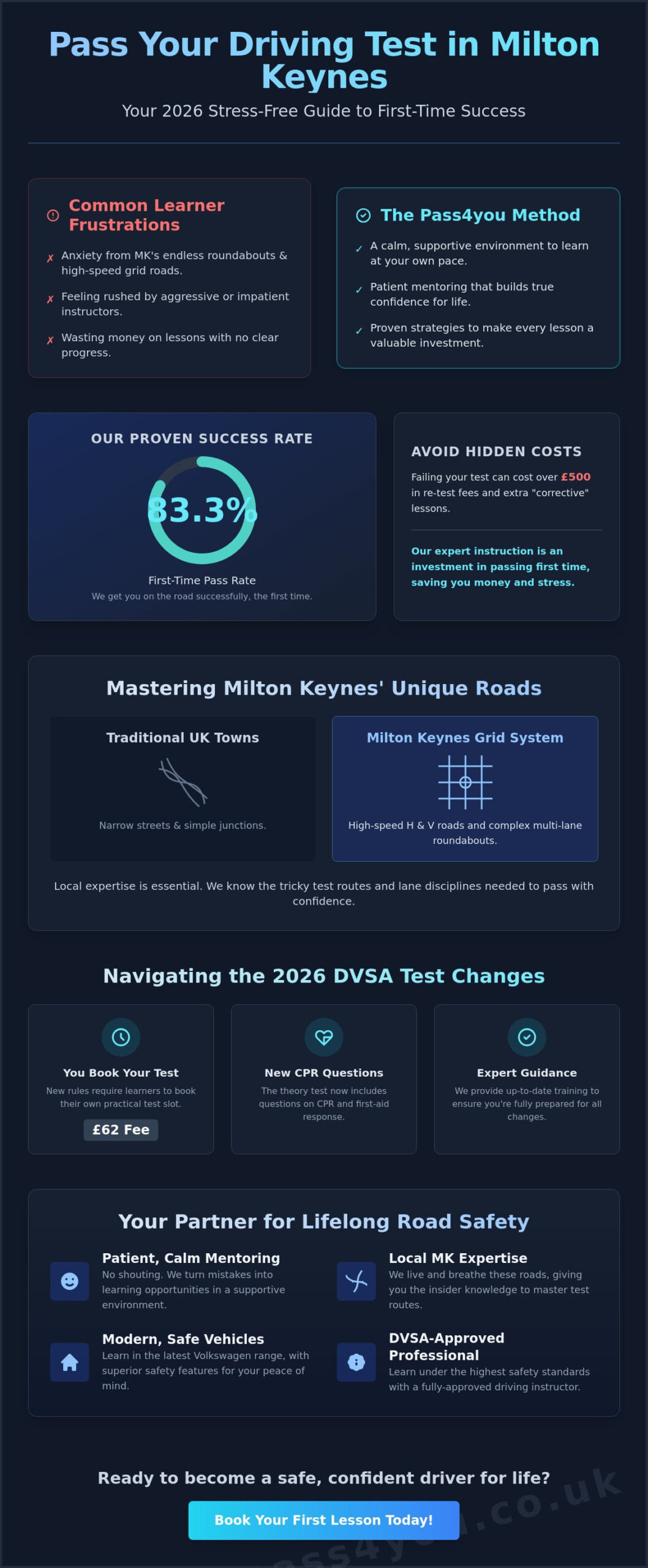
Professional instruction provides the foundation of your success, but private practice is the catalyst that speeds up your progress. When you understand how to practice driving between lessons, you aren’t just putting in miles; you are refining the professional techniques introduced by your instructor. This combination is incredibly effective. Statistics show that students who balance professional tuition with structured private practice have a significantly higher chance of success. In fact, our specific teaching methods and commitment to excellence contribute to an impressive 83.33% pass rate for our students.
One of the biggest benefits of this dual approach is the saving on time and money. Every two hours of focused private practice can “unlock” your next professional lesson faster. Instead of spending your paid tuition time on basic car control or simple junctions, you can use that time to tackle complex roundabouts or high-speed roads. You arrive at each lesson feeling more comfortable and prepared. This allows your instructor to move through the syllabus more efficiently, reducing the total number of professional lessons you might need to reach test-readiness.
However, you must be wary of “Bad Habit Contagion.” If you practice for too long without a professional check-in, you might start to drift away from the strict standards required by the DVSA. This is why private practice must always be a supplement to, not a replacement for, professional driving lessons. In the final two to three weeks before your practical test, we recommend shifting your focus back entirely to the tuition vehicle. This ensures you are perfectly attuned to the specific biting point and dimensions of the car you will use for the exam, keeping your confidence high for the big day.
The Pass4you Advantage
Our first-class instructors in Milton Keynes are experts at integrating your private practice into our comprehensive syllabus. We encourage you to share what you’ve been working on at home so we can refine those skills with professional precision. Learning in our modern Volkswagen tuition vehicles provides a superior technical foundation. These cars are chosen for their reliability and ease of handling, giving you the best possible environment to develop your skills. Professional expertise ensures you aren’t just “driving around” but are actually building the high-precision habits needed for long-term safety.
Next Steps: Booking Your Success
To maximise the impact of your private sessions, schedule your professional lessons at regular intervals. This allows your instructor to set specific goals for your practice between meetings. Before you start, ensure you have your provisional licence uk ready and that all legal requirements are met. By combining your dedication with our proven methods, you’ll be well on your way to independence. We are here to support you every step of the way with patience and expertise.
Start your journey with Pass4you and join our high-achieving students today!
Take the Wheel with Confidence
Mastering the art of private practice is about more than just getting extra miles. It’s about combining legal awareness with a structured, calm approach that supports your professional training. By choosing the right routes in Milton Keynes and maintaining a positive relationship with your supervisor, you turn every session into a step toward your full licence. These hours behind the wheel build the muscle memory and emotional stability needed to handle the road with ease.
Understanding how to practice driving between lessons gives you the edge needed to join our successful students. At Pass4you, our patient, first-class instructors are here to guide you through this journey with expert mentorship. We use modern Volkswagen tuition vehicles to ensure you have a superior technical foundation. This focus on high-precision habits is why we maintain an impressive 83.33% first-time pass rate. We are dedicated to your long-term safety and proficiency.
Ready to start? Book Your First Lesson with Milton Keynes’ Top-Rated Driving School and experience the difference that professional support makes. We are here to help you overcome anxiety and embrace the freedom of the open road. Your journey to becoming a safe, independent driver starts today.
Frequently Asked Questions
Can I practice driving on the motorway with a parent?
No, you cannot practice on the motorway with a parent or friend. In 2026, the law remains that learners can only drive on motorways when accompanied by an Approved Driving Instructor in a car fitted with dual controls. This rule is in place to ensure your safety while you learn to handle higher speeds and complex slip roads in a professionally controlled environment.
Do I need L-plates on both the front and back of the car?
Yes, you must display L-plates on both the front and back of the vehicle. These plates must be clearly visible to other road users and meet the legal size requirements. It’s a good habit to remove or cover them when a qualified driver is using the car. This prevents any confusion for other motorists who might expect a learner to be at the controls.
What happens if I get a speeding ticket while practicing with my dad?
You are legally responsible for any motoring offences committed while you are behind the wheel. If you are caught speeding, you will receive the fine and points on your provisional licence. It’s also possible for your dad to face penalties if he is found to have failed in his duty to supervise you properly. This is why staying calm and focused is so important for both of you.
Can a supervising driver sit in the back seat?
No, your supervising driver must sit in the front passenger seat. They need to be in a position where they can see the road clearly and intervene if an emergency occurs. Sitting in the back prevents them from assisting with the steering or the handbrake. Their role is to keep you safe, which requires them to be right next to the controls.
Is it better to practice in my own car or my instructor’s car?
Both options offer unique advantages for your development. Practicing in your own car helps you adapt to different biting points and vehicle dimensions, which builds significant confidence. However, it’s essential to keep up with professional tuition. Learning how to practice driving between lessons in your own vehicle should always be balanced with regular time in your instructor’s modern Volkswagen to maintain the high standards required for the test.
How many hours of private practice should I do between lessons?
The DVSA suggests that learners should aim for about 20 hours of private practice alongside 45 hours of professional tuition. While everyone learns at a different pace, this specific balance is often the key to passing the test first time. Understanding how to practice driving between lessons in short, frequent bursts is usually more effective than doing long drives that might lead to fatigue and loss of focus.
Can I use a Sat Nav while practicing privately?
Yes, using a Sat Nav is a great way to prepare for the independent driving section of the practical test. About 80% of learners will be asked to follow directions from a Sat Nav during their exam. Practicing this privately helps you get used to listening to voice prompts while maintaining full control of the car. It’s an excellent way to build your independent driving skills.
Does my supervising driver need to be insured on the car too?
Yes, the car must be fully insured for everyone who drives it. If you are practicing in a parent’s car, they will already be insured, but you must be added as a named driver or have a standalone learner policy. Always double check that the policy specifically allows for learner supervision. This ensures you are fully protected in the event of an accident or a minor bump during your practice.