
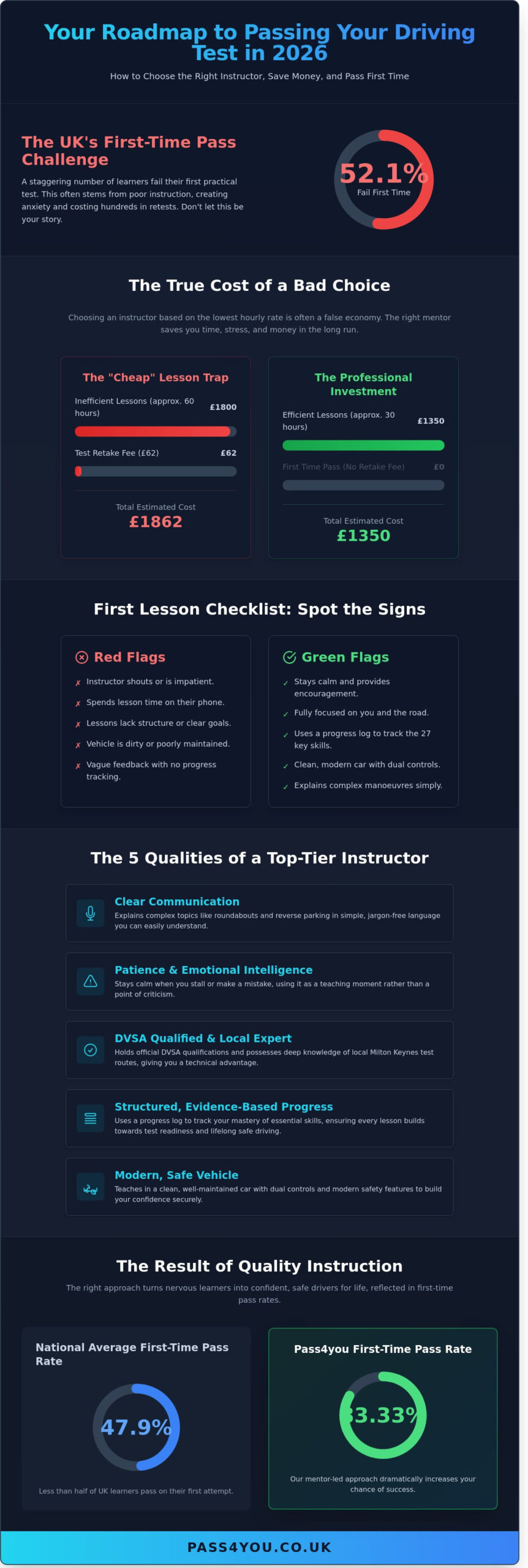
Did you know that 52.1% of learner drivers in the UK fail their practical test on the first attempt? It’s a daunting figure that often stems from poor preparation or a lack of rapport with a teacher. When you’re paying for lessons, the last thing you want is an instructor who shouts or makes you feel small. Understanding the signs of a good driving instructor is the first step toward avoiding wasted money and building the confidence you need to handle busy British roads.
We know how stressful it feels to balance the cost of lessons with the pressure of high failure rates. You deserve a mentor who stays calm when you stall at a junction and who actually wants you to succeed as quickly as possible. This article reveals the essential qualities and red flags you should look for to ensure you pass your test safely. We’ll walk you through our 2026 checklist so you can find a patient professional who turns your driving anxiety into genuine skill behind the wheel.
Key Takeaways
- Understand why your choice of instructor is a vital financial investment that can save you significant time and money on your journey to the driving test.
- Learn to identify the primary signs of a good driving instructor, including high emotional intelligence and the ability to explain complex manoeuvres in simple terms.
- Discover how to decode DVSA qualifications and why specific local knowledge of Milton Keynes test routes provides a massive technical advantage.
- Use our first-lesson checklist to spot critical red flags, such as instructor phone use, versus green flags like structured, confidence-building feedback.
- See how a patient, mentor-led approach has helped Pass4you achieve an 83.33% first-time pass rate, turning nervous learners into safe drivers for life.
Why Finding the Right Driving Instructor is Your Most Important Decision in 2026
Choosing who sits in the passenger seat during your first few miles on the road is the most significant hurdle you’ll face this year. It isn’t just about booking a block of hours to get a licence; it’s about finding a mentor who understands your nerves and builds your confidence from the first turn of the key. Identifying the signs of a good driving instructor early can save you hundreds of pounds and months of frustration. A poor choice often leads to more than just a failed test. It can result in long-term driving anxiety that lasts for years. At Pass4you, we’ve seen how a patient, professional approach leads to our 83.33% first-time pass rate, proving that the right environment makes all the legal and emotional difference.
A mentor does more than watch you drive. They actively manage your progress and adapt to your learning style. If you feel like a passenger in your own lesson, or if your instructor spends more time on their phone than observing your mirrors, you’re likely wasting your time. You need someone who takes the duties and responsibilities of a driving instructor seriously, ensuring every minute of your lesson is focused on safety and skill acquisition.
The Hidden Costs of ‘Cheap’ Lessons
It’s tempting to choose the instructor with the lowest hourly rate, but this is often a false economy. A cheaper rate of £30 per hour might seem attractive compared to a professional school, but if that instructor lacks the expertise to get you test-ready efficiently, you might end up needing 60 hours instead of 30. You also risk the £62 cost of a retest and the long wait times for new slots. We define value for money in driving tuition as the total cost to pass, not just the price of a single hour. Expert tuition focuses on “first-time pass” techniques that streamline your learning and get you on the road sooner.
- Low hourly rates often mask a lack of structured lesson plans.
- Experienced instructors use modern coaching methods to reduce the total number of lessons needed.
- High-quality tuition reduces the risk of expensive test failures.
Driving for Life vs. Driving for the Test
In 2026, the standards for road safety are higher than ever. A good instructor doesn’t just teach you how to pass a 40-minute exam; they prepare you for a lifetime of independent travel. This means hazard perception is treated as a core skill from day one, not just a theory test exercise. You’ll learn to anticipate the actions of others and manage complex junctions with a calm mind. When you’re properly prepared, you’ll find that you’re ready for the practical driving test naturally because your everyday driving already meets the required standard. This holistic approach ensures you don’t just get your pink licence, but you keep it by staying safe on Britain’s busy roads.
5 Essential Signs of a Professional and Patient Driving Instructor
Choosing the person who’ll guide you through your driving journey is a big decision. You aren’t just paying for time in a car; you’re investing in a life skill that keeps you safe for years to come. One of the most telling signs of a good driving instructor is how they handle the inevitable mistakes every learner makes. Before you commit your budget, it is vital to check if your instructor is registered with the DVSA to ensure they meet the latest 2026 professional standards.
- Emotional Intelligence: They stay calm when you stall at a busy junction or miss a turning, keeping the atmosphere relaxed and focused.
- Jargon-Free Communication: They explain complex manoeuvres, such as reverse bay parking, using simple language instead of confusing technical terms.
- Punctuality: They respect your schedule by arriving promptly and providing the full duration of the lesson you’ve paid for.
- Evidence-Based Progress: They use a digital or physical progress log to track exactly which of the 27 essential driving skills you’ve mastered.
- Modern Vehicle: You’ll learn in a clean, well-maintained car equipped with dual controls and the latest safety tech to ensure you feel secure.
The Power of a Calm Tuition Environment
A shouting instructor is a definitive sign of poor professionalism that can set your progress back by weeks. Research into driver education shows that high stress levels inhibit the brain’s ability to retain new information. If you’re one of the many nervous learners who’ve felt overwhelmed in the past, a patient approach is vital. A mentor like Simon focuses on being a confidence builder rather than a critic. By maintaining a quiet, supportive cabin even in heavy traffic, they help you process hazards more effectively. This supportive style is exactly why many students find they can build driving confidence much faster than they ever expected.
Organisation and Lesson Planning
In 2026, a professional instructor never just tells you to “drive around” for an hour without a goal. Every session should begin with a clear objective, such as mastering spiral roundabouts or perfecting hill starts. You should see a structured plan that follows a logical path toward your test date. This level of organisation is a key sign of a good driving instructor because it ensures you aren’t wasting money on aimless lessons. When every minute has a specific purpose, you’re far more likely to join the 83.33% of students who achieve a first-time pass through focused, goal-oriented tuition.
Qualifications and Local Expertise: The Technical Green Flags
When you start your search, you’ll quickly realise that not all instructors have the same level of training or experience. Identifying the technical signs of a good driving instructor starts with looking at the badge in their windscreen. This isn’t just a piece of plastic; it’s a legal requirement that tells you exactly where they are in their professional journey. You want someone who has invested time into their own education so they can provide you with the best possible start on the road.
Green Badge vs. Pink Badge: What You Need to Know
An Approved Driving Instructor (ADI) displays a green octagonal badge. This signifies they’ve passed all three stages of the DVSA qualifying process, including a rigorous test of their instructional ability. A Potential Driving Instructor (PDI) carries a pink triangular badge. While PDIs are often enthusiastic and have completed much of their training, they haven’t yet passed their final exams. Choosing an ADI gives you the peace of mind that your mentor has met the highest national standards for safety and teaching. All Pass4you instructors are first-class professionals who hold full qualifications to help you succeed.
The Milton Keynes Factor: Navigating Local Challenges
Milton Keynes presents a unique challenge for any learner driver. The famous grid system and the sheer volume of roundabouts require a specific set of skills that you won’t find in a standard textbook. One of the most reliable signs of a good driving instructor is their deep familiarity with local landmarks and traffic patterns. They should know exactly how to guide you through the V6 Grafton Street or the complex lane markings on the H6 Childs Way without causing you unnecessary stress.
Effective driving lessons Milton Keynes students rely on are those that focus on the specific quirks of the Bletchley test centre. A local expert knows which roads the examiners prefer and where the most common “trap” spots are located. This expertise allows them to tailor your lessons to your current skill level, choosing quieter residential streets for your first few hours before moving on to high-speed dual carriageways when you’re ready.
Modern Fleets and Data-Driven Success
The car you learn in matters just as much as the person sitting next to you. A good instructor maintains a modern fleet of vehicles, such as the Volkswagen Polo or Golf. These cars are chosen for their reliability, excellent visibility, and smooth controls. Learning in a vehicle that’s less than three years old reduces the risk of mechanical issues and ensures you’re using the latest safety technology.
Always look at the data before you book. A high first-time pass rate is a strong indicator of a calm and effective teaching style. For instance, our 83.33% first-time pass rate reflects a proven technique that builds genuine confidence. Check five-star reviews to see if previous students mention a patient atmosphere. If the data shows consistent success and the reviews highlight a supportive environment, you’ve likely found a professional who will help you become a safe driver for life.
The Red Flag vs. Green Flag Checklist for Your First Lesson
Your first lesson is about more than just finding the biting point. It’s an audition for the person sitting in the passenger seat. You need to know you’re in safe, professional hands from the moment you click your seatbelt. Recognising the signs of a good driving instructor early on will save you time, money, and unnecessary stress.
- Red Flag: Mobile phone use. If your instructor checks texts or takes personal calls while you’re driving, it’s a major safety breach. It’s actually illegal for a supervising driver to use a handheld mobile phone. They should be focused entirely on your progress and the road ahead.
- Green Flag: Constructive feedback. A great mentor doesn’t just tell you what you did wrong. They spend the final five minutes of your hour reviewing your performance and setting clear “next steps” for your following lesson.
- Red Flag: Poor punctuality. Everyone is late occasionally, but consistent lateness or last-minute cancellations show a lack of respect for your schedule. If they’re 10 minutes late every week, you’re losing valuable road time you’ve paid for.
- Green Flag: Highway Code integration. Instead of just telling you what to do, a patient instructor asks questions. They might ask who has priority at a junction or what a specific road sign means to ensure you’re actually absorbing the rules of the road.
Professional Boundaries and Behaviour
Professional conduct is non-negotiable. Your instructor should be calm, patient, and respectful at all times. If you ever feel shouted at or belittled, that’s a clear sign the teaching style isn’t right for you. You should never feel “guilty” for wanting to change instructors. Research suggests that 72% of learners who switch to a more compatible teacher feel a significant boost in their confidence within just two lessons. Your safety and comfort are the priority.
How to Interview a Potential Instructor
Don’t be afraid to ask questions before you hand over any money. A professional will be happy to provide transparent answers. Before booking a full block, ask these three essential questions:
- “Do you have a modern car with fully functioning dual controls and specialist tuition insurance?”
- “What is your current first-time pass rate for students in 2026?”
- “Can I book a single introductory trial lesson before committing to a larger package?”
It’s often helpful to look for driving instructors near me who specialise in nervous learners or offer trial sessions. This lets you test the “vibe” of the car and the teaching style without a huge financial commitment. If it’s a bad fit, it’s better to find out on day one than day twenty.
Ready to start your journey with a patient, expert mentor? Book your first lesson with Pass4you today and build your confidence behind the wheel.
Why Pass4you Sets the Standard for Instruction in Milton Keynes
Choosing where to learn is a major decision that impacts your safety and your bank balance. At Pass4you, we’ve built our reputation on what students call “The Simon Effect.” This refers to our lead instructor’s unique ability to provide personalised, patient tuition that delivers consistent results. One of the most vital signs of a good driving instructor is their capacity to remain calm when things get tricky, and that’s exactly what we offer every student who sits in our cars.
Our results speak for themselves. We maintain an impressive 83.33% first-time pass rate, which is significantly higher than the national average. This isn’t just a proud statistic; it’s a way for you to save money. By using proven techniques that help you learn faster and more effectively, we ensure you don’t spend more than necessary on extra lessons or repeated test fees. You’ll learn in modern Volkswagen vehicles, chosen specifically because they’re easy to handle, reliable, and packed with the latest safety features to protect you while you learn.
We believe driving is about more than just getting a plastic card. While passing the test is the immediate goal, our focus remains firmly on “Safe Driving for Life.” We want you to feel confident on the M1 or navigating the complex grid system and roundabouts of Milton Keynes long after your L-plates are gone. We don’t just teach you to pass a 40-minute exam; we teach you how to handle a lifetime on the road.
Our Tried and Tested Teaching Techniques
We know that many people come to us after a bad experience elsewhere. If you’ve been shouted at or felt rushed in the past, you’ll find our approach refreshing. We adapt our style for every individual, especially nervous learners who might feel overwhelmed by busy junctions. Our five-star testimonials highlight how we turn anxiety into genuine confidence. This local reputation is why so many of our students are referred to us by friends and family who passed with us years ago. We’ve honed our techniques over many years to ensure they work for everyone, regardless of their starting point.
Ready to Start Your Journey?
Your first hour behind the wheel is all about getting comfortable and building a foundation. We won’t throw you into the deep end of heavy traffic. You’ll learn the basic controls in a quiet, safe area, helping you build a bond of trust with your instructor. It’s a simple, stress-free introduction to the road. If you’re looking for the signs of a good driving instructor in a real-world setting, you’ll find them from the very first moment you sit in the driver’s seat.
Don’t leave your freedom to chance. Book your first lesson with Pass4you today and start your journey toward becoming a safe, independent driver for life.
Take the First Step Towards Your Driving Independence
Choosing your mentor is the single most important factor in how quickly you’ll trade your L-plates for a full UK driving licence. You now know the vital signs of a good driving instructor, from their calm, patient demeanour to their expert understanding of local Milton Keynes test routes. It’s about finding someone who builds your confidence rather than knocking it down. Learning to drive should be an exciting milestone, not a source of stress.
At Pass4you, we’ve refined a teaching method that genuinely works. Our impressive 83.33% first-time pass rate is a result of our professional, supportive approach. We don’t just teach you to pass; we ensure you’re a safe driver for life. With dozens of 5-star student testimonials and unrivalled local knowledge of the Milton Keynes road network, you’re in the best possible hands. Don’t settle for an instructor who makes you nervous when you can learn with a mentor who truly cares about your success.
Start your driving journey with a patient, professional Pass4you instructor today
The road ahead is waiting for you. We can’t wait to help you get there.
Frequently Asked Questions
How do I check if my driving instructor is fully qualified?
You can verify an instructor’s status by looking for a green octagonal badge displayed in their windscreen. This badge proves they are an Approved Driving Instructor (ADI) who has passed all three DVSA qualifying exams. If the badge is a pink triangle, they are a trainee who is still gaining experience. You can also use the GOV.UK “Find driving schools, lessons and instructors” service to check their official registration.
Is it okay for a driving instructor to shout at me if I make a mistake?
No, it is never acceptable for an instructor to shout or make you feel intimidated. One of the most important signs of a good driving instructor is their ability to remain calm and patient, even during stressful situations. A professional mentor focuses on building your confidence and providing clear, constructive feedback. If your instructor loses their temper, it’s a clear signal that their teaching style isn’t right for you.
What should I do if I don’t get on with my driving instructor?
You should look for a new instructor as soon as you realise the partnership isn’t working. Learning to drive is a significant financial investment, and you’ll progress much faster with someone who makes you feel safe and understood. Don’t worry about hurting their feelings; it’s a professional service and your success is the priority. Most learners find that a quick change to a more patient teacher makes a massive difference to their progress.
Can I take driving lessons before I pass my theory test?
Yes, you can start your practical driving lessons as soon as you have a valid provisional licence. Many students find that experiencing the road first-hand makes the theory topics much easier to understand and memorise. According to DVSA statistics from 2023, learners who combine practical experience with theory study often feel more prepared. Just remember that you can’t book your practical driving test until the theory certificate is secured.
How many lessons does the average person need to pass in 2026?
The Driver and Vehicle Standards Agency reports that the average learner needs 45 hours of professional tuition combined with 22 hours of private practice. While everyone learns at a different pace, choosing a high-quality instructor can often reduce this total. Our students benefit from a structured approach that has led to an 83.33% first-time pass rate. Focusing on consistent weekly sessions helps retain skills and reduces the need for refresher lessons.
Should I choose a local independent instructor or a national driving school?
Local independent instructors often provide a more personalised experience and a consistent point of contact. While national schools have large call centres, an independent professional relies on their local reputation and word-of-mouth recommendations. You’ll usually keep the same car and the same calm mentor for every lesson, which is vital for building trust. This consistency is often why local instructors can offer better value for money over the long term.
What are the most common signs of a bad driving instructor?
Frequent lateness, using a mobile phone during your lesson, and a lack of a clear progress log are major red flags. If an instructor spends more time talking about their personal life than your driving, you aren’t getting the tuition you’ve paid for. Recognising these issues early helps you find the signs of a good driving instructor instead. A poor teacher will leave you feeling nervous, while a great one will leave you feeling confident.
Is a high pass rate the only thing that matters when choosing an instructor?
No, while a high pass rate is a strong indicator of success, it shouldn’t be your only consideration. You also need to ensure their teaching style matches your personality, especially if you’re a nervous learner. An instructor might have great stats but a blunt manner that doesn’t suit everyone. Look for a balance of proven results and a supportive, patient environment to ensure you become a safe driver for life.