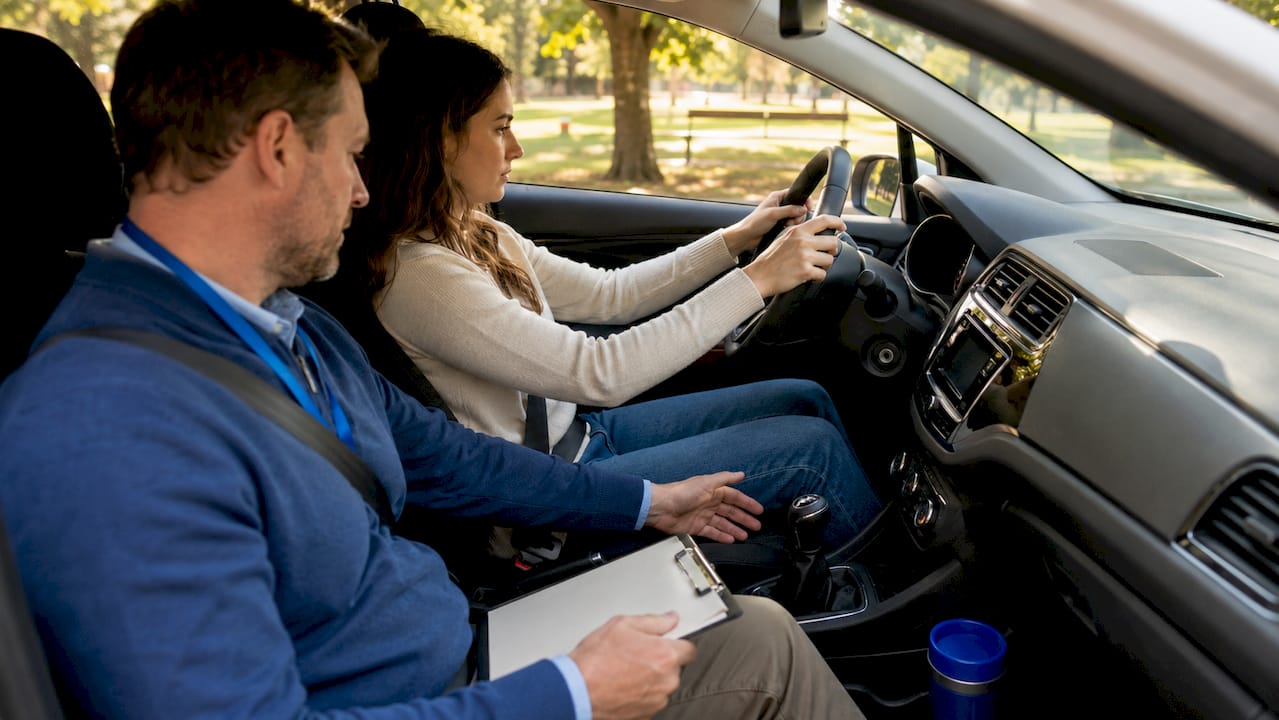
Your first five driving lessons are the foundation of every safe driving habit you will build for the rest of your life. Most new drivers arrive at lesson one with a mix of excitement and nerves, unsure of what actually happens behind the wheel. The first 5 driving lessons expectations are simpler than you think: each session builds on the last, moving from basic vehicle controls through to real traffic situations. Before you start, you must hold a provisional licence and pass an eyesight test by reading a number plate from 20 metres. Get those two things sorted, and you are ready to begin.
1. What to expect in your first driving lesson
Your first lesson is about vehicle familiarisation, not road mastery. The instructor will spend the opening minutes walking you through the cockpit drill, known formally as DSSSM: Doors, Seat, Steering, Mirrors, Seatbelt. This routine is not a formality. It is the safety check that professional drivers perform every single time they get into a vehicle.
A typical first lesson runs 60–90 minutes, with roughly 10–15 minutes of setup and briefing before you touch the pedals. That leaves around 30–40 minutes of actual driving practice, usually on quiet residential roads away from heavy traffic. The structure is deliberate. Your brain needs time to process each new input before adding another.
Here is what the first lesson typically covers:
- Cockpit drill (DSSSM): Adjusting the seat, mirrors, and steering column before every drive
- Pedal introduction: Accelerator, brake, and clutch (manual) or accelerator and brake (automatic)
- Dashboard overview: Speedometer, fuel gauge, warning lights
- Finding the bite point: The moment the clutch engages the engine in a manual car
- Moving off and stopping: Controlled starts and smooth stops on a quiet road
Stalling is almost guaranteed in a manual car during lesson one. Stalling is a normal part of developing clutch control, not a sign of failure. Your instructor expects it and uses it as a teaching moment.
Pro Tip: Take three slow, deep breaths before the lesson starts. Physical tension travels directly into your steering and pedal control. Relaxed hands produce smoother inputs.
2. How skills develop in lessons two and three
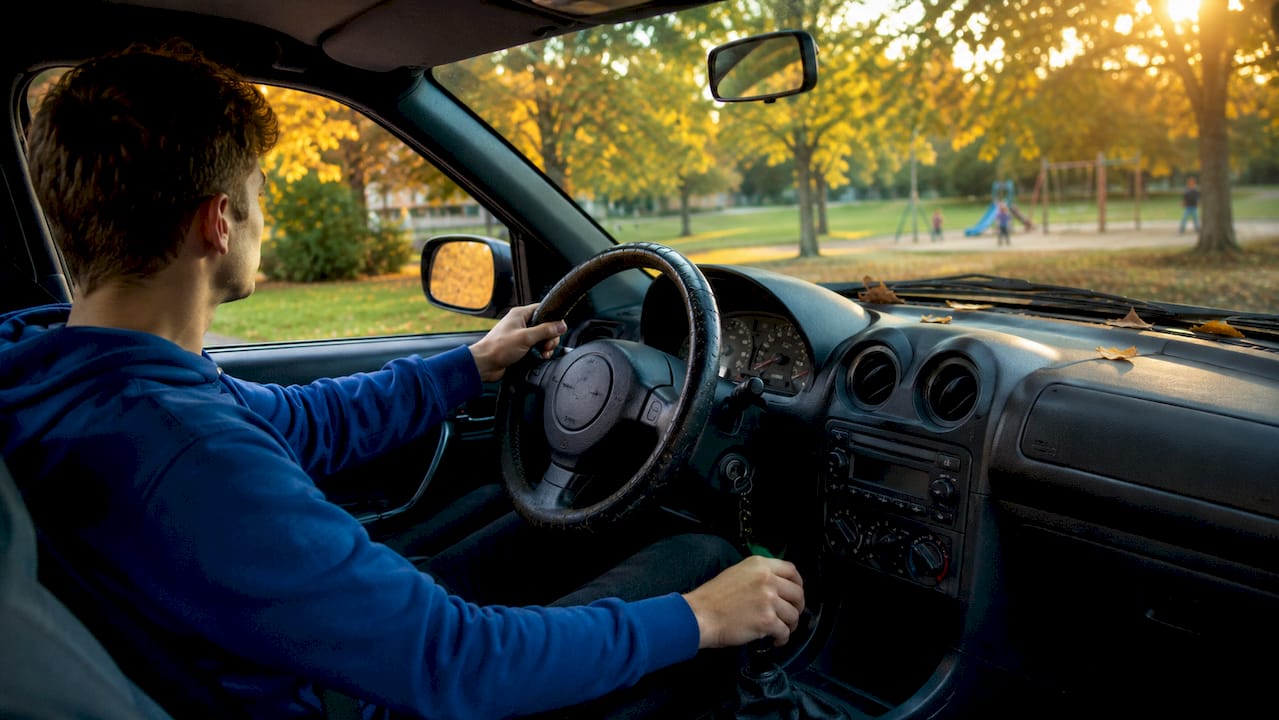
Lessons two and three shift the focus from “what does this do?” to “how do I control this consistently?” Clutch control and steering accuracy become the main targets. You will practise moving off and stopping repeatedly until the sequence feels less deliberate and more natural.
The progression across these two lessons typically follows this order:
- Smooth gear changes: Moving between first and second gear without lurching
- Steering consistency: Keeping the car in the correct road position without overcorrecting
- Basic junctions: Approaching a T-junction, observing, and turning left or right safely
- Mirror checks: Building the habit of checking mirrors before every speed or direction change
- Signalling: Timing indicators correctly so other road users have enough warning
Lane positioning surprises many learners at this stage. Staying in the centre of your lane feels unnatural at first because the car feels much wider than it actually is. This perception adjusts with repetition, usually within two or three sessions.
Honest feedback and clear short-term goals from your instructor make a measurable difference to progress at this stage. If something is not clicking, say so. Instructors can adjust their approach, slow the pace, or revisit a skill from a different angle.
Pro Tip: After each lesson, write down one thing that went well and one thing to focus on next time. This simple habit keeps your progress visible and stops you fixating on mistakes.
3. What lessons four and five introduce
By lessons four and five, you are no longer just controlling the car. You are starting to read the road. The MSPSL routine (Mirrors, Signal, Position, Speed, Look) becomes the framework for every junction, turn, and hazard response. Your instructor will prompt you through it until it starts to feel automatic.
These lessons typically include:
- Busier roads: Moving from quiet residential streets to roads with parked cars, cyclists, and oncoming traffic
- Left and right turns at junctions: Applying MSPSL in real conditions with other road users present
- Speed management: Adjusting speed smoothly for bends, junctions, and pedestrian crossings
- Hazard awareness: Spotting potential risks early, such as a car door opening or a pedestrian stepping out
- Independent decision-making: The instructor prompts less; you are expected to read situations yourself
Mental fatigue is significant at this stage. Learning to drive causes genuine exhaustion because every action requires conscious thought rather than automatic response. Experienced drivers do not think about checking mirrors before changing lanes. You do. That cognitive load is real, and it is why lesson pacing matters.
Learning progression is non-linear. A lesson four that feels worse than lesson two is completely normal. Setbacks happen when new complexity is introduced. They are not a sign that you are falling behind.
4. Manual vs automatic: how the first five lessons differ
The vehicle type you choose shapes what your first five lessons actually focus on. Manual and automatic transmissions create genuinely different learning curves, and understanding the difference helps you set realistic expectations from the start.
Automatic learners progress faster to traffic interaction because they are not managing a clutch. Manual learners spend more of the early lessons on clutch control and stall recovery before they can give full attention to road observation.
| Area | Manual lessons | Automatic lessons |
|---|---|---|
| Lesson 1 focus | Cockpit drill, bite point, stall recovery | Cockpit drill, smooth acceleration and braking |
| Lessons 2–3 focus | Gear changes, clutch consistency, basic junctions | Steering accuracy, mirror use, junctions |
| Lessons 4–5 focus | MSPSL, busier roads, gear selection in traffic | MSPSL, busier roads, speed management |
| Main early challenge | Clutch control and stalling | Smooth braking without overreliance on brake |
| Common to both | Safety awareness, road positioning, observation skills |
Choosing between manual and automatic depends on your long-term goals. A manual licence covers both vehicle types. An automatic licence restricts you to automatics only. If you are undecided, consider reading a guide on buying your first car before committing to a transmission type, as your future vehicle choice may influence the decision.
5. How a structured lesson supports faster progress
Well-structured lessons follow a consistent format: a pre-drive briefing, focused driving practice, and a recap at the end. That recap is where real learning consolidates. Your instructor identifies what went well, what needs work, and what the next lesson will target.
The national average for reaching test standard is around 45 hours of professional instruction. That figure varies significantly by individual aptitude and environment. Urban learners in busy cities often need more hours than those practising in quieter towns. The first five lessons represent roughly 5–7 hours of that total, which means they cover approximately 10–15% of the full learning journey.
Spacing your lessons sensibly also matters. Back-to-back lessons on consecutive days can accelerate progress, but only if you are not arriving at each session already fatigued. Most instructors recommend at least one rest day between lessons during the early stages. Sleep is when the brain consolidates new motor skills, so a rest day is not wasted time.
Sharing specific fears with your instructor before each lesson allows them to tailor the session to your actual needs. An instructor who knows you are anxious about roundabouts will not put you on one unprepared. That kind of personalised coaching is what separates a good instructor from a great one.
6. What to do before your first lesson
Preparation before lesson one reduces anxiety and makes the session more productive. You do not need to know anything about driving, but a few practical steps help.
First, confirm your provisional licence is valid and that your eyesight meets the legal standard. Second, wear comfortable, flat-soled shoes. High heels and thick-soled boots reduce pedal sensitivity and make clutch control harder. Third, eat a light meal beforehand. Low blood sugar affects concentration, and a 90-minute lesson demands sustained focus.
If you are thinking ahead to the costs of car ownership after passing, it is worth understanding first-time car insurance early. New drivers face higher premiums, and knowing what to expect financially helps you plan. You can explore the Pass4you blog for practical advice on preparing for lessons and beyond.
Key takeaways
The first five driving lessons build the essential skills, routines, and road awareness that every safe driver relies on for life.
| Point | Details |
|---|---|
| Lesson one is about controls, not roads | Expect the cockpit drill, pedal introduction, and quiet-road practice before anything else. |
| Stalling and fatigue are normal | Mental exhaustion and stalling in a manual car are expected parts of early learning, not failures. |
| MSPSL becomes central by lesson five | Mirrors, Signal, Position, Speed, Look is the routine that ties all road decisions together. |
| Manual and automatic differ early on | Manual learners focus on clutch control first; automatic learners reach traffic interaction sooner. |
| Lesson structure drives progress | A pre-drive briefing, focused practice, and end-of-lesson recap accelerate skill development. |
What I have learned from watching new drivers take their first five lessons
The anxiety new drivers bring to lesson one is almost always about the wrong thing. Most learners worry about crashing or embarrassing themselves. What actually trips people up is the sheer volume of simultaneous tasks: steer, check mirrors, manage the clutch, read a road sign, and respond to the instructor, all at once. That cognitive overload is the real challenge, and it is entirely temporary.
I have seen learners who stalled six times in lesson one pass their test first time. I have also seen confident learners plateau badly around lesson four because they stopped communicating with their instructor about what was confusing them. The pattern is consistent: learners who ask questions and admit uncertainty progress faster than those who try to appear capable.
The cockpit drill is the one habit I would urge every new driver to take seriously from day one. It takes 30 seconds. It is foundational for a lifetime of safe driving. Drivers who skip it develop blind spots, literally and figuratively.
My honest advice: treat the first five lessons as data collection, not performance. You are learning what the car does, what the road demands, and what your own instincts get right and wrong. None of that information is available until you are actually driving. Give yourself permission to be a beginner.
— Simon
Start your lessons with Pass4you in Milton Keynes
Pass4you delivers beginner driving lessons in Milton Keynes using modern Volkswagen tuition vehicles fitted with dual controls for safety. Every session follows the 60–90 minute structured format described in this article, with a pre-lesson briefing and end-of-lesson recap built in as standard. Pass4you instructors are calm, patient, and experienced in working with first-time learners who arrive nervous and leave more confident. The school holds an 83.33% first-time pass rate, well above the local average, with verified reviews on Trustpilot to back it up. If you are ready to take the first step, explore the learner courses available and book your first lesson today.
FAQ
How long is a typical first driving lesson?
A first driving lesson runs 60–90 minutes, including 10–15 minutes of setup and briefing before any driving begins. Actual time behind the wheel is typically 30–40 minutes on quiet roads.
Is stalling normal in the first few lessons?
Stalling is a normal and expected part of learning clutch control in a manual car. Instructors treat it as a teaching opportunity, not a mistake to be embarrassed about.
What is the MSPSL routine?
MSPSL stands for Mirrors, Signal, Position, Speed, Look. It is the standard decision-making routine used at every junction and hazard, and it becomes a central focus by lessons four and five.
How many hours of lessons do I need before my test?
The national average is around 45 hours of professional instruction before reaching test standard, though this varies by individual and environment. The first five lessons cover roughly 10–15% of that total.
Should I choose manual or automatic lessons?
Manual lessons give you a licence that covers both vehicle types. Automatic lessons restrict you to automatics only. If you are unsure, consider what car you plan to drive after passing before making the decision.
Leave a Reply