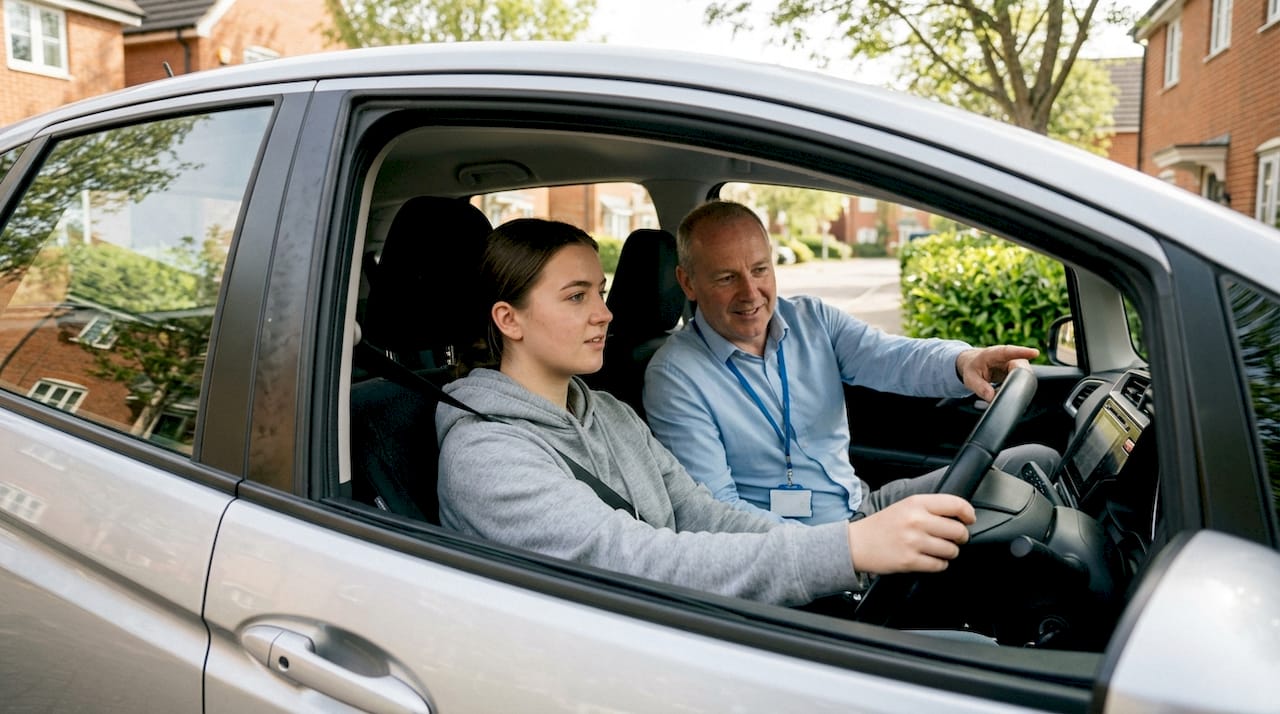
Hiring qualified driving instructors locally means selecting a DVSA-approved Approved Driving Instructor (ADI) who holds a valid licence, knows your local test routes, and can be verified through the official government register. In Milton Keynes, where the Bletchley test centre serves most learners, the instructor you choose directly affects how quickly you progress and whether you pass first time. From 12 May 2026, DVSA rules also place new booking responsibilities on learners themselves, making it more important than ever to find skilled driving instructors who will guide your preparation without managing the administrative side for you.
What qualifications should you look for when hiring a local driving instructor?
A fully qualified ADI is the standard you should demand. The DVSA maintains a public ADI register that lets you search by name or licence number to confirm an instructor is genuinely approved. This takes under two minutes and removes any guesswork about who you are trusting with your safety.
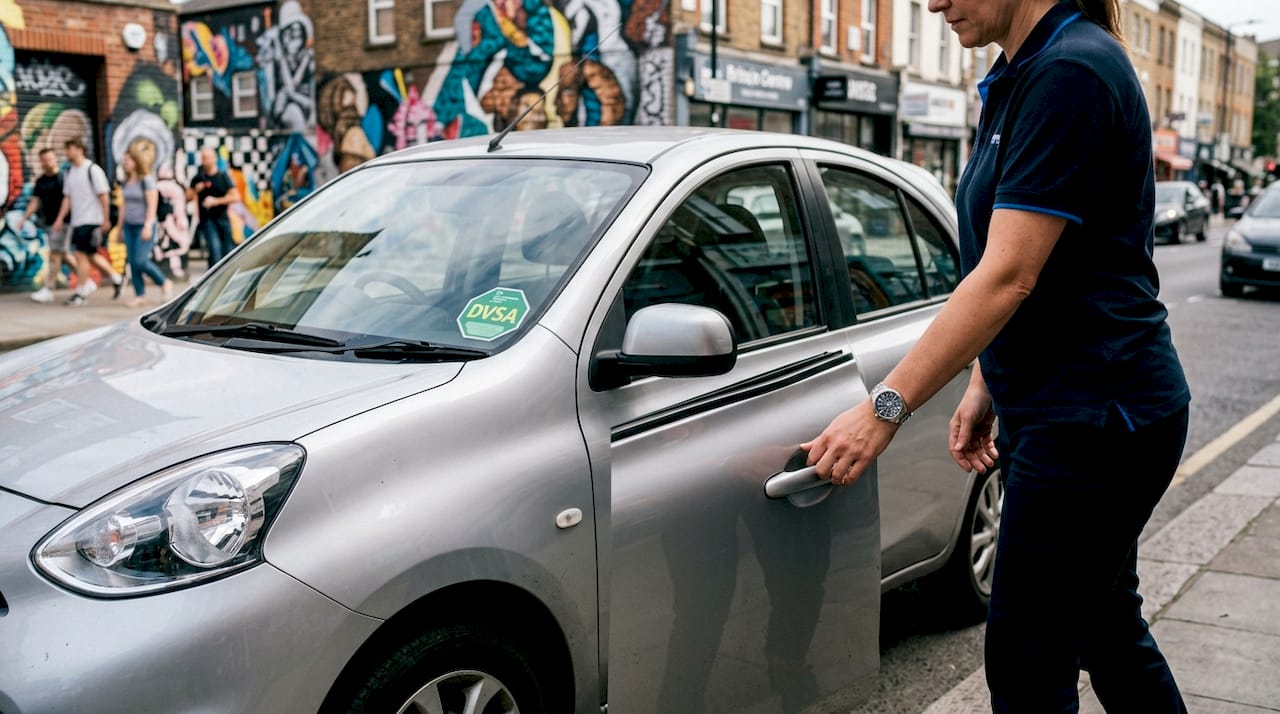
The most visible credential is the badge displayed in the instructor’s car. Fully qualified ADIs display a green octagonal badge; trainee instructors, known as PDIs (Potential Driving Instructors), display a pink triangular badge. PDIs can legally teach, but they are still completing their own training. They often charge less, but the trade-off is less experience and a less refined teaching style.
Beyond the badge, ADIs are graded by the DVSA on a scale from 4 to 6, with Grade 6 representing the highest standard of instruction. Grade A or Grade 6 instructors typically charge more per hour, but qualified ADIs sustain their standard through continuous professional development and periodic re-assessments. This ongoing accountability explains why experienced instructors often produce better pass rates despite the higher hourly rate.
All ADIs are also subject to mandatory Disclosure and Barring Service (DBS) checks. You are entitled to ask any instructor to confirm their DBS status before you begin lessons.
Key credentials to verify before booking:
- Valid ADI licence and green octagonal badge displayed in the vehicle
- Name confirmed on the DVSA public ADI register at gov.uk
- Current DBS check completed
- Evidence of ongoing professional development or recent re-assessment
- Positive, verified reviews on platforms such as Trustpilot or Google
Pro Tip: Ask your instructor directly for their ADI licence number and cross-reference it on the gov.uk register before your first lesson. A legitimate instructor will never hesitate to provide this.
How to find and compare skilled driving instructors near Milton Keynes
The gov.uk ADI register is the most reliable starting point, but it does not rank instructors by quality. To find certified driving coaches locally who are genuinely suited to your needs, you need to layer in additional research.
Personal recommendations remain the most effective filter. Ask friends, family, or colleagues who have recently passed their test in Milton Keynes which instructor they used and whether they would use them again. A recommendation from someone who passed at Bletchley carries particular weight because it confirms the instructor knows those specific test routes.
Online directories such as Yell and Google Maps surface local instructors with reviews attached. When reading reviews, look beyond the star rating. Comments that mention patience, clear explanations, and adaptability to different learning styles are more useful than generic praise. Reviews that describe how an instructor handled a nervous learner or adjusted their approach mid-course tell you far more than “great instructor, passed first time.”
A practical comparison framework:
- Confirm ADI status via the gov.uk register
- Read at least ten recent reviews, focusing on teaching style and patience
- Ask for a trial lesson before committing to a block booking
- Compare lesson packages, not just hourly rates
- Check whether the instructor covers the Bletchley test centre routes specifically
- Ask how they communicate progress and when they recommend booking the test
Comparing lesson package options:
| Package type | Typical structure | Best suited for |
|---|---|---|
| Pay-as-you-go | Single lessons booked individually | Learners with unpredictable schedules |
| Block booking | 10 or more lessons paid upfront | Learners seeking discounts and consistency |
| Intensive course | Multiple hours per day over one to two weeks | Learners wanting to pass quickly |
| Refresher package | Short series of lessons for lapsed drivers | Returning drivers updating their skills |
Pro Tip: Block bookings and off-peak lesson times such as mid-morning on weekdays typically attract discounts. Booking ten lessons upfront with a local instructor often reduces the effective hourly rate by £3 to £5.
What are the 2026 DVSA rules on booking your driving test?
The most significant change affecting learners in 2026 is straightforward: from 12 May 2026, only the candidate can book and manage their own practical car driving test. Instructors and driving schools can no longer book tests on a learner’s behalf. This shifts a meaningful responsibility directly onto you.
Your instructor can still help. They can share their availability, advise on which test slots align with your lesson schedule, and tell you when they believe you are ready. What they cannot do is log in to the DVSA system and secure a slot for you. You book via gov.uk or by calling the DVSA booking line directly.
“The learner’s role in managing their own test booking has grown in importance from 2026, requiring greater personal responsibility and planning.” — DVSA practical test business service terms and conditions
This change has a direct financial implication. Failing a practical test means paying the full test fee again plus the cost of any additional lessons needed before you can rebook. The statutory fee is £62 for weekday tests and £75 for evening, weekend, and bank holiday tests, with the theory test costing £23 per attempt. Booking before you are ready is an expensive mistake.
What this means in practice:
- Book your test only after your instructor has assessed you as consistently test-ready
- Discuss available test dates with your instructor before logging on to gov.uk
- Local intensive courses can help compress your learning timeline, but you still manage the test booking yourself
- Keep your DVSA login details secure and check cancellation policies before booking
- If your schedule changes, reschedule rather than cancel to avoid losing fees unnecessarily
How much should you expect to pay for driving lessons in Milton Keynes?
Cost is one of the first questions learners ask, and the honest answer is that it depends heavily on instructor grade and lesson timing. Qualified ADIs charge £35 to £45 per hour in 2026, with experienced Grade A instructors sitting at the upper end of that range. The higher rate is often worth it. A more experienced instructor typically identifies and corrects faults faster, which means you may need fewer total lessons.
The total cost of learning to drive is larger than most people anticipate. Learners typically complete around 45 hours of professional tuition alongside 20 hours of private practice before reaching test standard. At £40 per hour for professional lessons, that is £1,800 in tuition alone before adding test fees and theory preparation costs.
Typical cost breakdown for a Milton Keynes learner in 2026:
| Expense | Estimated cost |
|---|---|
| Professional tuition (45 hours at £40/hr) | £1,800 |
| Theory test | £23 |
| Practical test (weekday) | £62 |
| Practical test (evening/weekend) | £75 |
| Private practice (fuel and insurance) | Variable |
Private practice with a family member or friend in a suitable vehicle reduces the number of paid lessons you need. It reinforces skills between professional sessions and accelerates progress, but it works best when the supervising driver understands what your instructor is teaching you. Ask your instructor to brief your practice supervisor on the current focus areas.
Pro Tip: Planning test dates strategically with your instructor’s assessment minimises failed attempts. One avoided resit saves £62 to £75 in test fees plus the cost of remedial lessons, which often outweighs any saving from choosing a cheaper instructor.
What steps should you follow to get the most from your local driving instructor?
Getting the most from your driving instructor services nearby starts before your first lesson. Verify credentials, read reviews, and book a trial lesson with any instructor you are seriously considering. A single hour tells you a great deal about communication style, patience, and whether their teaching approach suits how you learn.
Once you commit to an instructor, communicate your goals clearly from the outset. Tell them your target test date if you have one, your availability for lessons, and any anxieties you have about specific manoeuvres or road types. Instructors who understand your timeline and concerns can structure lessons more effectively than those working without that context.
A structured approach to maximising your lessons:
- Verify ADI credentials before booking any lessons
- Book a trial lesson to assess teaching style and compatibility
- Communicate your target test date and weekly availability upfront
- Combine professional lessons with private practice under supervision to reinforce skills
- Ask for written or verbal feedback after each lesson to track progress
- Let your instructor assess your readiness before you book the practical test
- Adjust lesson frequency as your test date approaches to maintain momentum
The most common mistake learners make is booking their test too early, driven by impatience rather than readiness. Your instructor’s assessment is the most reliable indicator of whether you will pass. Trust it, even when it means waiting an extra few weeks.
Pro Tip: Learners in Milton Keynes benefit from instructors who know the local Bletchley test routes in detail. Route-specific preparation in the weeks before your test significantly reduces surprises on the day.
Key takeaways
Choosing a DVSA-approved ADI with local route knowledge, verifying credentials before booking, and managing your own test booking under 2026 rules are the three actions that most directly determine whether you pass efficiently and affordably.
| Point | Details |
|---|---|
| Verify ADI credentials first | Check the gov.uk ADI register and confirm the green octagonal badge before committing to any instructor. |
| Understand the 2026 booking change | From 12 May 2026, only you can book your practical test. Discuss timing with your instructor before logging on to gov.uk. |
| Budget for the full learning journey | Expect around 45 hours of professional tuition plus 20 hours of private practice at roughly £40 per hour. |
| Prioritise local route knowledge | Instructors familiar with Bletchley test routes give you a measurable advantage in test preparation. |
| Book your test only when ready | Each failed attempt costs £62 to £75 in fees plus additional lesson costs. Your instructor’s readiness assessment is the most reliable guide. |
Why local knowledge matters more than people realise
I have spoken with enough learners in Milton Keynes to know that the most common regret is not choosing a cheaper instructor. It is choosing one who did not know the Bletchley test centre routes well enough to prepare them properly. The difference between an instructor who has accompanied dozens of pupils through that specific test and one who simply covers the general Milton Keynes area is measurable. Pupils who practise the actual junctions, roundabouts, and dual carriageway sections they will encounter on test day arrive with a level of familiarity that genuinely reduces nerves and errors.
The 2026 booking rule change is worth taking seriously too. Some learners I have spoken with were caught off guard by the shift in responsibility. The practical implication is that you need to be more engaged in your own progress tracking. Ask your instructor after every few lessons where you stand. Do not wait for them to volunteer that information.
On cost, I would push back against the instinct to find the most affordable driving teachers and treat price as the primary filter. A Grade A ADI at £45 per hour who gets you through in 40 lessons costs less overall than a cheaper instructor who needs 55 lessons to reach the same standard. The maths is straightforward once you run it. Quality instruction is not a luxury. It is the more cost-effective choice in the long run.
— Simon
Start your lessons with Pass4you in Milton Keynes
Pass4you offers fully qualified ADI instruction across Milton Keynes, with instructors who know the Bletchley test centre routes in detail. The school’s 83.33% first-time pass rate is significantly above the local average, and all lessons are delivered in modern Volkswagen vehicles fitted with dual controls. Whether you are looking for structured learner driving courses or a faster route through an intensive driving course, Pass4you provides a clear, personalised path to your test. Verified Trustpilot reviews reflect the calm, patient approach that helps nervous learners build genuine confidence. Contact Pass4you by phone or email to book your first lesson and discuss which course structure suits your timeline.
FAQ
What does ADI mean and why does it matter?
ADI stands for Approved Driving Instructor. Only DVSA-registered ADIs are legally permitted to charge for driving tuition, and their credentials can be verified on the gov.uk public register.
Can my driving instructor book my practical test for me in 2026?
No. From 12 May 2026, only the candidate can book and manage their own practical car driving test via gov.uk or the DVSA phone line. Your instructor can advise on timing but cannot book on your behalf.
How many lessons do most learners need before their test?
Most learners complete around 45 hours of professional tuition alongside approximately 20 hours of private practice before reaching test standard, though this varies by individual.
What is the difference between a green badge and a pink badge instructor?
A green octagonal badge identifies a fully qualified ADI. A pink triangular badge identifies a trainee PDI who is still completing their own qualification. PDIs can teach legally but have less experience than fully qualified instructors.
How can I reduce the total cost of learning to drive?
Book lessons in blocks to access discounts, choose off-peak weekday slots where possible, supplement professional lessons with private practice, and only book your practical test once your instructor confirms you are consistently test-ready.
Leave a Reply