
Changing your driving instructor is one of the most underused strategies for learner drivers who feel stuck, frustrated, or underprepared for their test. A switch to a better-matched instructor directly addresses stalled progress, corrects ingrained habits, and aligns your training with the 2026 DVSA booking reforms that now place full scheduling responsibility on you. The DVSA, passrates.uk, and PracticeTestGeeks all confirm that fresh coaching, targeted feedback, and clear readiness criteria are the defining factors between learners who pass first time and those who don’t.
Why changing driving instructor helps learner drivers progress
The most common reason learners switch is a learning plateau. You attend lesson after lesson, put in genuine effort, yet your driving doesn’t improve. Switching when learning stagnates helps avoid wasted time and money, and the fix is rarely about working harder. It’s about working with someone who teaches differently.
Teaching style mismatch is the second major cause. Some instructors favour a talk-heavy approach; others prefer to let you drive and intervene only when necessary. Neither is wrong, but if your instructor’s style doesn’t match how you absorb information, your confidence suffers regardless of how many hours you log. A learner who needs calm, step-by-step guidance will struggle with an instructor who assumes prior knowledge and moves quickly.
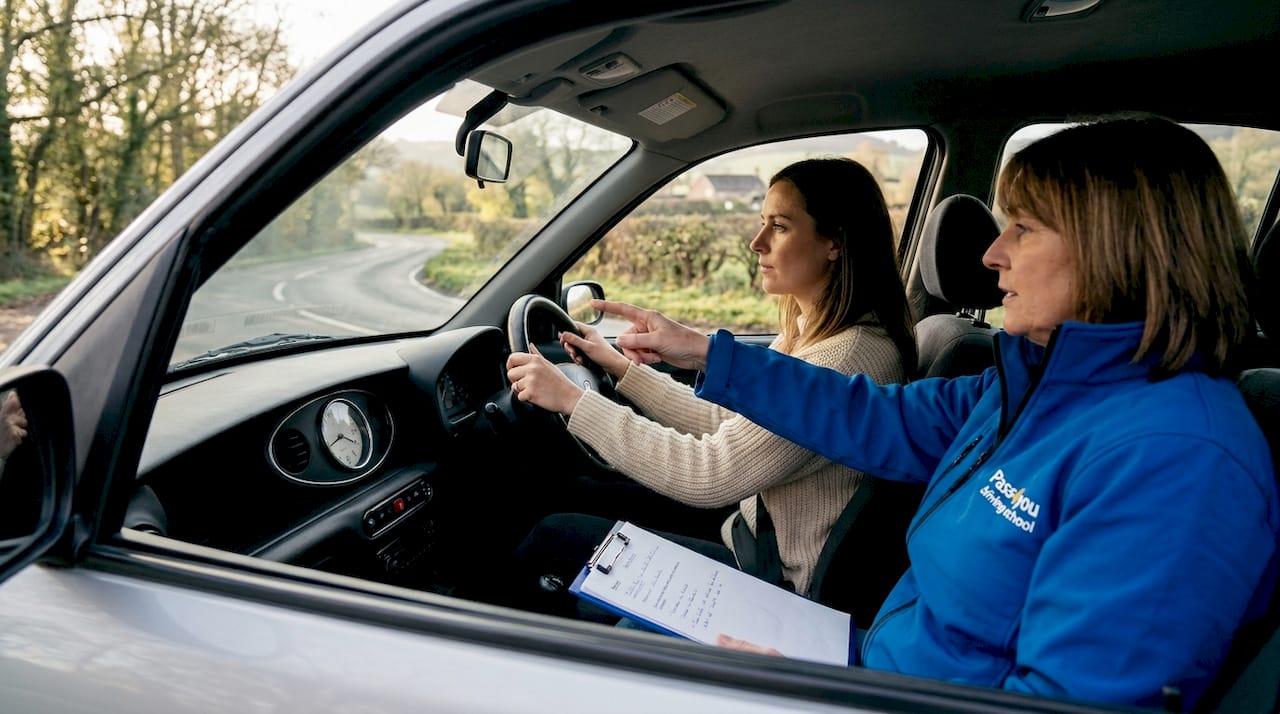
Reliability matters more than most learners realise. Frequent cancellations break the rhythm of learning. Driving skills are built through consistent repetition, and a gap of two or three weeks between lessons forces you to re-learn ground already covered. If your instructor regularly cancels at short notice, the financial and psychological cost compounds quickly.
The fourth reason is the value of a fresh perspective. A new instructor brings no assumptions about your driving. They assess you from scratch, identify weaknesses your previous instructor may have normalised, and build a lesson plan around your actual current standard rather than where you were six months ago.
- Learning plateaus despite consistent effort signal a mismatch, not a lack of ability.
- Teaching style incompatibility reduces confidence and slows skill retention.
- Frequent cancellations disrupt momentum and increase total lesson costs.
- A new instructor provides an unbiased reassessment of your current standard.
- Trial lessons assess fit before you commit to a full block of lessons.
Pro Tip: Book a single assessment lesson with a prospective new instructor before committing to a block. One hour tells you more about compatibility than any review or recommendation.
How do 2026 DVSA booking rule changes affect your instructor choice?
From 12 May 2026, only learners can book or manage their own practical car driving tests. Instructors can no longer handle bookings on your behalf. This single rule change transforms the relationship between learner and instructor in a way many people haven’t yet registered.
The practical consequence is significant. Learners are limited to two changes to their test date or location before the booking must be cancelled and rebooked entirely. That two-change limit means poor timing of your test booking carries a real cost. An instructor who delays telling you that you’re ready, or who gives vague feedback about your progress, forces you to use up those changes unnecessarily.
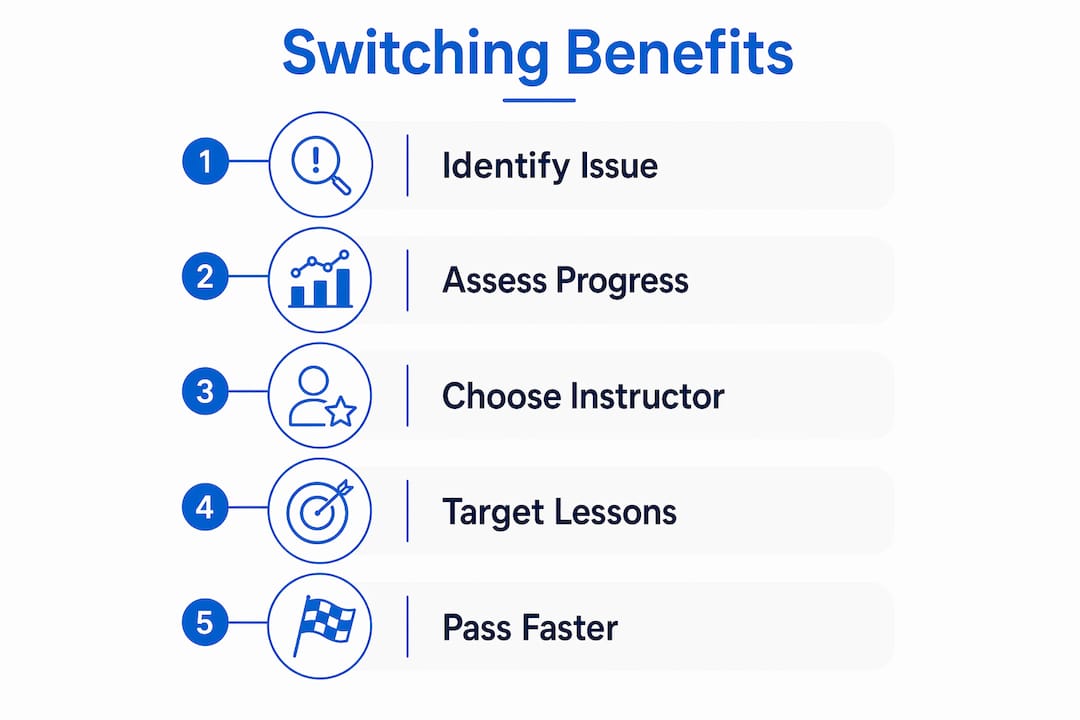
Instructors cannot view test availability under the new system. You see the available slots directly. This means the scheduling burden sits entirely with you, and you need an instructor who gives you clear, honest readiness criteria so you can act on a slot the moment one appears.
| Booking rule change | What it means for you |
|---|---|
| Learners manage all bookings from May 2026 | You cannot rely on your instructor to book or reschedule your test |
| Two changes allowed per booking | Poor readiness timing wastes your change allowance |
| Instructors cannot see test availability | You need clear readiness criteria to book confidently and quickly |
| Test swaps require both learners simultaneously | Swapping is complex and must be done by learners, not instructors |
Choosing an instructor who helps you judge readiness and coordinate bookings within the new change limits improves your test success odds significantly. An instructor who is vague about your progress or who avoids the readiness conversation is now a direct liability under these rules.
Pro Tip: Ask any prospective instructor directly: “How will you tell me when I’m ready to book my test?” A confident, specific answer is a strong sign they’ll support you well under the new DVSA system.
Signs your current driving instructor may not be right for you
Recognising the signs early saves money and reduces frustration. Here are the clearest indicators that a change is worth considering.
- You feel patronised or talked down to during lessons. Confidence is a driving skill. An instructor who undermines yours is actively slowing your progress, regardless of their technical knowledge.
- You regularly feel confused after lessons rather than clearer. Good instruction leaves you with a specific understanding of what to practise and why. Confusion after every lesson is a feedback problem, not a learning problem.
- Your instructor pressures you to book your test before you feel ready. Under the new DVSA rules, booking too early wastes your two-change allowance and increases test anxiety. An instructor who prioritises their own schedule over your readiness is not working in your interest.
- Lessons are cancelled frequently or rescheduled at short notice. One or two cancellations over a long course is normal. A pattern of last-minute changes is not. Consistent disruption to your lesson schedule costs you both time and money.
- You receive no clear feedback on what you need to improve. Progress in driving is measurable. If your instructor cannot tell you specifically which manoeuvres or junctions need work, they are not tracking your development effectively.
If two or more of these apply to your current situation, the question is no longer should I change my driving instructor but when to change driving instructor to minimise further cost.
How does switching instructors improve your chances after a failed test?
Failing a driving test is not a reason to repeat the same preparation with the same instructor. The examiner’s fault sheet is a precise diagnostic tool, and using examiner feedback to create targeted revision with a new instructor is one of the most effective strategies available after a fail.
A new instructor brings no prior assumptions about your driving. Where your original instructor may have grown accustomed to your habits, a fresh pair of eyes identifies the patterns that led to the faults on your test sheet. This is particularly true for serious faults, which often reflect a recurring behaviour rather than a one-off error.
The impact of a new instructor after a failed test includes:
- Direct mapping of examiner fault notes to specific lesson content, so every hour of preparation addresses a real weakness.
- Identification of secondary weaknesses your previous instructor may have overlooked or normalised over time.
- At least two mock tests with the new instructor to simulate test conditions and build composure under pressure.
- A reset of ingrained habits that contributed to the fail, approached without the assumptions built up over months of lessons.
- Faster progression to retest readiness because lessons are targeted rather than general.
The timing of the switch matters too. Switching immediately after a fail, rather than waiting several weeks, means the examiner’s feedback is still fresh and your motivation is high. Switching early is more cost-effective than delaying, and the same principle applies after a fail as it does at any other stage of learning.
Key takeaways
Changing your driving instructor helps most when progress has stalled, teaching styles clash, or you need targeted preparation after a failed test under the new DVSA booking rules.
| Point | Details |
|---|---|
| Switch when progress stalls | A learning plateau despite effort signals a teaching mismatch, not a lack of ability. |
| 2026 DVSA rules increase urgency | Learners now manage all bookings with only two changes allowed, making readiness clarity critical. |
| Recognise the warning signs early | Patronising behaviour, vague feedback, and frequent cancellations are clear signals to switch. |
| Use examiner feedback after a fail | A new instructor maps fault notes to targeted lessons and mock tests for faster retest success. |
| Trial lessons reduce switching risk | One assessment lesson reveals compatibility before you commit to a full block. |
What I’ve learned from watching learners stay too long with the wrong instructor
I’ve seen the same pattern repeat itself more times than I can count. A learner arrives having had 40 or 50 hours of lessons with a previous instructor, still not test-ready, and visibly deflated. The issue is almost never ability. It’s almost always that the previous instructor had stopped genuinely assessing them and was running on autopilot.
The most valuable thing a new instructor can do in that first lesson is not teach. It’s assess. A one-hour assessment lesson, done properly, tells you more about a learner’s actual standard than a dozen routine lessons. It resets the baseline and gives both instructor and learner a clear, honest picture of what remains to be done.
What strikes me most about the 2026 DVSA booking changes is how much they expose the cost of a passive instructor relationship. When an instructor managed your bookings, a vague sense of “nearly there” was tolerable. Now that you’re managing your own test slot with a two-change limit, you need an instructor who can tell you, with precision, what you need to do before you’re ready to book. That specificity is not a bonus. It’s the job.
The learners who pass first time are not always the most naturally talented drivers. They are the ones who found an instructor who communicated clearly, assessed honestly, and prepared them for the test as it actually is, not as a general driving exercise. If your current instructor isn’t doing that, changing is not giving up. It’s making a smart decision.
— Simon
Ready to make the switch? Pass4you can help
If you recognise the signs described in this article, Pass4you is built for exactly this situation. Based in Milton Keynes with an 83.33% first-time pass rate, Pass4you delivers calm, patient instruction in modern Volkswagen tuition vehicles with dual controls, with detailed knowledge of the Bletchley test routes.
Whether you’re switching after a failed test or simply need a fresh start with an instructor who communicates clearly and tracks your progress honestly, Pass4you’s learner driving courses are structured around your readiness, not a fixed schedule. For learners who need to progress quickly under the new DVSA booking rules, Pass4you also offers intensive driving courses designed to get you test-ready efficiently. Check verified reviews on Trustpilot or explore all Pass4you services to find the right fit.
FAQ
When should I change my driving instructor?
Change your instructor when progress has stalled despite consistent effort, lessons are frequently cancelled, or you receive no clear feedback on what to improve. Switching early is more cost-effective than waiting until after many wasted lessons.
Can my instructor still book my driving test for me?
No. From 12 May 2026, only learners can book or manage their own practical car driving tests. Instructors are no longer permitted to handle test bookings on a learner’s behalf.
How many times can I change my driving test date?
You are allowed two changes per booking to your test date or location. After that, the booking must be cancelled and rebooked entirely, resetting the change limit.
Does switching instructors after a failed test actually help?
Yes. A new instructor uses your examiner’s fault notes to build targeted lessons and runs mock tests to address specific weaknesses. Fresh coaching after a fail addresses the root causes of faults more effectively than repeating the same lessons with your original instructor.
What should I look for when finding the right driving instructor?
Look for an instructor who gives specific, honest feedback on your progress, tells you clearly when you’re ready to book your test, and has a strong first-time pass rate. Assessing instructor fit with a trial lesson before committing to a block is the most reliable way to judge compatibility.
Leave a Reply